Ciao splendida Sole !
Abbiamo visionato il sito e l abbiamo trovato fatto molto bene e interessante, riteniamo che sia di facile comprensione e con tutte le...
Some images are so familiar that a simple glance is enough to make us think of a particular country. When it comes to Vietnam, we may picture the traditional conical hat, the elegant ao dai, or endless green rice fields stretching across the countryside. And of course, we cannot forget the lotus flower, which has long been part of Vietnamese culture and everyday life. In 2027, this familiar flower will appear on a special international stage, as it has been chosen as the inspiration for the official logo of Vietnam’s APEC Year 2027. But why the lotus? What stories lie behind its seemingly simple design? And what message does Vietnam want to share with the world through this symbol?
Join Vietnam Travel Price as we explore the story behind the APEC 2027 logo, discover more about this important international event, and learn how Vietnam hopes to introduce its beauty, culture and people to the world.
The Meaning Behind the APEC 2027 Logo
1. What is APEC? Vietnam’s journey with the forum
2. Why did Vietnam choose the lotus flower as the symbol of APEC 2027?
3. Discovering the meaning behind the APEC 2027 logo
4. APEC 2027 in Vietnam: Opportunities for local people and businesses
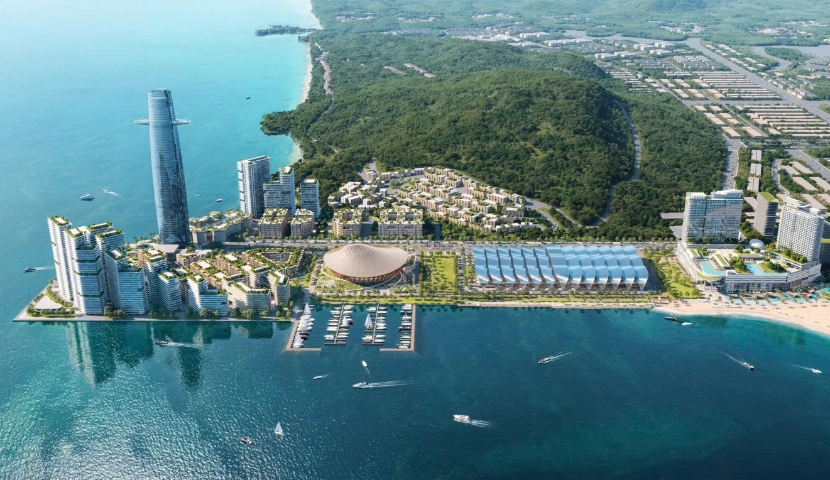
5. Discover Phu Quoc, the host destination of APEC 2027
6. APEC 2027: Vietnam’s story to the world
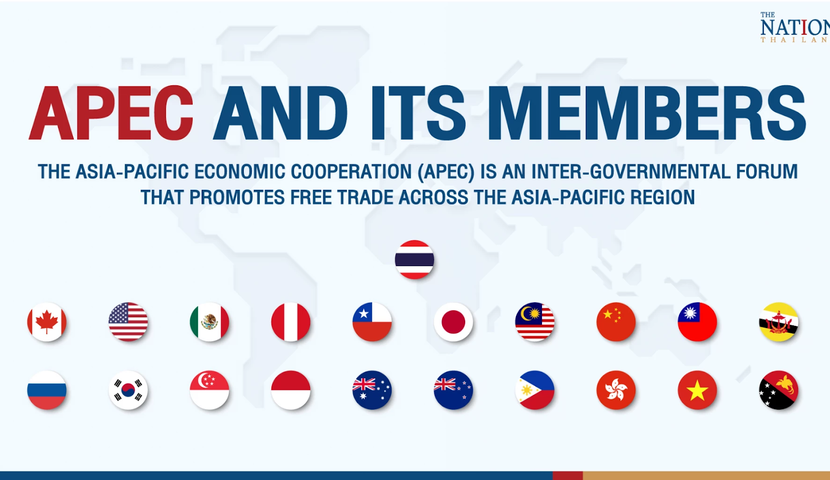
Before looking more closely at the logo, let’s take a moment to learn about APEC. APEC, short for Asia-Pacific Economic Cooperation, was established in 1989 in Canberra, Australia. It brings together 21 member economies, including major economic partners such as the United States, China, Japan, South Korea, Australia and Vietnam. The forum aims to promote economic cooperation, make trade and investment easier, and strengthen connections between economies across the region. Unlike organisations that operate through legally binding agreements, APEC mainly works through dialogue, consensus and voluntary cooperation. Put simply, APEC provides a space where economies can come together, share experiences, explore new opportunities and work on common challenges, from trade and investment to sustainable development and people's quality of life.
Vietnam officially joined APEC in 1998. After hosting the forum in 2006 and 2017, the country will once again take on the role of host for APEC Year 2027. This is an important opportunity for Vietnam to make a greater contribution to regional cooperation while introducing itself as a dynamic, open country that is becoming increasingly connected with the world.
With the theme “Building a New Era of Resilience, Innovation and Shared Prosperity”, APEC 2027 looks towards a future in which economies do more than simply grow together. They also strengthen their ability to adapt, innovate and share the benefits of development. To represent this spirit, Vietnam has chosen an image that is deeply familiar to its people: a blooming lotus flower.
Source: compilation
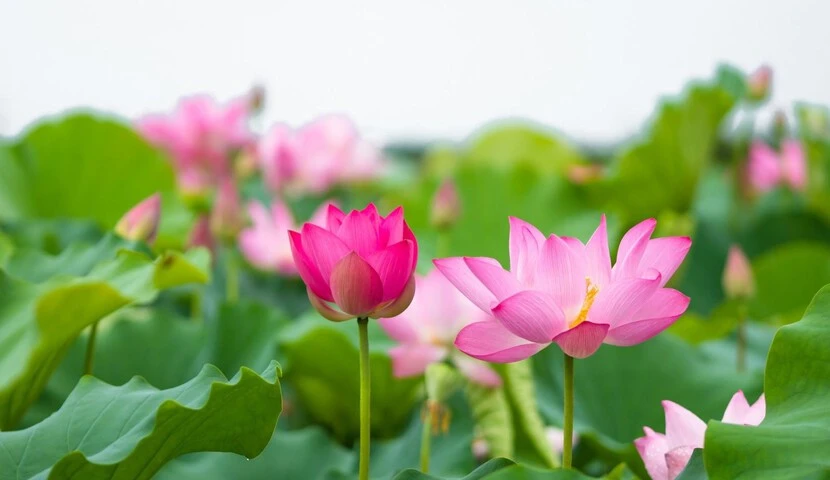
The lotus has long been associated with Vietnam because of its graceful beauty, simplicity and ability to thrive in challenging conditions. Although it grows in muddy water, the flower rises above the surface and blooms beautifully. For this reason, it is often seen as a symbol of strength, perseverance and the desire to overcome difficulties.
Choosing the lotus for the APEC 2027 logo therefore means much more than simply selecting an attractive design. It is a way for Vietnam to introduce its cultural identity to the international community through an image that is familiar, deeply rooted in tradition and meaningful to the Vietnamese people. In the APEC 2027 logo, however, the lotus is not presented in its traditional form. Its petals are given a softer, more open design, with flowing lines that resemble waves. This creates a modern and dynamic look. The image not only reflects Vietnamese culture but also connects with the wider Asia-Pacific region.
Through the lotus flower, Vietnam hopes to share a simple message: although each economy has its own identity and development path, they can still connect, cooperate and work towards a more prosperous future together.
Source: Compilation
One of the most interesting things about the APEC 2027 logo is that every detail carries its own meaning. At first glance, we see a blooming lotus flower. But when we take a closer look, its petals, lines and colours tell a bigger story about Vietnam and the APEC community.
3.1 The blooming lotus: Vietnam’s strength and aspirations
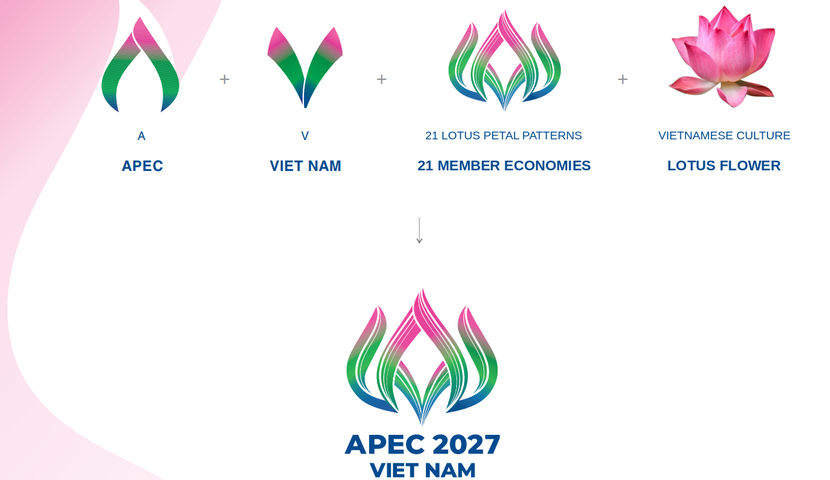
The first detail that catches the eye is the image of a lotus flower opening in full bloom. Its delicate petals represent Vietnam’s resilience, inner strength and ambition to continue growing in a new era of development, often described as the country’s “era of rising”. Beyond its familiar lotus shape, each petal is also designed to resemble a wave, suggesting movement and connection. More interestingly, the lines are formed from the letters A and V, representing APEC and Vietnam. This is a thoughtful detail because it directly connects the host country with the wider regional economic community. Vietnam has its own identity, but it is also part of a shared journey towards cooperation and development across the Asia-Pacific region.
3.2 The 21 lines: 21 economies working towards shared prosperity
Looking closely at the lotus petals, we can notice several lines that overlap and come together. Each line represents one of the 21 APEC member economies, each with its own characteristics, culture and level of development. When these economies come together in a shared forum, their differences become opportunities to learn from one another, exchange experiences and build new partnerships. The 21 lines coming together to form a single design reflect this spirit: respecting cultural diversity while staying connected, and recognising the strength that comes from cooperation and unity.
3.3 Open shapes: A spirit of innovation and new opportunities
Another detail worth noticing is the overall design of the logo. Its open shapes and upward-moving lines create a sense of continuous growth, movement and the desire to reach new goals. This design also represents the spirit of innovation, the ability to adapt to change and the search for new opportunities for growth among APEC economies. In the context of Vietnam hosting APEC 2027, the upward movement also reflects the ambitions of a country that is working to strengthen its position, expand international cooperation and embrace new opportunities.
3.4 The meaning behind the logo’s colours and typography
Besides the shape of the lotus flower, the choice of colours also gives the APEC 2027 logo its distinctive look. The logo features a harmonious blend of blue, green and lotus pink. The shades of blue and green are taken from APEC’s official colour palette, bringing to mind the ocean, connection, innovation and sustainable development. Meanwhile, the pink adds a distinctive touch inspired by Vietnam’s lotus flower, creating a warm and welcoming feeling. This combination allows the logo to maintain APEC’s overall visual identity while clearly reflecting the culture of its host country. The words “APEC Viet Nam” below the symbol use a modern, bold typeface in blue. Their design balances the lotus image and helps present Vietnam as a confident, dynamic country that is ready to take on its responsibilities as host. Overall, the logo brings together familiar cultural values and a modern design style. It presents a traditional symbol in a fresh way, while telling a wider story about connection, integration and development across the region.
Source: Ministry of Culture, Sports and Tourism of Vietnam
Many people may think that major international events like APEC are mainly about meetings between world leaders and high-level political or economic discussions. In reality, one of the forum’s key aims is to bring benefits to local communities and create opportunities for businesses to meet, connect and grow through partnerships with international companies. These connections also allow businesses to learn from one another and gain valuable experience. In 2027, APEC-related activities will take place in different parts of Vietnam, with Phu Quoc hosting the APEC Economic Leaders’ Week. This will be an opportunity for Vietnam to welcome international delegations, investors, business leaders and media representatives from around the world.
For Vietnamese businesses, especially small and medium-sized enterprises, the event could open up new opportunities to meet international partners, introduce their products, explore new markets and learn more about business management. Industries such as tourism, hotels, restaurants, transport and other services may also benefit from stronger connections with partners across the region.
For local communities, improvements to infrastructure, transport and services in preparation for the event could create more jobs and new business opportunities. People working in tourism, in particular, may have more chances to connect with international visitors and reach new markets.
Located in southwestern Vietnam, Phu Quoc is famous for its clear blue waters, white sandy beaches and beautiful sunsets. It has long been a favourite destination for both Vietnamese and international travellers looking to enjoy a relaxing holiday while exploring nature. In 2027, the island will attract even more international attention as the host destination for the APEC Economic Leaders’ Week.
During your visit, you can spend a relaxing morning at Bai Sao Beach, explore the An Thoi Archipelago or take the Hon Thom Cable Car to enjoy stunning views of the surrounding sea and islands from above. If you love the ocean, island-hopping tours and snorkelling are also great ways to discover the beauty of the underwater world. But Phu Quoc is much more than its beaches and modern resorts. The island is also home to traditional fishing villages and fish sauce workshops, where visitors can learn about a craft that has been closely connected to local life for generations. A visit to a local market is another great way to experience the island. You can enjoy fresh seafood and try some of its well-known local dishes, such as goi ca trich (herring salad) and bun quay (Phu Quoc-style noodle soup).
Source: Vnexpress
Looking back at the APEC 2027 logo, we can see that the lotus flower carries more meaning than we might first imagine. It represents Vietnam’s resilience, the connection between 21 economies and their shared ambition to build a more prosperous future.For Vietnam, APEC 2027 is not only an opportunity to contribute to issues that matter to the region, but also a chance to introduce a country rich in culture and traditions, open to the world and always ready to welcome international visitors. If you have the chance to visit Vietnam in 2027, don't spend all your time attending meetings or taking part in activities related to the event. Why not stay a few extra days to explore the beaches, try some local food, visit a small village or simply have a chat with the local people? Sometimes, it is these little moments and personal experiences along the way that help us truly discover a country.
Related articles: