
Ciao splendida Sole !
Abbiamo visionato il sito e l abbiamo trovato fatto molto bene e interessante, riteniamo che sia di facile comprensione e con tutte le...
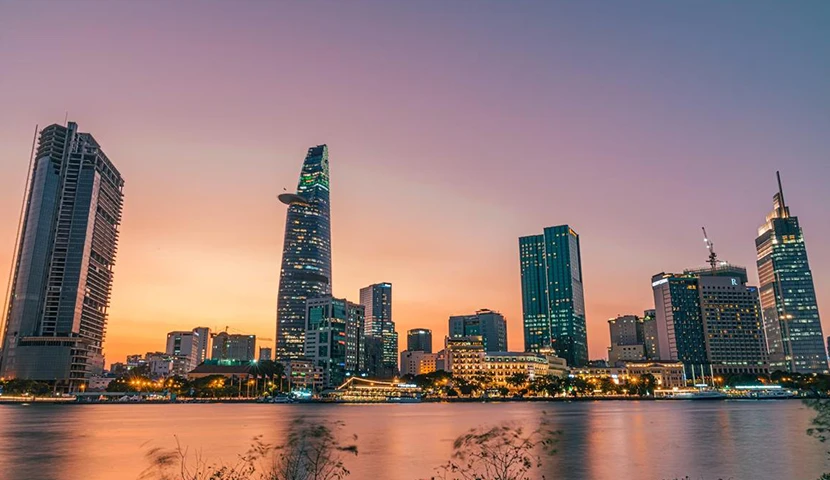
Ho Chi Minh City or what we call Saigon, is the largest city in Vietnam and the economic, cultural, and entertainment hub of the country. If one had to describe it in a few words, they would be fast-paced, youthful, open, and never sleeps.
1. Ho Chi Minh - the dynamic heart of Southern Vietnam
2. Geographical location of Ho Chi Minh City
3. The History of Ho Chi Minh City
4. Places to Visit - Every District Has Its Own Personality
5. Saigon cuisine
6. People and the Rhythm of Ho Chi Minh City
7. How to get to Ho Chi Minh City
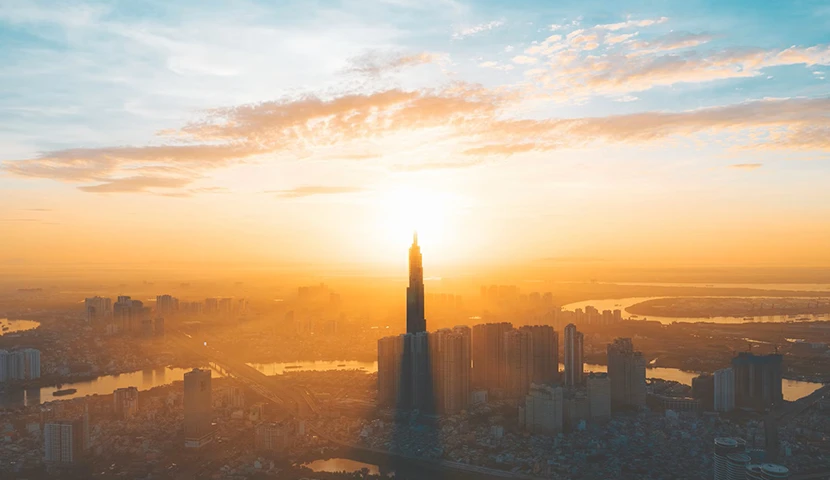
Located in the Southeast region, Ho Chi Minh City covers an area of approximately 2,095 km² with an official population of over 9 million people, and over 14 million with immigrants, students, and workers are included. The Saigon River runs through the city, along with the Nhieu Loc - Thi Nghe Canal and the Tau Hu Canal, creating a complex network of waterways. Unlike other tranquil cities, Saigon is always bustling and vibrant from early morning until 2-3 am.
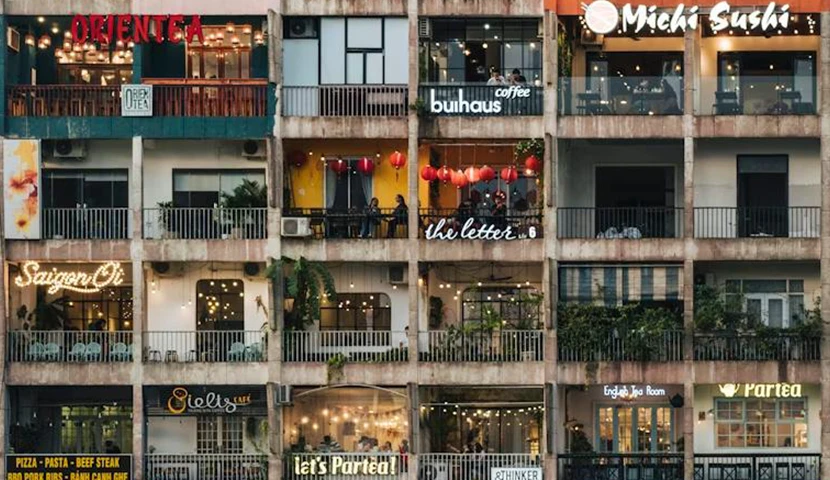
What makes Saigon unique is its incredibly interesting blend of cultures. On one side, you have the 140-year-old Notre-Dame Cathedral and the French-colonial Central Post Office. Across the street are Diamond Plaza, Vincom, and Landmark 81, which pierce the sky. One corner features a 15,000 VND sidewalk coffee stall with low plastic chairs. Another corner, there is a specialty coffee shop with a high-end machine, costing 80,000 VND per cup. They all coexist, but are still working well.
For foreigners, Ho Chi Minh City is often the first destination to experience a modern, integrated Vietnam. For locals, it's the "promised land" - a place where people believe that with hard work and a willingness to take risks, anyone can change their life. Saigon doesn't ask where you're from; it only cares if you’re ready to live fully.
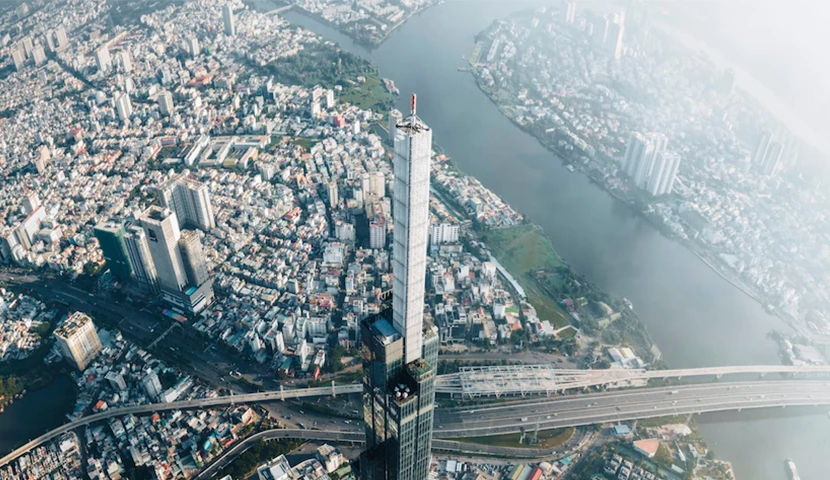
Located in the south of Vietnam, Ho Chi Minh City is approximately 1,730 km from Hanoi by road.
Thanks to its central location in Southeast Asia, Ho Chi Minh City plays a strategic role as a transportation hub in all three aspects: road, water, and air. This advantage allows the city to connect effectively with the neighboring provinces and serves as an important international gateway for the entire country.
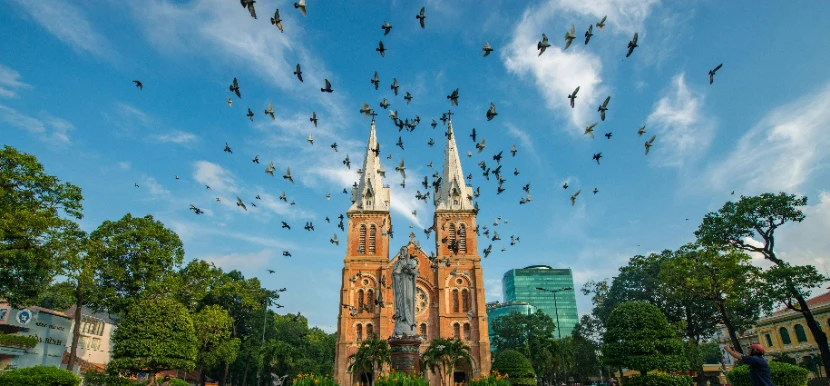
The land of Sai Gon originally belonged to Prey Nokor - Cambodia, meaning "city in the forest," which at that time was a swampy area crisscrossed with canals. A major turning event happened in 1698 when Lord Nguyen Huu Canh, under the orders of Lord Nguyen, surveyed the area and established Gia Dinh Citadel. This is considered the birthplace of Saigon for the Vietnamese people. From then on, migrants from the five provinces of Quang Nam (Vietnam) came to reclaim land and establish settlements, transforming the swampy area into prosperous villages. During the French colonial period from 1859, Saigon was completely re-planned according to Western urban styles and quickly became the "Pearl of the Far East." A series of iconic buildings were constructed, such as Notre Dame Cathedral (1880), the Central Post Office (1891), the City Theatre (1900), and Ben Thanh Market (1914). Between 1887 and 1901, Saigon was also the capital of the Indochina Federation, the most bustling city in Asia.
From 1954 to 1975, Saigon was the capital of the Republic of Vietnam, experiencing a period of great economic, cultural, and entertainment development. Catinat Street (now Dong Khoi Street) and Tu Do Street (now Nguyen Hue Street) became vibrant shopping and entertainment centers. Chợ Lớn Market has also become the largest Chinese commercial district in the South at the time. At 11:30 AM on April 30, 1975, tanks entered the Independence Palace, marking the moment of national reunification. On July 2, 1976, the National Assembly decided to rename Saigon - Gia Dinh City to Ho Chi Minh City in memory of President Ho Chi Minh. Although the administrative name has changed, for the people, "Saigon" remains the everyday name, containing irreplaceable feelings, memories, and identity of this city.
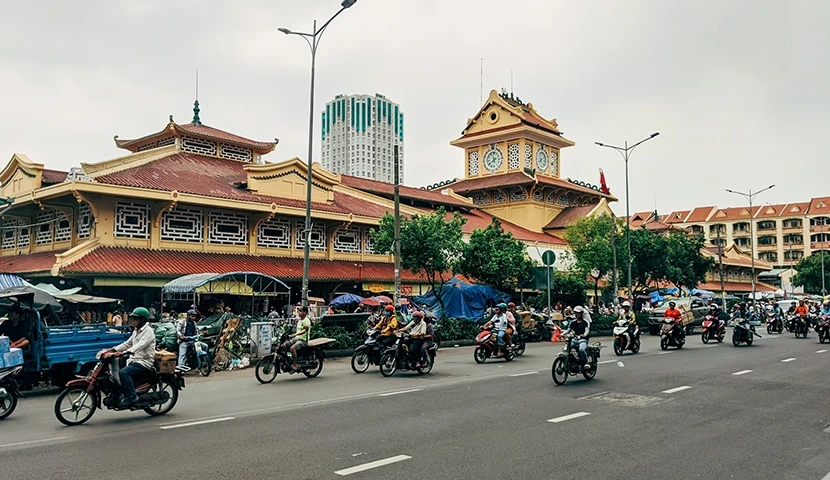
Ho Chi Minh City doesn't have a centuries-old Old Quarter, but each district has its own unique character. Visiting Saigon is like exploring many "small cities" within a large city.
District 1 is home to landmarks associated with important events. The Independence Palace is a historical witness to the end of the war, still preserving the cabinet meeting room, the President's office, the command bunker, and the rooftop with a helicopter. The War Museum displays many artifacts and authentic images about the consequences of war, offering insightful perspectives on the past. Further to the northwest are the Cu Chi Tunnels, a system of tunnels over 250km long, considered a military marvel showcasing the resilience and ingenuity of the Vietnamese people during wartime.
When it comes to French Architecture, District 1's center is also a place that is like an open-air museum of French architecture. Notre Dame Cathedral was built between 1877 and 1880 with all materials imported from France. The City Post Office, designed by Gustave Eiffel, retains its old telephone booths. The City Theatre resembles a miniature Opera House, while the Ho Chi Minh City People's Committee building stands out with its iconic clock tower. Ben Thanh Market is also located in this area, a nice shopping and dining destination for both locals and tourists.
Districts 5 and 6 - the Cultural Charm of Chợ Lớn Market - the Chinese Community in Vietnam, however, have a completely different character. This is the largest Chinese community in Vietnam with a history of over 300 years. The Chinese assembly halls, like Nghia An and the Thien Hau Temple, retain the vibrant and serene architecture of Chinese temples. Hai Thuong Lan Ong Street sells traditional Chinese medicine, and Luong Nhu Hoc Street is brightly lit with lanterns during the Mid-Autumn Festival. The Chinese cuisine here is also very distinctive, featuring dim sum, roast duck, and traditional desserts.
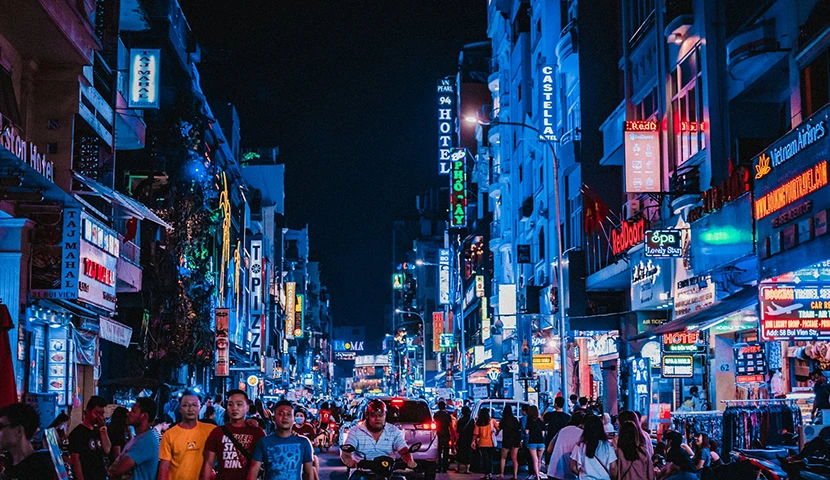
As the sun sets, Saigon transforms into a different rhythm of life. Nguyen Hue pedestrian street becomes an open space with water fountains, street performances, and bustling crowds. Bui Vien Street, famous for its lively atmosphere, sidewalk beer stalls, live music, and a blend of many cultures, is another highlight. High-rise buildings like Landmark 81 in Binh Thanh offer panoramic views of the city at night, while rooftop bars are popular spots for those seeking to admire Saigon from above.
When talking about a very green Saigon, one should mention Can Gio, the only district with a coastline. The Rung Sac Biosphere Reserve, recognized by UNESCO, boasts a unique mangrove ecosystem. Monkey Island is a popular destination, and Hang Duong Market is famous for its fresh seafood. This rare green space helps balance the city's hectic urban life.
If there's one reason to love Saigon, it's the food. Unlike the light and delicate flavors of the North, Saigon food is sweeter and richer. The sweetness isn't overpowering, but rather a gentle sweetness from the bone broth, the sweet fish sauce, or the coconut milk. Every dish has plenty of toppings and choices, and the vendors are incredibly accommodating - less spicy, more vegetables, more onions - whatever you like.
Saigon breakfasts often start with "cơm tấm" - special rice served with fragrant grilled pork ribs, "bì" - pork skin, "chả" - pork patties, eggs, and sweet fish sauce. Or Nam Vang noodle soup with noodles, clear broth, plenty of shrimp, and meat toppings. Saigon banh mi is crispy, filled with pate, meat, and pickles, and costs only 20,000 VND, enough to fill you up.
Evening is when the culinary soul truly shines. Snails restaurants are everywhere in the city, from creamy stir-fried snails with coconut milk to spicy or salty stir-fried fragrant snails. If you don't like snails, there's "phá lấu" - braised offal, or "bột chiên" - fried dough on the sidewalk, both cheap and fun.
And of course, there's the iced milk coffee - Saigon's "national drink." A large glass, lots of ice, strong, sweet, one sip and you're wide awake. From 15k VND at a roadside stall to 80k VND at a fancy cafe, coffee here isn't just for drinking; it's for chatting, working, and slowing down from the hustle and bustle of the city.
In short, eating in Saigon is about enjoying yourself. The sweetness, generous portions, and hours of sale until 1-2 am make this city truly a "sleepless paradise."
The most noticeable trait of the Saigonese people is their generosity. This generosity is evident in their voice, with their sweet letter "dạ" - yes, "nha, hen" - well responses, and in their way of treating others. They are ready to help strangers along the way, and if someone's vehicle breaks down in the street, someone will surely stop to help.
Secondly, they are straightforward. Saigonese people don't beat around the bush; if they like something, they say so, if not, they say it directly. This way of life makes the pace here very fast and practical. During the day, everyone is busy, and the streets are crowded from early morning. But at night, they let loose: late-night meals, coffee, strolling around. Saigon rarely sleeps; the lights are still on until 11 or 12 midnight.
It is this generosity and straightforwardness that create the spirit of working hard and playing hard – the very essence of this city.
As the largest city of Vietnam, it is quite easy to get to Ho Chi Minh thanks to its diverse transportation system: airplanes, trains, ferries, and buses.
In terms of air travel, all domestic airlines have daily direct flights to Tan Son Nhat Airport. This is the airport with the highest frequency in terms of domestic flights in Vietnam. Round-trip tickets from Ho Chi Minh City to other provinces usually range from 2 to 4 million VND.
Tan Son Nhat Airport is located in Tan Binh District, about 8 km from District 1, and about 5 km from Districts 3 and Phu Nhuan. It costs around 250,000 VND to take a traditional taxi from the airport to the city center. Using ride-hailing services outside of peak hours is also a good option. Tip: Booking a ride at the international terminal is faster than at the domestic terminal.
For train travel, there is the Thong Nhat line, running from the north to the south, which takes approximately 30 hours, and stops at major stations such as Vinh, Dong Hoi, Hue, and Da Nang. By buying tickets online, you could select your departure station, arrival station, and seat or sleeper berth type, depending on your needs.
Related articles: