Ciao splendida Sole !
Abbiamo visionato il sito e l abbiamo trovato fatto molto bene e interessante, riteniamo che sia di facile comprensione e con tutte le...
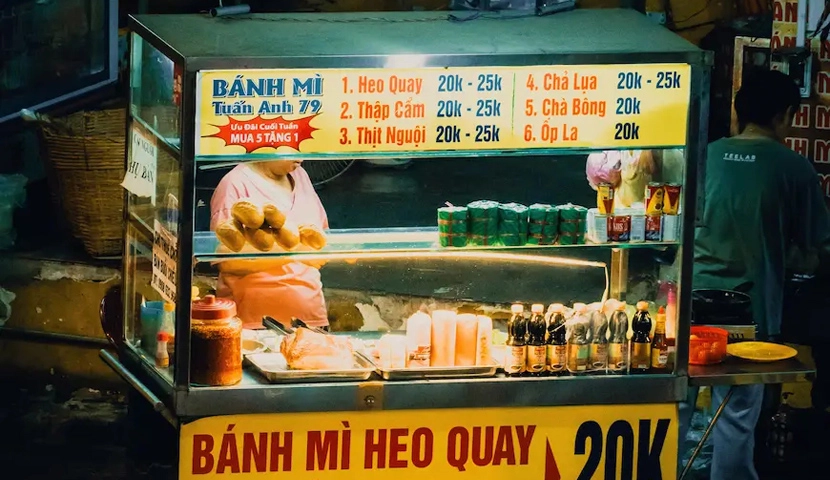
The Vietnamese “bánh mì” is more than just a sandwich: it’s a journey through flavors and memories. From the French baguette to the crispy Vietnamese take on it, every bite encapsulates history, cultural exchange, and identity. With paté, mayonnaise, sweet-and-sour vegetables, aromatic herbs, meat, and spicy sauce, the “bánh mì” showcases Vietnam’s ability to transform foreign influences into a heritage all its own. From Saigon to Hanoi, from bustling streets to neighborhood shops, this symbol of street food is an invitation to discover a living heritage, built on balance, creativity, and conviviality.
1. A Taste of Humanity’s Intangible Cultural Heritage: Vietnamese “Bánh mì”
2. What do tourists say?
3. More than just a dish
4. A small bite, a great story of Vietnam
5:30 a.m. Saigon hasn’t quite woken up yet. The streets are shrouded in a thin veil of fog; the yellowish glow of streetlights illuminates sidewalks still damp with the night’s dew. But on a familiar street corner, you can already hear the ticking of the oven, the clatter of knives on a wooden cutting board, and the hustle and bustle of carts being prepared.
And then,there’s that scent.
The scent of freshly baked “bánh mì” warm, intense, with the aroma of golden-brown baked flour, mingled with creamy pâté, meat sizzling over hot coals, fresh cilantro, and slightly tart sweet-and-sour vegetables. It all blends into an unmistakable aroma: the scent of a Vietnamese morning.
You’re there, in the midst of the hurried crowd, and you know you have to stop. Not because you’re hungry. But because that scent calls to you like an irresistible invitation.
The Moment of Waiting
The “bánh mì” vendor is often a woman with quick hands and a kind smile. She only needs to look at you once, and she may already remember what you like: a little pâté, no cilantro, extra chili. If it’s your first time, she’ll quickly ask, in a friendly tone, “Do you prefer it with cilantro? Would you like to add chili?” All you have to do is nod or shake your head. That’s all it takes.
Then it begins.
The “bánh mì” is taken out of the oven, still warm. He places it on a wooden cutting board and cuts a slit along the length of the bread. The knife slicing through the crispy crust makes a “crunch”-the sound of freshness. Steam rises from inside; the crumb is snow-white, soft, and light, as if waiting to be filled.
He spreads the pâté-a thin, even, velvety layer. Then comes the butter or mayonnaise, depending on the shop. Next is the sauce: it’s a family sauce that each shop prepares using its own recipe, often guarded with care. It’s a little secret passed down through generations, and it’s also the reason why every bánh mì stand has an unforgettable flavor.
Next comes the meat. Layers of cured meats and cold cuts, thinly sliced “chả lụa” (a Vietnamese pork sausage), golden-brown grilled meat, or pieces of crispy roast pork. She arranges them in the bread as if she were composing a work of art: not too much, not too little-just enough so that every bite has the right flavor.
Then the vegetables. Thinly sliced cucumber, bright green. Cilantro-the distinctive aromatic herb that Vietnamese people love and that foreign tourists either adore or haven’t yet learned to appreciate. Sweet-and-sour carrots and white radishes, crisp, slightly tart, with a sweet aftertaste. And a few slices of fresh red chili pepper, if you want it spicy.
Finally, he wraps the “bánh mì” in an old sheet of newspaper or a plastic bag and hands it to you with a smile. The “bánh mì” nestles comfortably in the palm of your hand-warm, heavy, and fragrant. And you realize that even this moment of waiting-a few minutes beside a small stand-is already part of the experience.
The First Bite
Bring the “bánh mì” to your mouth. Take a bite.
A “crack” echoes: the crispy crust breaks in your mouth, releasing warmth and aroma. Immediately after comes the soft, fluffy, incredibly light crumb, soaked in sauce and pâté. Then the meat: flavorful, rich, and so tender it melts in your mouth. Then the vegetables: fresh, crisp. Then the sweet-and-sour vegetables: slightly tart, with a sweet aftertaste, balancing the richness. Then the chili pepper: spicy and intense, exploding on the tip of your tongue.
It all happens in a matter of seconds. But you perceive every layer, every nuance of flavor. Rich, salty, sour, spicy, sweet, fresh. This harmony isn’t accidental. It’s the result of more than a century of refinement, creativity, and a love for cooking.
For many tourists, this is the moment they realize why the Vietnamese “bánh mì” is counted among the best street foods in the world. It isn’t sophisticated. It isn’t expensive. But it’s incredibly balanced: between crunchy and soft, between rich and light, between familiar and new.
Chew slowly. You don’t want to swallow. You want to hold onto this moment a little longer. And perhaps you’ll remember that first “bánh mì” forever, as the first greeting Vietnam ever gave you.
The Story Behind the “Bánh Mì”
But the “bánh mì” you’re holding isn’t just a food. It’s a story that spans more than a century.
The story begins in the second half of the 19th century, when the French arrived in Vietnam and brought the baguette with them. At first, it was a Western food: long, hard, dry, and difficult for the Asian palate to eat. The Vietnamese viewed it with curiosity and, little by little, learned how to make it. They kneaded the dough, baked the bread, and realized: that bread could be transformed.
They made it smaller. They thinned the crust. They lightened the crumb. They transformed it into a bread that was easier to eat, easier to pair with other foods, and suited to the hot, humid climate and the Vietnamese way of life.
Then, in 1958, the “Bánh Mì Hòa Mã” shop opened in Saigon. It was a turning point. People began putting cold cuts, sliced meats, and pâté inside the bread. The “bánh mì” was no longer “Western bread.” It became a Vietnamese dish: practical, flavorful, and rich in identity.
Since then, “bánh mì” has spread throughout the country. Every region has its own version. Every shop has its own secret. And every Vietnamese person has a personal memory tied to “bánh mì.”
“Bánh mì” in the Memories of the Vietnamese
There are memories you can never forget.
It’s the “bánh mì” your mother used to buy for you before you went to school, when you were a first-grader, your hands still trembling as you held that warm bread, eating as you walked, until the crumbs fell onto your uniform.
It’s the “bánh mì” you’d grab on the run on your way to work, by the time you were an adult, when the hectic pace of life was overwhelming you, and that sandwich was the only breakfast you could manage.
It’s the “bánh mì” that you and your loved one shared, sitting on the sidewalk amid the noise of traffic, and you realized that sometimes happiness is simply a good “bánh mì” and someone you love.
It’s the “bánh mì” you ate on a street corner in Hanoi on a cold winter morning, when you felt the warmth of the bread seep into your frozen hands.
“Bánh mì” isn’t just food. It’s part of your memory. It’s part of your childhood. It’s part of your homeland.
The Variety of Vietnamese “Bánh Mì” - Vietnamese Street Food
As you travel from north to south, you’ll notice that “bánh mì” changes.
In Hanoi, the Hanoi-style “bánh mì” is usually simpler: pâté, cold cuts, a few slices of cucumber, and a bit of cilantro. The crust is thin, crispy, and light. The flavor is delicate and refined.
In Hai Phong, the “bánh mì que” is small and long; it’s eaten with creamy, fragrant pâté and spicy chili sauce. You could eat ten of them without feeling full.
In Hoi An, the “bánh mì” is famous for the way it combines ingredients and its signature sauce. Foreign tourists stand in long lines to try it.
In Saigon, the “bánh mì” is the most lavish: cold cuts, pâté, chả lụa, grilled meat, roast pork, eggs, lemongrass chicken, fish, and even tofu for the vegetarian version. Every shop has its own recipe, its own soul.
In the Mekong Delta, “bánh mì” can be served with coconut water, or transformed into “bánh mì chảo,” served in a small cast-iron skillet with eggs, pâté, meat, and bread for dipping.
This variety shows that “bánh mì” isn’t a fixed recipe. It’s an idea. A foundation. A way for Vietnamese people to express their creativity.
The Art of the “Bánh Mì” Vendors
Behind every “bánh mì” there is a vendor. And behind every vendor there is a story.
Some have been selling “bánh mì” for 30 years. They started out as young people, when their cart was new, when the street was still empty. They’ve watched generations of customers grow up, go to school, get jobs, and start families. They remember everyone’s face. They remember everyone’s preferences. “This gentleman doesn’t eat cilantro. This lady wants more chili. This young man prefers just a little pâté.”
Some “bánh mì” vendors are famous for their family sauce-a recipe passed down from their grandmother that no one outside the family knows. Others are famous for their homemade pâté: creamy, velvety, and intensely fragrant. Still others for their grilled meat: golden, fragrant, and so tender it melts in your mouth.
Every vendor is an artist. Every “bánh mì” is a work of art. And every morning they start all over again: with the oven, the wooden cutting board, their quick hands, and a kind smile.
“Bánh mì” Takes the World by Storm
Today, “bánh mì” is no longer found only in Vietnam.
In Paris, London, Sydney, New York, and Toronto, you can find shops selling Vietnamese “bánh mì.” Some stick to the traditional style. Others adapt the ingredients to local tastes. But wherever you go, “bánh mì” is recognizable by its crispy crust, hearty filling, and combination of meat, aromatic herbs, and sweet-and-sour vegetables.
In 2011, the word “banh mi” was added to the Oxford English Dictionary. In June 2025, CNN Travel included the Vietnamese “bánh mì” on its list of the 25 best sandwiches in the world. In November 2025, CNN Travel then ranked it second on that list.
But the success of “bánh mì” isn’t just about rankings. What matters most is that this dish retains its place in the daily lives of the Vietnamese. Even when it’s served in foreign restaurants or featured in articles on world cuisine, “bánh mì” always comes down to simple things: freshly baked bread, carefully prepared ingredients, and the vendor’s nimble hands.
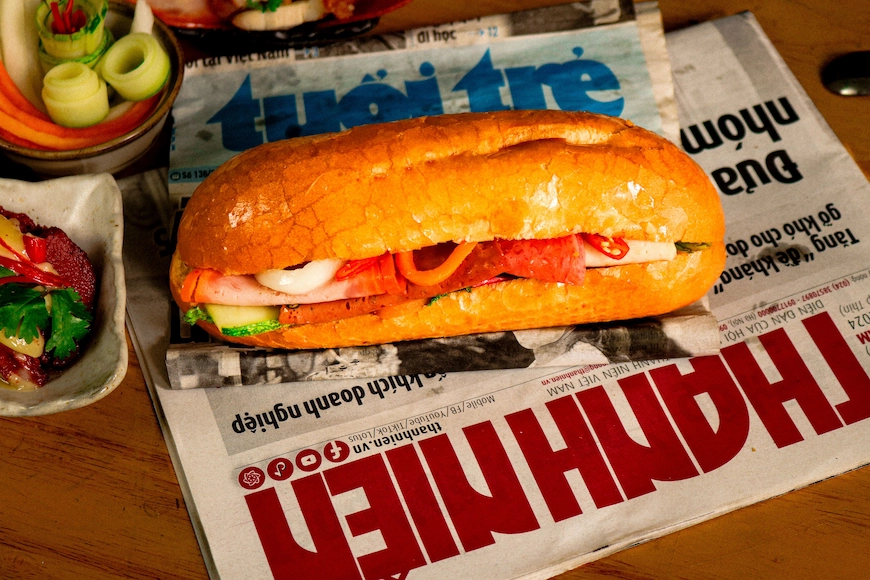
Foreign tourists are often drawn to the way “bánh mì” combines so many flavors in a small roll.
They notice the crispiness of the crust, the creaminess of the pâté, the rich flavor of the meat, and the freshness of the vegetables. In particular, the sweet-and-sour vegetables and aromatic herbs create a balance that not all sandwiches have.
A Swedish tourist says, “The Vietnamese bánh mì has a much more intense flavor than the sandwiches or baguettes back home. And it only costs 35,000 đồng!”
A Dutch tourist says, “In the Netherlands, we eat soft bread with peanut butter or cheese. But this is completely different: crispy, fresh, and full of flavor.”
A French tourist says: “Nothing compares to the original.”
Many tourists love to try different fillings while traveling to discover the variety of this dish. However, cilantro and chili peppers may not be to everyone’s taste, so you can often ask to have the ingredients adjusted to your liking.
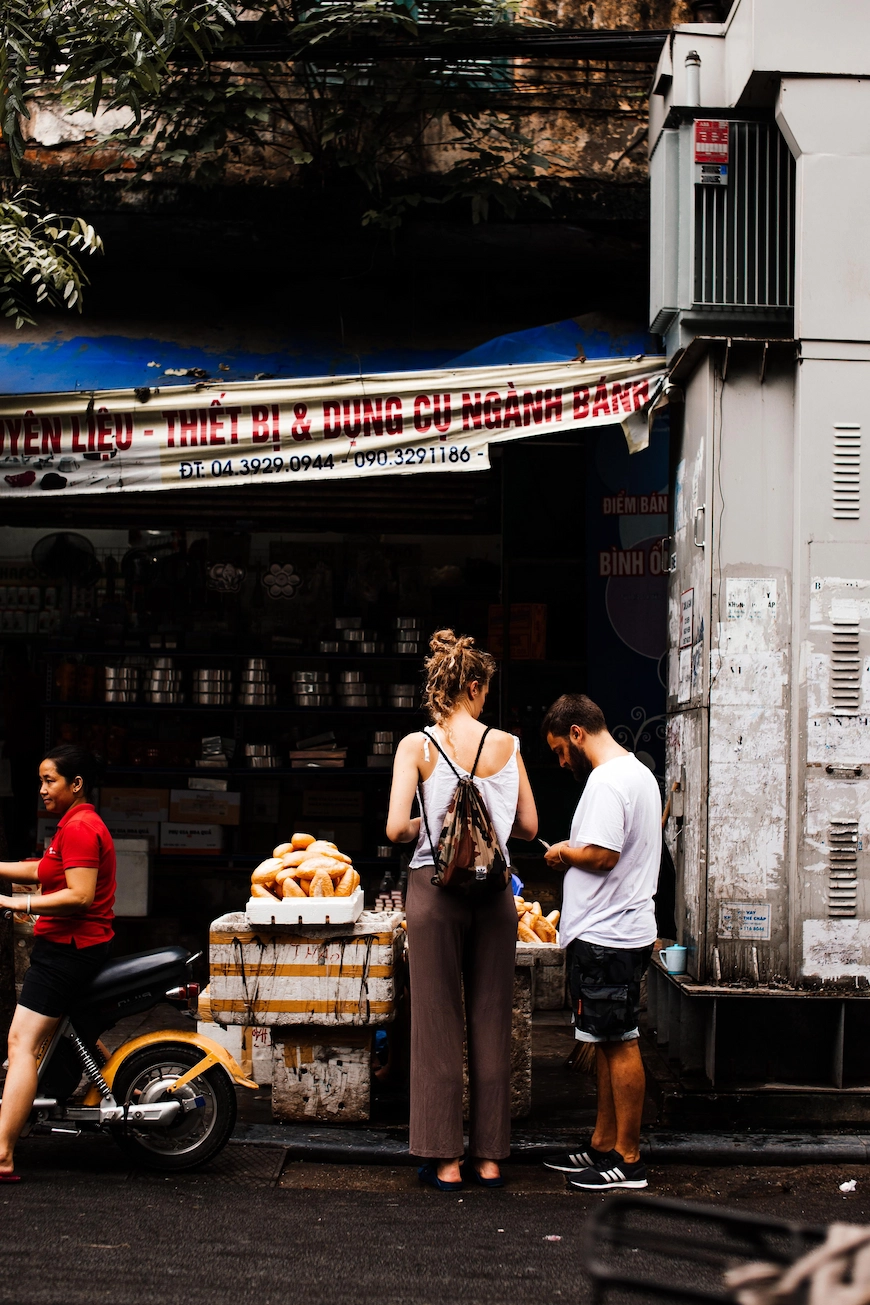
The Vietnamese “bánh mì” is special because of its blend of history, creativity, and everyday life.
Starting with a French-influenced bread, the Vietnamese have transformed it into a dish with its own distinct identity. The crispy crust, varied fillings, fresh aromatic herbs, and harmonious blend of flavors create an unmistakable charm.
But above all, the “bánh mì” also speaks to the Vietnamese people’s ability to embrace and transform culture. It speaks of streets teeming with life. Of small traditions that have existed for generations.
Perhaps the reason the “bánh mì” is so beloved lies not only in the fact that it’s delicious or convenient. It also lies in the fact that every “bánh mì” can carry its own unique story.
It could be the “bánh mì” a mother buys for her child before school. An office worker’s quick breakfast. Or the dish a tourist will remember forever after their first trip to Vietnam.
Wherever and however you enjoy it, “bánh mì” carries with it a taste of Vietnam: simple, rich, creative, and always close to everyone’s heart.
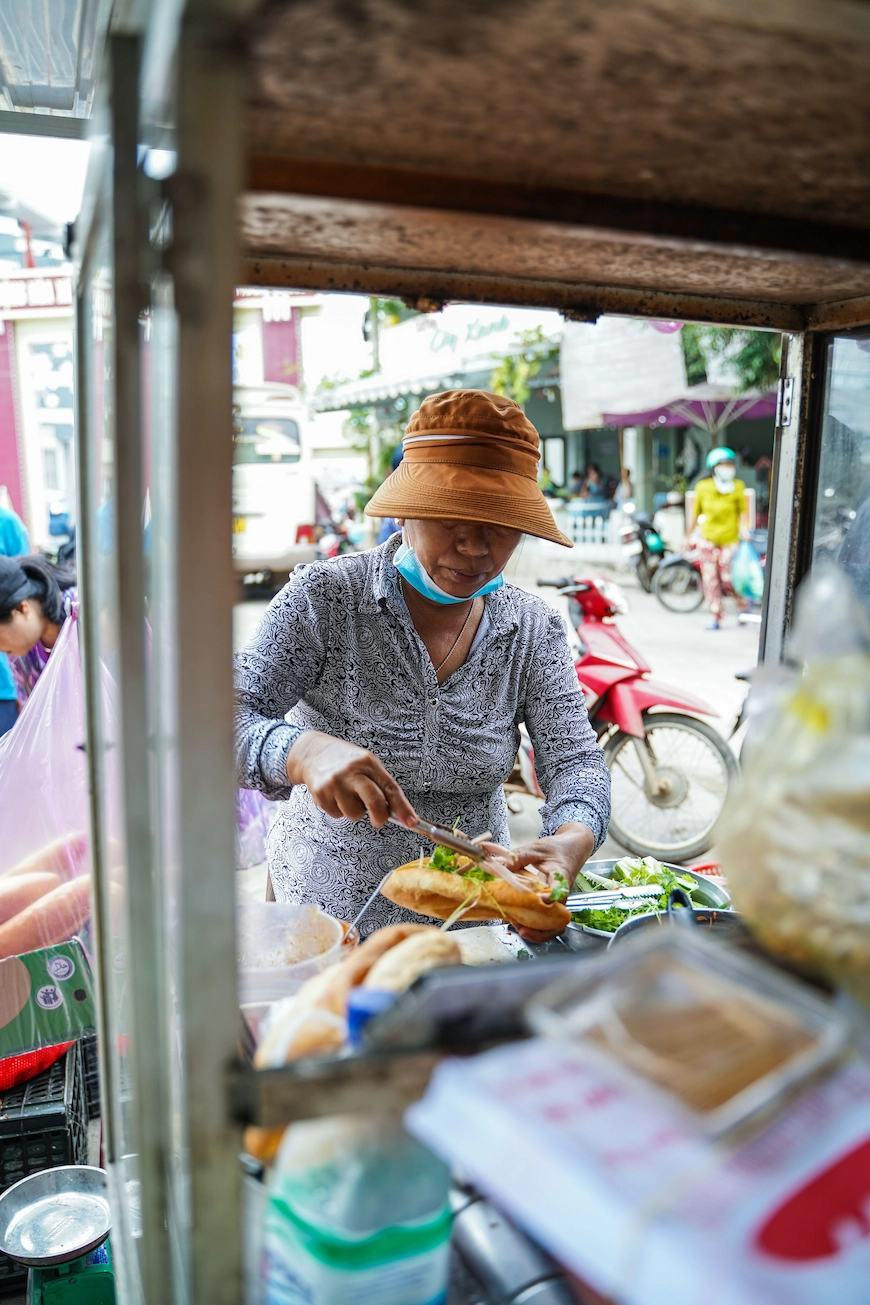
The Vietnamese “bánh mì” is much more than just a sandwich. Born from the fusion of French bread-making traditions and the creativity of Vietnamese cuisine, it has become a symbol of the country’s street food.
Each region offers its own take on it, every bakery adds a personal touch, and every filling reveals something about local customs. The crispy crust, pâté, meats, aromatic herbs, and sweet-and-sour vegetables create a balance of flavors that makes this sandwich instantly recognizable.
While traveling in Vietnam, tasting a freshly made “bánh mì” is a simple way to get a feel for the country’s daily life: stop at a street stall, watch the vendor at work, and discover flavors that vary from city to city.
Because sometimes, to get to know a culture, you don’t need to sit down at a fancy restaurant. All it takes is a small, freshly made sandwich and the curiosity to discover what’s hidden inside.
Related articles:
>> Top 10 Vietnamese Dishes You Must Try
>> Top 10 dishes to taste in Vietnam
>> Vietnamese traditional dishes