






Ciao splendida Sole !
Abbiamo visionato il sito e l abbiamo trovato fatto molto bene e interessante, riteniamo che sia di facile comprensione e con tutte le...
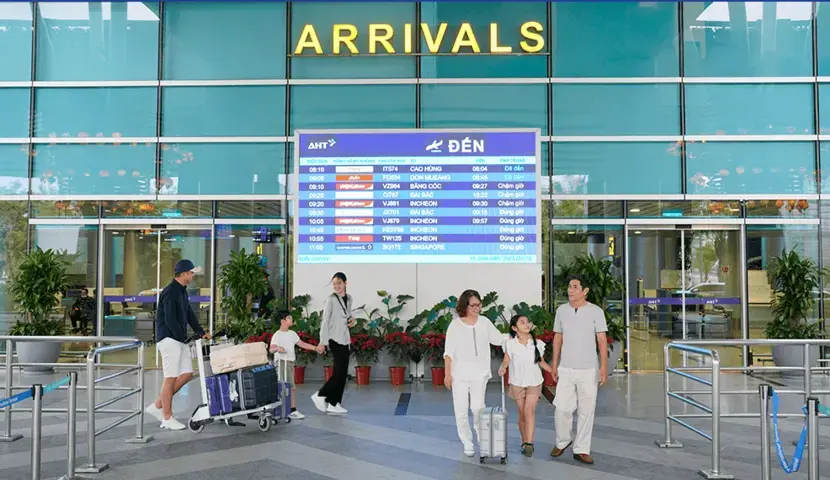
Arriving in Vietnam is straightforward for most travellers - but immigration queues, especially at Hanoi's Noi Bai and Ho Chi Minh City's Tan Son Nhat airports, can run long during peak hours. A little preparation before you fly can shave significant time off the process and get you out of the terminal and into the city considerably faster. None of it is complicated. Here are some tips to make your entry into Vietnam smooth and speedy.
How to speed the Vietnam entry procedure?
1. Get Your Visa Sorted Well Before You Travel
2. Have Your Documents Ready Before You Join the Queue
3. Fill In Your Entry Form on the Plane
4. Choose the Right Queue
5. Arrive at Off-Peak Times When You Can
6. Use the Baggage Claim Wait Productively
7. At Land Borders, Timing Matters More
One of the most avoidable causes of delays at immigration is incomplete or incorrect visa documentation. If your e-visa has a name that does not exactly match your passport, or lists the wrong entry port, the officer will need to resolve it - and that takes time, sometimes a lot of it. In more serious cases of discrepancy, you may be asked to step aside while the issue is reviewed, which can mean missing onward connections or waiting an extended period while other passengers clear the hall.
Apply for your e-visa at least a week before departure. Check that your name is entered exactly as it appears in your passport, including middle names and hyphens. Make sure the entry port on your application matches the airport or border crossing you are actually arriving at. If you are flying into Da Nang, your e-visa must list Da Nang - not Hanoi, not Ho Chi Minh City. None of this takes long to verify before you submit, and getting it right means your documents clear the counter without any back-and-forth.
If your travel plans change after you have applied and your entry point shifts, submit a new application rather than hoping the discrepancy will be overlooked. It usually is not.
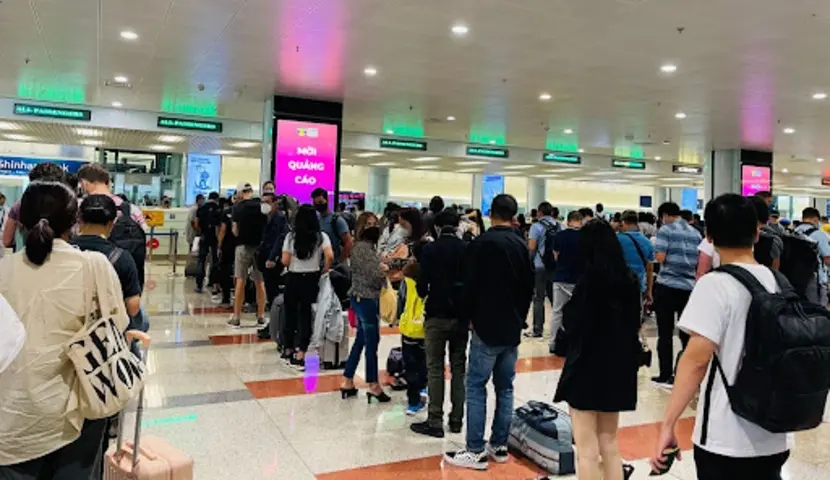
Vietnam's immigration counters are not the place to be opening email attachments or waiting for a PDF to load, especially if your internet connection isn't guaranteed. Often, the biggest cause of slow-moving lines is travellers scrambling for paperwork at the counter, so have everything printed or saved offline before you queue: your passport, a printed copy of your e-visa or visa approval letter, your completed entry declaration form, and any accommodation details the officer may ask for.
A small travel folder or document wallet keeps all of this together and saves you from digging through a bag while a queue builds behind you. Presenting your documents immediately, rather than fumbling with your phone, moves things along faster - for you and for everyone waiting behind you.
It is also worth keeping your accommodation details - even just the name and address of your first night's hotel - easily accessible. Immigration officers occasionally ask where you are staying, and having to search through your email for a booking confirmation at the counter is easily avoided.
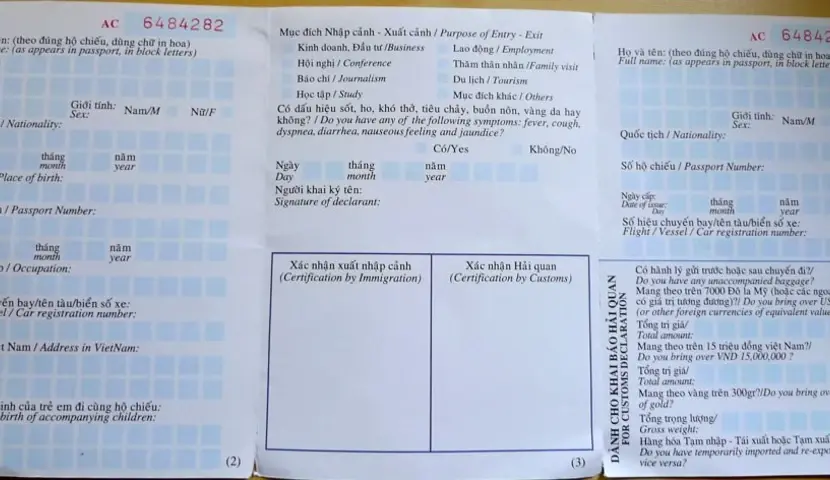
Vietnam requires arriving travellers to complete an entry declaration form. These are distributed on the plane and are also available at the airport, but filling one out at a desk in the terminal eats into time you could spend clearing immigration. Ask the cabin crew for one as soon as they are distributed, fill it in during the flight, and have it ready when you land.
If forms are not distributed on board - which sometimes happens on shorter regional flights - head straight to the form-filling area when you land and complete it there before joining the immigration queue. If you join the queue first and then realise you are missing the form, you would have to leave the line to obtain one. This means you have to start lining up again from the back, which is a hassle no one wants.
Most major Vietnamese airports have separate immigration lanes for different categories of traveller - Vietnamese citizens, diplomatic passport holders, and foreign visitors. Some airports also have dedicated e-visa lanes or faster-processing counters at certain times of day. Take a moment when you enter the hall to read the signs rather than joining the first queue you see. A less obvious lane that is moving faster is worth the extra thirty seconds it takes to find.
Queue length is not always the best indicator of speed. A shorter queue staffed by a slower or more thorough officer can take longer than a longer queue moving efficiently. If you have the chance, watch how quickly people are being processed at each counter before you commit to a line.
Immigration queues at Vietnamese airports tend to peak when multiple international flights land within a short window - typically mid-morning and early evening at the major hubs. Noi Bai and Tan Son Nhat both handle large volumes of international arrivals, and when several wide-body aircraft land around the same time, the immigration hall fills quickly regardless of how well-staffed it is.
If you have flexibility in your flight timing, arriving late at night or in the early hours often means a noticeably shorter wait. Red-eye flights are rarely anyone's preference, but the trade-off in immigration time can be significant - the difference between a ten-minute clearance and a ninety-minute queue is not unusual at the busiest periods. This is not always within your control, but it is worth factoring in when you have a genuine choice between similar flights at similar prices.
If you have checked luggage, you will spend time at baggage reclaim after clearing immigration so use any waiting time productively. Double-check your customs declaration if one is required. Confirm your onward transport arrangements - whether that is a pre-booked taxi, an airport shuttle, or a ride-hailing app. Make sure your phone is charged and your local SIM or roaming data is active so you are not sorting out connectivity in the arrivals hall while a driver waits outside.
Arriving at the exit ready to move - with bags collected, declaration submitted, and transport confirmed - means you are through the terminal and on your way without the stop-start delays that add unnecessary time at the end of a long flight.
Land border crossings between Vietnam and Cambodia, Laos, or China vary considerably in how busy they are and how efficiently they run. The main crossings - Moc Bai, Lao Bao, and Huu Nghi among them - can back up significantly on weekends, public holidays, and during the morning rush when local commuters and freight traffic are heaviest. Crossing mid-week during mid-morning tends to move faster than early morning or late afternoon when traffic peaks.
The document preparation advice above applies just as much at land borders, arguably more so. Processing at some land crossings is slower than at airports, and officers at smaller posts may scrutinise documents more carefully. Have everything printed, organised, and ready before you approach the booth.
Also confirm in advance that your e-visa is valid at your specific crossing - not all land borders are included on the approved list, and finding this out at the gate is a far worse problem than a long queue. The official e-visa portal lists approved entry points, and it takes two minutes to verify before you travel.
Most of the time lost at Vietnamese immigration comes down to avoidable preparation gaps - missing printouts, incorrect visa details, the wrong queue, or simply not knowing what to expect on the other side of the gate. The steps above are not complicated or time-consuming to follow. Sort your documents before you fly, print what needs printing, fill in your forms on the plane, and give yourself a moment in the arrivals hall to find the right lane. These steps could be the difference between an hour of frustrating waiting and a ten-minute breeze through immigration - leaving you more time for exploring Vietnam to your heart’s content.
Related articles: