
Ciao splendida Sole !
Abbiamo visionato il sito e l abbiamo trovato fatto molto bene e interessante, riteniamo che sia di facile comprensione e con tutte le...
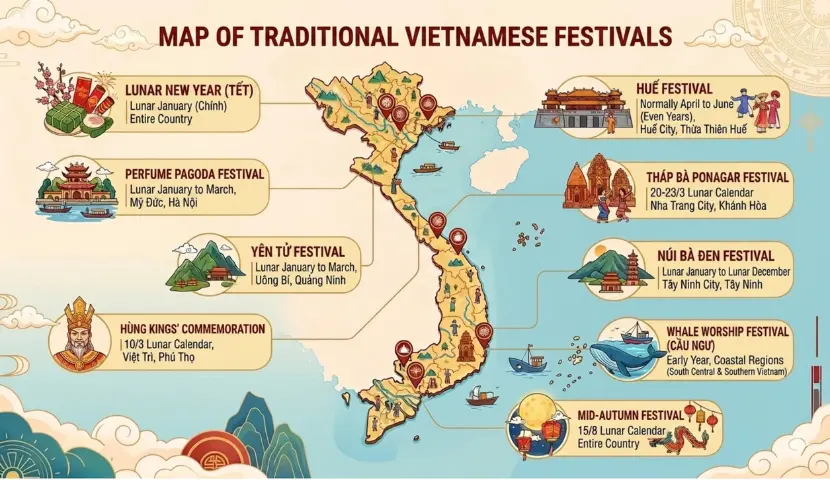
As far as you know, if you’ve ever traveled abroad, you agree with me on one point: we observe some of the highest views of the mountains, but regarding the people and the mood of your festivities, we stay right in our hearts as much. Mountains, rivers, and coastlines give incredible beauty, and it is in people and culture that you find a kind of spirit that gives a location its nature. Vietnam has many festivals, from the stony forests out there to the lush plains, from the hot streets of Vietnam to the deep countryside. To make sure you don’t miss these experiences, imagine a “festival journey” through Vietnam - a cultural map listing all the most meaningful celebrations you've encountered along the way. So let us explore Vietnam’s traditional festivals and discover how many you have already “checked in” on your own travel list.
Traditional Vietnam Festivals
1. Lunar New Year - The Heartbeat of Every Vietnamese Family
2. Hung Kings Commemoration Day - Honoring the Roots
3. Huong Pagoda Festival - A Spiritual Escape into Nature
4. Yen Tu Festival - A Journey of Enlightenment
5. Hue Festival - A Grand Cultural Celebration
6. Ponagar Tower Festival - A Harmony of Cultures
7. Whale Worship Festival - Life by the Sea
8. Mid-Autumn Festival - A Celebration of Family and Childhood
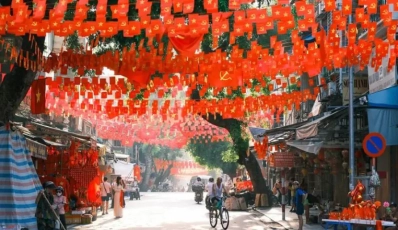
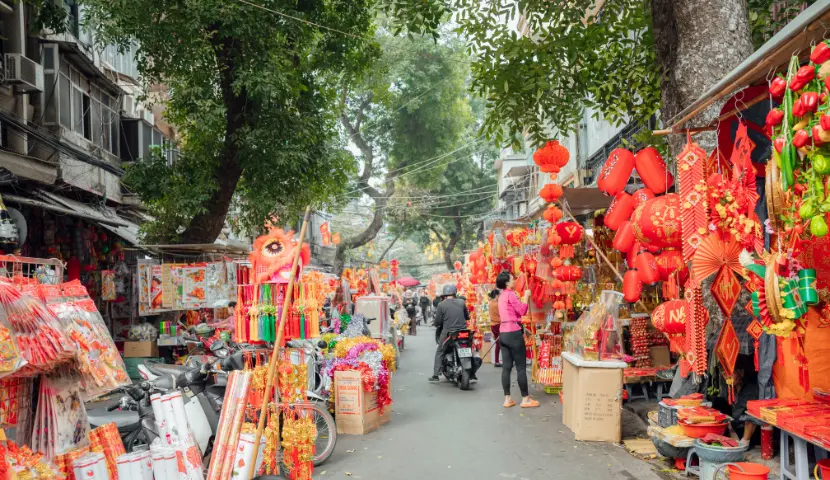
No discussion about Vietnamese festivals would be complete without mentioning the Lunar New Year. This event is not only a holiday; it is the Vietnamese culture’s way of living. The festival marks the beginning of the Lunar Year; it’s deeply cultural, grounded in the wet-rice farming tradition. People gather to thank the heavens for the crops of the past year, pursuing a greater harvest in the future. But even more than that, this special time is about bringing people back home after all those years of travels for millions of Vietnamese. The celebration begins early on the 23rd day of the final lunar month, when families can send offerings to the Land Genies and Kitchen Gods. With preparation, there is cleaning, decoration, and cooking to be done. The holiday piques every sense: the smell of incense fills your breath; yellow apricot blossoms bloom in the South, and pink peach blossoms bloom in the North, along with red envelopes filled with lucky money. But it is also about something more than pleasure, gratitude, and hope for the future.
The Vietnamese people cherish this old tradition: “wherever you are, remember the tenth day of the third lunar month.” The Founding Kings, mythical beings that are the roots of the country, are celebrated on this day. Not only is there an appropriate ceremony and memories people gather for, but visitors will also see a long line of pilgrims coming to Nghia Linh Mountain to offer incense. Aside from formal rituals, which occur in other places, there are lively cultural activities, such as banh chung banh day and traditional folk singing. This festival is a perfect mix of culture, spirituality, and historical identity; cultural context should remain front and center in Vietnam.
The Perfume Pagoda Festival goes from the sixth day of the first lunar month to the last day of the third lunar month; it is the longest festival in Vietnam - hence one might say it is the longest festival of Vietnam. A couple of hundred passengers take a mellow boat ride on the Yen Stream, observing limestone mountains and green foliage under the cloud cover. After the boat ride to Huong Tich Cave, sometimes called "The Most Beautiful Cave under the Southern Sky," people can hike or take the cable car to get there. When there is fog, the smell of incense, and the silence of the air, it feels so spiritual that they know they’ve got to be there to pray
The Yen Tu Sacred Buddhist Festival is usually held from the tenth day of the first lunar month to the end of the third lunar month. Due to its importance and unique features, it is among Vietnam's biggest Buddhist celebrations. It offers such traditional ceremonies as offering incense and praying for peace; it requires religious observances to maintain calm, alongside meditation. Travelling on the last trip, entering and exiting the mountain with one eye fixed on the horizon, one first sees the magnificent cloud-shrouded peaks that are impossible to miss, accompanied by beautiful white clouds as you descend. It is one of the biggest and most important festivals, allowing participants to feel inner peace. There’s a sense of family spirit and dedication to the land that becomes their own.
In Central Vietnam, for the Hue Festival, it’s different as the theme and culture represent the entire country. This festival is usually held every two years. Because it's an international festival that celebrates history and creativity in one place, it differs from folk festivals held at regional levels. The festival occurs in the ancient imperial palaces, which served as the capital, and features royal events, such as the Heaven-Worshiping Sacrifice and Imperial Court ceremonies. It is a place for visitors to enjoy traditional performances, featuring the iconic Vietnamese tunic, royal court music, and food, celebrating in a holistic sense. The streets, historical buildings, and riverbanks overflow with exhibits and art installations, presenting Vietnam's royal history in a new, active, and lively way.
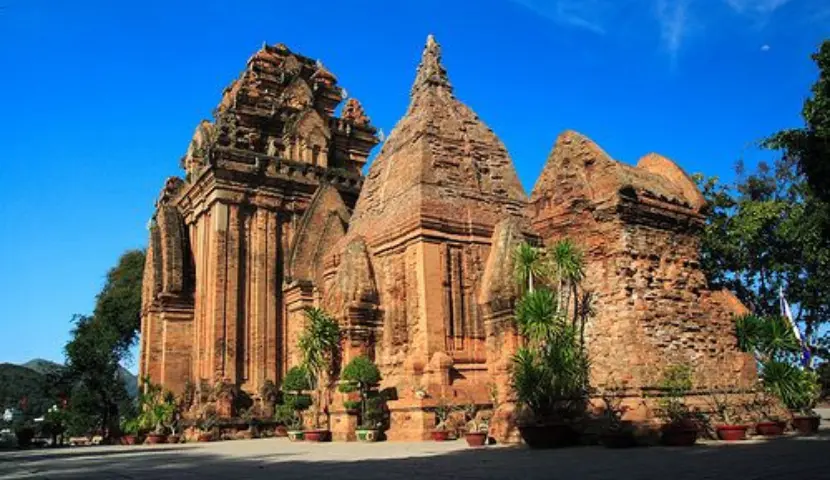
If you come to Nha Trang coastal city in late March according to the lunar calendar, you will have an opportunity to experience one of the most important festivals of this beautiful city. This main festival of the ethnic Cham community, held annually from the twentieth to the twenty-third day of the third lunar month, honors The Holy Mother of the Realm or Lady Ponagar, who taught people agriculture and weaving. This unique cultural and religious festival of the people of Central Vietnam features activities such as the sacred statue-bathing ritual, the ceremonial robe-changing, incense offerings, and prayers for peace. Besides the solemn rituals, the festival also includes traditional folk performances throughout the day, and colorful food stalls, creating a festival that reflects the cultural exchange between Cham and Vietnamese cultures, expressing gratitude and respect for their origins.
Fishing towns along Vietnam’s coast celebrate the Whale Worshiping Festival, considered a vital and spiritual occasion. Fishermen believe whales support them at sea, helping them through storms and keeping them safe. Thus, the celebration focuses on these “Bả trạo”, calm waters, and abundant catches. With drums, processions, and traditional performers, this festival is both booming and passionate. Boat racing and traditional coastal folk singing exemplify the resilience of coastal communities.
Finally, the Full Moon Festival, held on the fifteenth day of the eighth lunar month, is one of the most beloved celebrations in Vietnam. It is the time for celebration - the Mid-Autumn Festival on the fifteenth of the eighth lunar month - where vibrant lantern parades, traditional lion dances, and sweet mooncakes are common sights. This special night also engages children at home; by the end of the day, children are surrounded by family members sharing food, cooking together, taking pictures, and telling stories. The festival is all about happiness; the simple yet joyful aspects of life come to the fore
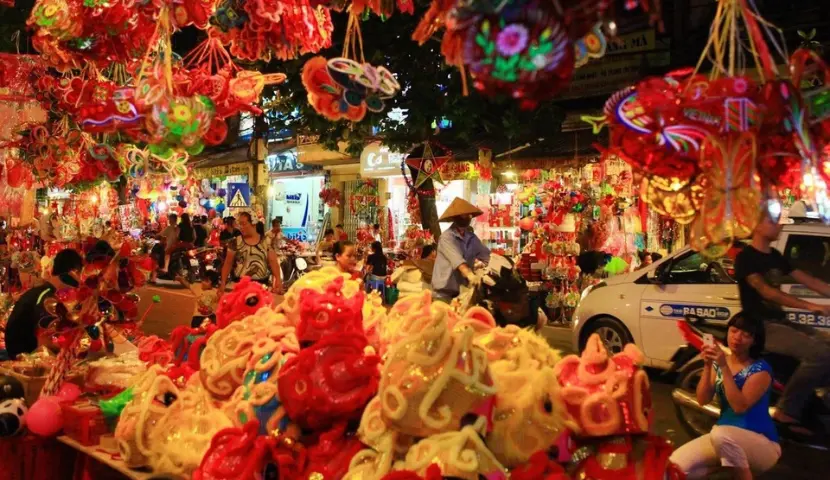
As you can see, each Vietnamese festival carries its own story, yet they all share common values: gratitude, unity, love for the homeland, and a desire for happiness. If you truly love travel, do not limit yourself to sightseeing and taking photos. Instead, plan your journey around festivals. By doing so, you will experience a more authentic, vibrant Vietnam - one filled with laughter, traditions, and human warmth. These festivals invite you not only to observe but to participate, to listen to ancient stories, and to connect with people on a deeper level. Hopefully, this journey through Vietnam’s festivals will inspire your next adventure. And who knows? The next time you return, it might not just be for the scenery - but for the unforgettable moments shared among the lively, colorful, and welcoming festival lands of Vietnam.
Related articles: