


Ciao splendida Sole !
Abbiamo visionato il sito e l abbiamo trovato fatto molto bene e interessante, riteniamo che sia di facile comprensione e con tutte le...
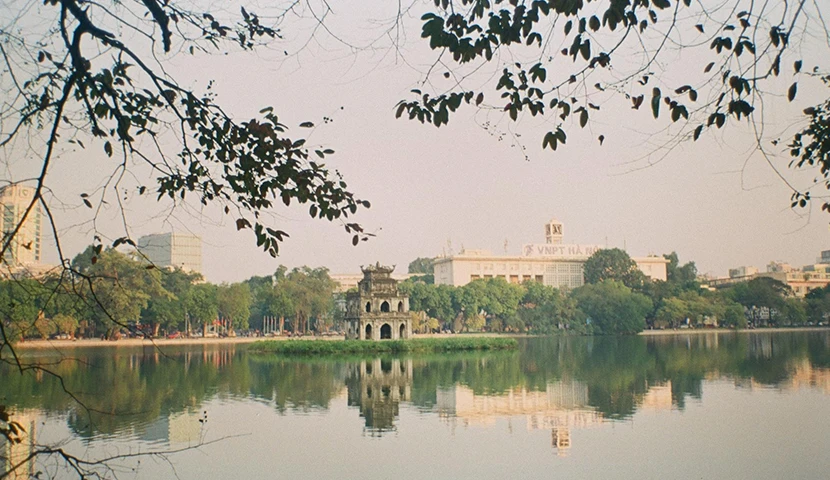
Hanoi is the capital of Vietnam. It is also the country's most important political, cultural, and educational city. Within the Red River Delta, Hanoi is approximately 3,360 km² and has over 8 million people, famous as the "city of rivers and lakes" because of the river Hồng, river Đuống, and over 100 lakes, such as lake “Hồ Tây” and lake “Hồ Gươm”. Unlike other big cities, Hanoi possesses a tranquil and elegant charm, intertwining the ancient and the modern. One can easily find the 36 Old Quarter streets standing alongside modern urban areas, or a sidewalk cafe next to a fancy shop. For visitors, Hanoi is a place to enjoy its depth of history, architecture, and cuisine.
1. History of Hanoi
2. Geographical location of Hanoi
3. Famous landmarks
4. Hanoi Culture
5. People & the rhythm of Hanoi
6. How to get to Hanoi
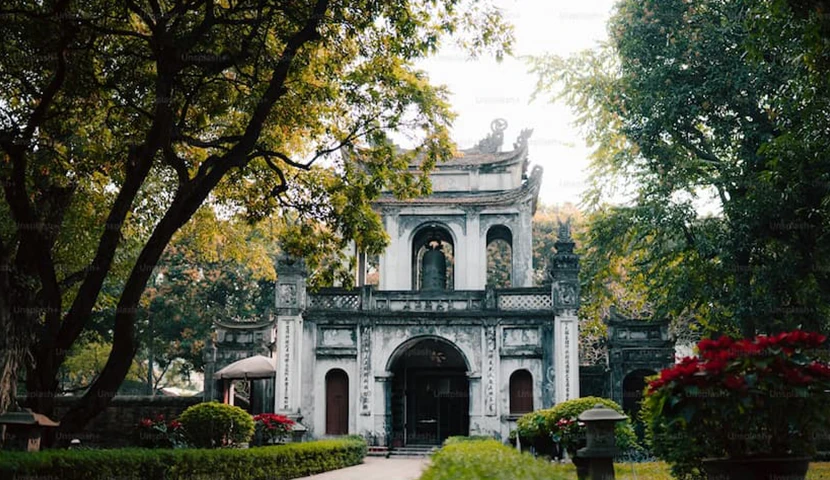
Van Mieu - Quoc Tu Giam
Hanoi has a very long history of over 1000 years as Vietnam’s capital. Each name, Thăng Long, Đông Đô, Đông Kinh, and Hà Nội, marks a memorial to a significant period in the past. Started as the ancient imperial, it was named Thăng Long - meaning “ascending dragon” by the King Lý Thái Tổ. Over the centuries, the name has changed to Đông Đô and Đông Kinh. In 1891, King Minh Mạng established Hanoi province, meaning "inside the river”, as it is between the River Hồng and the River Đáy.
In 1988, the French President established the city of Hanoi. Much of the structure and planning map of modern central Hanoi (especially the area south of Hoan Kiem Lake and the Ba Dinh area) was designed and planned by the French during the colonial period. Architecture was also strongly influenced by the Western style, but adapted to the city's weather. Some significant buildings are the Grand Opera House, the Presidential Palace, and the Long Bien Bridge. On September 2, 1945, at Ba Dinh Square, President Ho Chi Minh read the Declaration of Independence, giving birth to the Democratic Republic of Vietnam. Since then, Hanoi has been the capital of Vietnam.
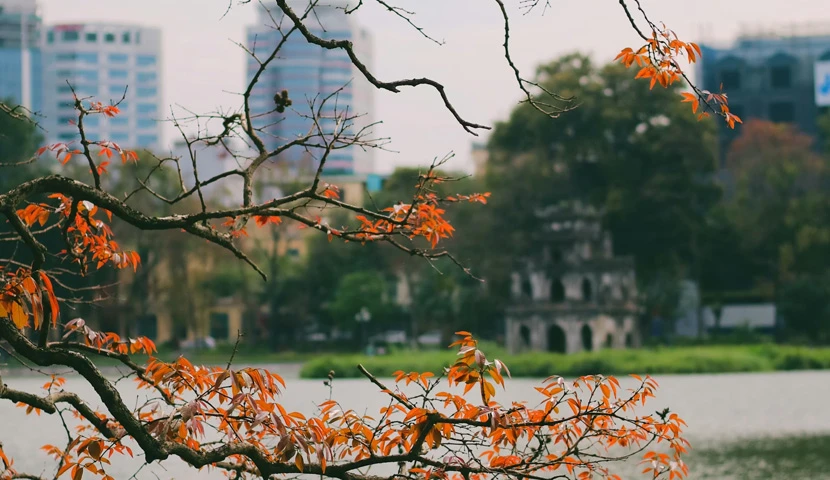
Hanoi is located in the north of Vietnam. It is not only the capital but also the country's political and cultural center. It takes 1,730 km by road from Ho Chi Minh City, equivalent to a 2-hour flight, and is the largest transportation hub in the North with a complex network of road, rail, and air routes.
Thanks to its location, from Hanoi you can easily travel to famous tourist destinations such as Ha Long Bay (only 2.5 hours east), Sapa (via an overnight train to the Northwest), or Ninh Binh and Trang An (only 90 minutes to the South). This is also why Hanoi is chosen as the starting point for exploring northern Vietnam.
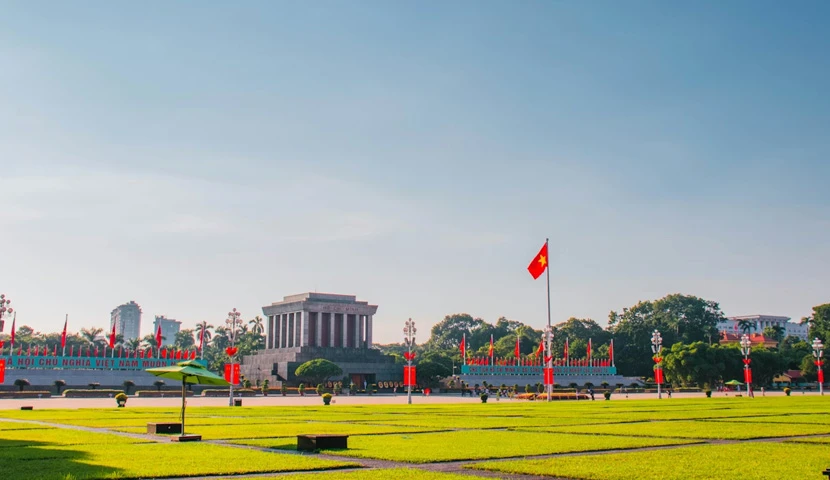
Ho Chi Minh's Mausoleum
Visiting Hanoi is like visiting a giant open-air "museum." The city is densely packed with historical sites, each telling a story or a legend.
The most important site in terms of history must be Ba Dinh Square, or the Ho Chi Minh Mausoleum, where Uncle Ho read the Declaration of Independence, giving birth to the nation of Vietnam. Thang Long Imperial Citadel - “Hoàng thành Thăng Long and the Temple of Literature - “Văn Miếu – Quốc Tử Giám” take visitors back in time, touching the center of power for 13 centuries and the first university in our country. Hanoi is also a land of spirituality, with Hoan Kiem Lake associated with the legend of King Le returning the sword, the One Pillar Pagoda shaped like a thousand-year-old lotus flower, or the peaceful West Lake beside the ancient Tran Quoc Pagoda and the sacred Tay Ho Palace. A little further from the center, Co Loa Citadel still retains traces of the ancient capital of An Duong Vuong with its spiral ramparts and the story of the Princess My Chau and Trong Thuy. This legacy creates a Hanoi that is both proud and serene.
Visiting Hanoi is a memorable, unique experience. The Old Quarter, with its 36 streets, “Phố cổ 36 phố phường”, is where you can best feel the rhythm of life of the old city, from the ancient O Quan Chuong gate to the vibrant Ta Hien street at night. Hoa Lo Prison, the Grand Opera House, and Long Bien Bridge are architectural masterpieces that bear the mark of time, witnessing the ups and downs of the nation. To understand Vietnamese culture, visit the Vietnam Museum of Ethnology with its lively exhibition space about the 54 ethnic groups. And if you prefer materiality, Bat Trang pottery village on the Red River will allow you to create your own pottery. Hanoi is thus both ancient and modern, peaceful and bustling. Each landmark is a piece of the puzzle that helps visitors understand and love the capital even more. Visiting Hanoi is not just about tourism, but about touching the soul of Northern Vietnamese culture.
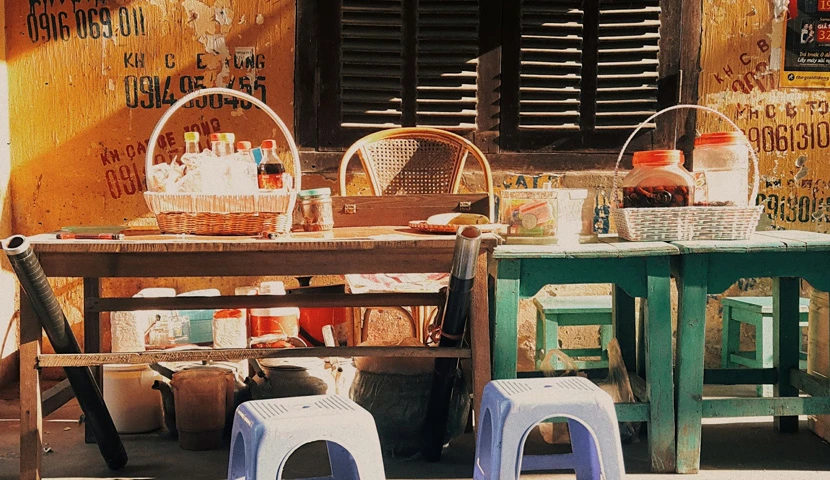
Casual chatting over iced tea
When mentioning Hanoi, one immediately thinks of "Trang An culture," an elegant character that has become its trademark. Hanoians of the past were known for their gentle speech, polite manners, and respectful eating habits. The cuisine here is not as intensely sweet as in the South, nor as spicy as in the Central region, but rather leans towards a light, rich, and refined flavor. Despite being a city of over 8 million people, Hanoi remains the essence of a "village within the city." Each street contains an ancient name, which is essentially a traditional craft village: Hang Bac for silver, Hang Dong for copper, Hang Ma for votive offerings. Temples and pagodas remain centers of community life; Hanoians value kinship and neighboring relations, truly embodying the spirit of "helping each other in times of need."
There is a famous term to describe Hanoians, which is “Hà Nội không vội được đâu”, meaning "Hanoians can't be rushed". That is why early in the morning, it is normal to see people queuing for a bowl of beef pho at their favorite restaurant. On a cold winter night, one can enjoy a “chả cá Lã Vọng”, which is a pan of La Vong fish or a bowl of crab hotpot. Then one can wander across Long Bien Bridge to eat grilled corn. Hanoi's cuisine follows the seasons: in summer, there's refreshing starfruit juice; in autumn, there's “cốm làng Vòng gói lá sen,” which is sticky rice wrapped in lotus leaves; in winter, you crave “bánh trôi tàu”, which is warm glutinous rice balls in sweet syrup. Coffee must be brewed slowly in a filter, and draft beer must be enjoyed on the sidewalk. Rushing spoils the taste; that’s what Hanoians believe.
Hanoi is a place of both classical and folk art, creating a unique spiritual life. “Ca Trù”, with its deep, soulful zither and female singers, has been recognized by UNESCO as an Intangible Cultural Heritage in need of urgent protection. Alongside it, “Chèo, Tuồng, and Cải Lương” still play every evening at the Hong Ha and Chuong Vang theaters, preserving the spirit of the past amidst the modern city. “Múa rối nước Thăng Long”, which is Thang Long water puppetry, has become an indispensable destination for international tourists, with wooden puppets telling stories of the countryside on the shimmering water. Alongside performing arts, Hanoi also nurtures centuries-old traditional craft villages. The silk of Van Phuc, the simple yet profound Dong Ho paintings, and the exquisite bronze casting of Ngu Xa – all still burn brightly, preserving the skillful hands of the people of old Thang Long.
But Hanoi is not just about theaters and traditional craft villages. The soul of the city sometimes lies right on the sidewalks. The term “Trà đá chém gió”, which means "Casual chatting over iced tea," has become a cultural norm: with just a few low plastic chairs and a three-thousand-dong cup of tea, people can sit and chat from morning till noon. Even the term “bún mắng, cháo chửi”, which means "insulting noodle soup," has become a specialty – it sounds embarrassing, but once you try it, you'll remember it because it embodies the very real, down-to-earth essence of Hanoi. Motorbikes whiz by, night vendors' calls, the scent of milk flowers in the breeze – everything blends. The sidewalks aren't chaotic; they're how Hanoi operates, a place where people live slowly amidst the hustle and bustle, where every conversation can begin on a plastic chair.
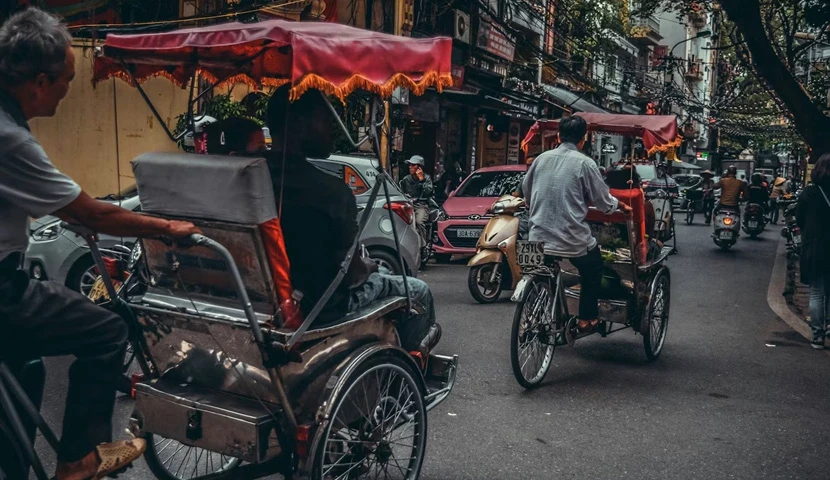
Original Hanoians have their own unique characteristics: discreet, thoughtful, and respectful of etiquette. But today's Hanoi is a melting pot of people from all over the country, so the personalities are more diverse. A common trait is calmness and a lack of haste. If you ask for directions, they will give very detailed instructions, even leading you if it's convenient.
The pace of life in Hanoi is slower than in Ho Chi Minh City. Many shops and restaurants only open around 8 am, and the streets are quiet by 10 pm. Except for Ta Hien and Au Trieu streets, Hanoi goes to sleep early. Hanoians enjoy quiet moments: reading the newspaper with a cup of coffee in the morning, cycling around West Lake in the afternoon, and walking around Hoan Kiem Lake in the evening.
However, Hanoi is also transforming. High-rise buildings are springing up, the Cat Linh - Ha Dong Metro line is operational, and many young people are starting businesses. The "hurry" of the times has crept in, but the "leisurely" atmosphere of Trang An (ancient Hanoi) remains an undiminished part of its soul. Rush hour traffic jams and flooding during the rainy season are urban specialties that Hanoians both complain about and empathize with.
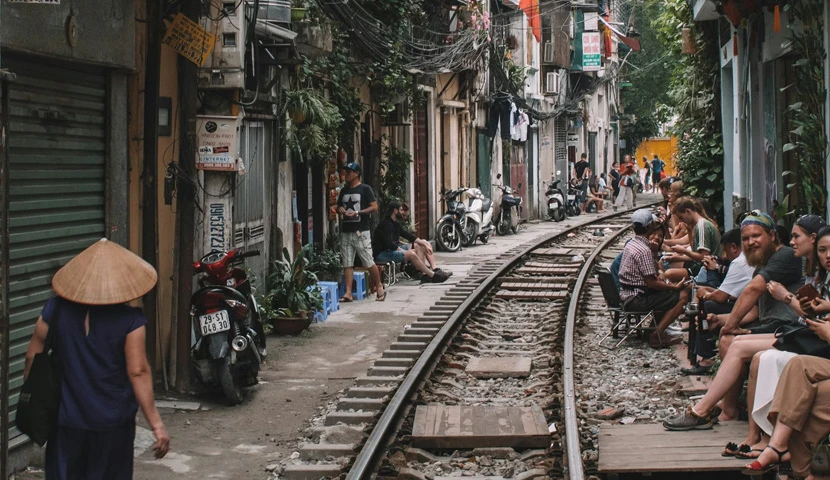
Hanoi is the capital and political-cultural center of the country. Here you can easily find airplanes, trains, buses, and private cars.
For traveling by flight, there is Noi Bai Airport, the second-largest international airport of Vietnam. Noi Bai Airport is situated quite far outside the center, approximately 28 km. From here, you can choose several options to commute, such as taxis, buses, or rail-hailing.
It could cost you around 350,000 - 450,000 VND to take traditional taxis from the airport to the city center. Another much cheaper option could be using a ride-hailing service or airport buses, which range from 40,000 to 250,000 VND. Tip: The high-quality bus (route 86) to the city center costs only 45,000 VND.
For traveling by railway, there is the Thong Nhat line, or we can call it the Reunification Express, which is Vietnam's premier railway up until now, connecting from the north to the south. The journey would take approximately 30-35 hours, with stops at Da Nang, Hue, Vinh, and Thanh Hoa. There are several options you could choose, which are soft seats or air-conditioned sleeper berths.
Related articles:
>> Best time to visit and travel Hanoi