

Ciao splendida Sole !
Abbiamo visionato il sito e l abbiamo trovato fatto molto bene e interessante, riteniamo che sia di facile comprensione e con tutte le...
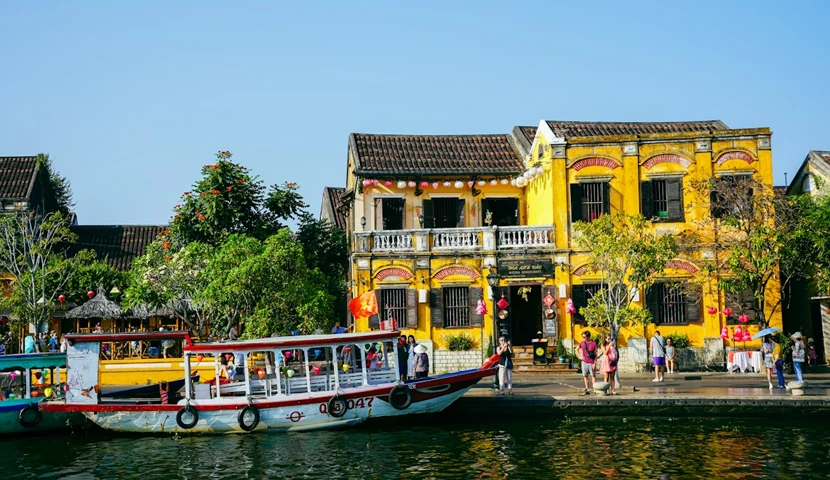
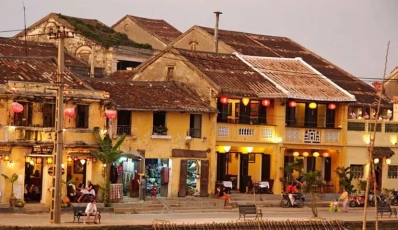
Hoi An is a famous ancient town located in Quang Nam province, which was awarded the UNESCO World Heritage Site in 1999. Hoi An still has its charm as an international trading port from the 16th to the 18th centuries, without the skyscrapers or heavy traffic. Hoi An is often called” the time forgotten place” because once you set foot over the Japanese Covered Bridge, a world of moss-covered tiled roofs, yellow walls, bougainvillea flowers, and hundreds of colorful lanterns opens in front of your eyes. The town is peaceful during the day and seems like a fairy tale, glowing in the night. Hoi An is pretty small compared to other ancient towns; you can walk around there in half a day, but its beauty, hospitality, and cuisine are what make the visitor stay much longer.
1. History of Hoi An
2. Geographical location of Hoi An
3. Tourist Attractions
4. Hoi An Culture and people
5. Hoi An cuisine
6. How to get to Hoi An
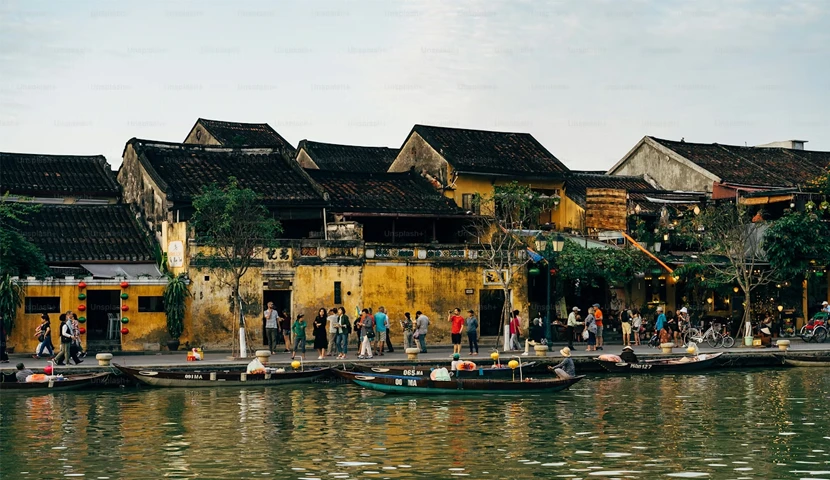
The international maritime trade is deeply tied to Hoi An’s history. The Champa Kingdom, known as Lam Ap Pho, had Hoi An for their port as early as the 2nd century.
Under the Nguyen ruler during the 16th and 17th centuries, Hoi An flourished. Japanese and Chinese communities were allowed to establish separate districts, including Japanese Town and Chinese Quarter, only in Hoi An.
People were trading silk, ceramics, and agarwood from Hoi An throughout Asia. Chinese settlers built assembly halls, while Japanese merchants constructed the Japanese Covered Bridge in 1593, believed to suppress a mythical sea monster.
Hoi An was gradually replaced by Da Nang as the major port by the late 18th century. Fortunately, this helps to preserve Hoi An's architecture for 300 years. Hoi An was recognized by UNESCO as a World Heritage Site in 1999, describing it as” an extraordinary well-preserved example of a traditional Southeast Asian trading port.
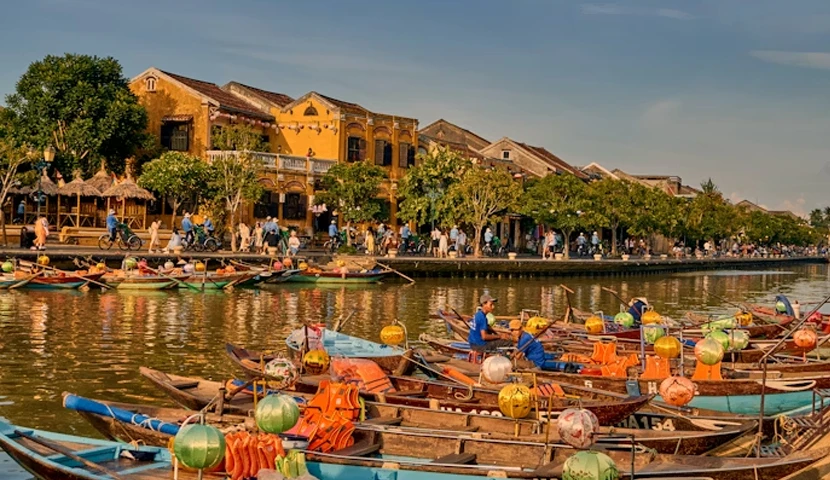
Hoi An is near the Thu Bon River, in plain sight of Southern Central Vietnam. Its approximate coordinates are 15°52′ North latitude and 108°19′ East longitude.
To the east lies the East Sea with An Bang Beach and Cua Dai Beach stretching over 7 km. To the west and north, Hoi An borders Dien Ban District, while Duy Xuyen District lies to the south.
Hoi An is approximately:
30 km south of Da Nang
120 km from Hue
40 km from My Son Sanctuary
Thanks to its river-mouth location connecting to the sea, ancient Hoi An-formerly called Faifo-became a famous trading port where merchants from Japan, China, the Netherlands, and Portugal gathered. Nowadays, Hoi An is near Da Nang International Airport and beaches, which makes the city one of the most accessible tourist sites in Central Vietnam.
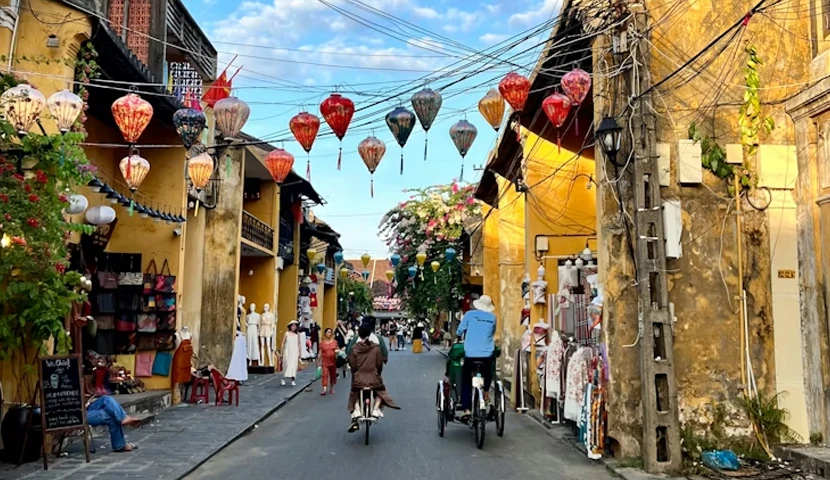
Hoi An may be small, but nearly every corner is photo-worthy.
3.1. Inside the Ancient Town: (Entrance ticket: approximately 120,000 VND for 5 attractions)
Japanese Covered Bridge (Chua Cau).
The symbol of Hoi An, built by Japanese merchants in 1593. The covered bridge contains a shrine dedicated to the deity Bac De Tran Vo. It is also featured on Vietnam’s 20,000 VND banknote.
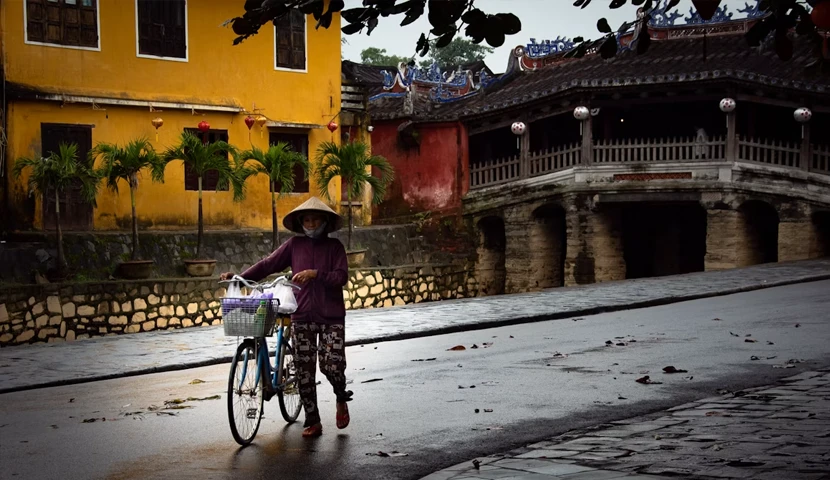
Chinese Assembly Halls - Hội quán, including:
Fujian Assembly Hall - Hội quán Phúc Kiến
Cantonese Assembly Hall - Hội quán Quảng Đông
Chaozhou Assembly Hall - Hội quán Triều Châu
Hainan Assembly Hall - Hội quán Hải Nam
These buildings showcase vibrant Chinese architecture and worship deities such as Thien Hau and Guan Yu. The Fujian Assembly Hall is considered the most impressive.
Ancient Houses.
There are notable examples:
Tan Ky Ancient House is one of Hoi An’s best-known merchant houses, blending Vietnamese, Chinese, and Japanese architectural influences.
Quan Thang House is known for its strong Chinese-style carved wooden architecture.
Phung Hung House is a historical Vietnamese name, also associated with a famous 8th-century Vietnamese hero.
These 200-year-old wooden houses remain inhabited and feature traditional architecture without the use of nails.
Museums.
The Sa Huynh Culture Museum and Trade Ceramics Museum provide insight into Hoi An’s trading history.
3.2. Outside the Ancient Town
Hoai River & Lantern Releasing.
Floating lanterns are religion activity on the river. People can do it on boat rides, which are for four people.
Nguyen Hoang Night Market.
It is famous for lantern shopping, souvenirs, and street food.
An Bang Beach.
It is considered the world’s top beach. Located 4 km from the Ancient Town, visitors could come here to relax with beach bars and lounge chairs.
Thanh Ha Pottery Village, Tra Que Vegetable Village, Bay Mau Coconut Forest.
Explore by bicycle or basket boat, make pottery, grow vegetables, or paddle traditional bamboo boats.
Cham Islands (Cu Lao Cham).
Located about 15 km offshore and reachable by speedboat in 30 minutes. Famous for coral diving, seafood, and recognized as a UNESCO Biosphere Reserve.
Tip: On the 14th and 30th days of the lunar month, Hoi An hosts “Ancient Town Night,” when electric lights are turned off, and the town is illuminated only by lanterns.

4.1. Character and lifestyle of Hoi An people.
People in Hoi An are not only hospitable but also kind, honest, and very welcoming. Their accent is hard to hear at first, but warm and charming when you get used to it.
The people of Hoi An have a strong awareness of preserving their culture. You can not find karaoke, tall construction building in the area, and the prices are good.
Hoi An residents live slowly. They start working quite early at the local markets, then rest in the afternoon. Many shops reopen around 4 PM. Visitors often adopt the same pace - cycling, drinking tea, and reading books. This is sometimes called the “Hoi An therapy”: healing through tranquility.
4.2. Fusion culture and traditional festivals.
Hoi An’s culture is one of fusion. Traditional celebrations include:
· Lantern festivals during Lunar New Year - Tết Nguyên Đán.
· Lion and celestial dog dances (Múa lân và múa thiên cẩu) during the Mid-Autumn Festival (Tết Trung Thu).
· Wedding customs involving traditional bridal processions.
On the night of lunar moon, electric lights are turned off, giving space for candles and lanterns while traditional performances like bai choi continue.
4.3. Traditional craft villages.
Craftsmanship has been passed down through generations and remains the soul of Hoi An.
Lantern making.
People consider Hoi An Lanterns the symbols of luck, happiness, and guidance, so they are more than just decoration; they are the soul of Hoi An. Bamboo frames and colorful silk or paper, hand-stretched and glued without nails by artisans. They shape, paint, and finish each lantern for hours. At night, the lantern light are glowed in the ancient town on the 14th and 30th nights of the lunar month, when everything else is turned off. There are workshops for visitors to make their own lanterns and bring home a piece of Hoi An’s light.
Silk weaving and mulberry farming – “ươm tơ dệt lụa”.
People here have been using the craft of raising silkworms, reeling silk and weaving for many generations. They do every step by hand, from cocoons to thread to glossy fabric. People use local silk for ao dai, scarves and lanterns. Artisans spin thread, dye it with natural colors, and weave on wooden looms in a traditional workshop where people can visit. Hoi An people’s roots are deeply reflected there through their patience, delicacy and respect for nature.
Tailoring.
Fast, affordable, custom tailoring is very famous in Hoi An. Visitors can be measured in the morning and finish a suit, dress or ao dai within 24-48 hours by a skilled tailor. Fabric and silk port are grown from the town’s history. Today, what keeps the tradition of meticulous handwork alive are hundreds of tailor shops lying on the streets. Hoi An spirit: careful, friendly and proud of craftsmanship are shown here in detail through choosing fabric, fitting and hand finishing.
Pottery and other crafts.
People preserved pottery, wood carving, and other handicrafts in nearby villages. Clay, carved wood and souvenirs are created by artisans without machines, keeping the link between past and present.
4.4. Performing arts and folk music.
Music and games are part of daily life here.
Folk singing - Hát dân ca.
Folk singing is performed during festivals, weddings, and community gatherings – simple melodies telling stories of love, labor, and the river. The local dialect and emotion are preserved for generations.
Bài chòi art.
Bài chòi, recognized by UNESCO as Intangible Cultural Heritage, is a unique art form combining music, poetry, acting, and a folk game similar to bingo. Performers sit in bamboo huts, sing verses, draw cards, and call out with humor and rhythm. Visitors can watch Bài chòi shows in the evening in the ancient town, especially during festival nights. This is how Hoi An people preserve their language, humor and community spirit alive.
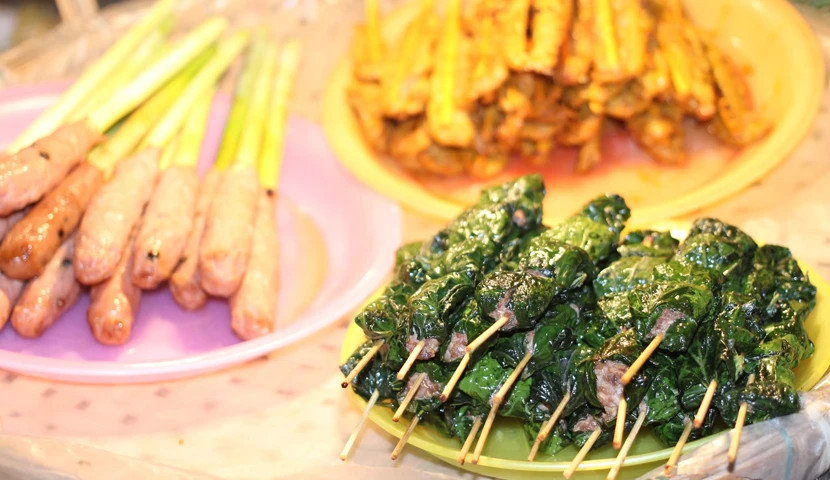
Hoi An cuisine is a combination of Vietnamese, Chinese, and Japanese. Here are some traditional dishes:
5.1. Cao Lau
The “soul” of Hoi An cuisine. It has thick yellow noodles that traditionally require water from Ba Le Well and ash from Cham Islands wood to achieve their authentic texture.
5.2. Mi Quang (Quang Noodles)
It serves with yellow noodles with a rich broth, shrimp, pork, and eggs, accompanied by rice crackers and green chili.
5.3. Hoi An Chicken Rice (Com Ga Hoi An)
Shredded free-range chicken served with rice cooked in chicken broth and turmeric, accompanied by pickled papaya and spicy sauce.
5.4. Fried Wontons and White Rose Dumplings - Hoành thánh chiên anh bánh bao
Transparent dumplings with shrimp and pork filling shaped like white roses.
5.5. Banh Dap with Stir-Fried Clams
Grilled rice crackers pressed together with steamed rice sheets and served with stir-fried clams.
5.6. Herbal Tea - Trà thảo mộc
A popular herbal drink made with lemongrass, ginger, and lime, decorated with lotus petals.
5.7. Sweet Desserts
Including sweet corn soup, tofu pudding, and tao xa - affordable street desserts.
Hoi An cuisine is mild rather than spicy, with prices ranging from 20,000 to 60,000 VND per dish. Enjoying local food while walking through the lantern-lit night market is a signature experience.
Hoi An has neither an airport nor a railway station, so visitors usually transit through Da Nang.
6.1. Travelling by Plane
The distance between Da Nang International Airport (DAD) and Hoi An is approximately 30 km, which takes around 45 to 60 minutes. Here is the general price:
. Taxi/Grab: around 350,000–400,000 VND.
. Bus No. 12: around 30,000 VND.
. Limousine transfer: around 150,000 VND/person.
6.2. Travelling by Train
The distance between Da Nang Railway Station and Hoi An is also 30 km. So, from there to Hoi An, you will need to use similar transportation to that in 6.1.
6.3. Travelling by Bus or Car
Traveling from Da Nang to Hoi An is very convenient. The price is also affordable.
. Public bus: around 30,000 VND
. Limousine shuttle: 120,000–150,000 VND with hotel pickup
From Hue to Hoi An takes around 3 hours via Hai Van Pass or Hai Van Tunnel.
Long-distance sleeper buses from other provinces also arrive at Hoi An Bus Station.
Related articles: