
Ciao splendida Sole !
Abbiamo visionato il sito e l abbiamo trovato fatto molto bene e interessante, riteniamo che sia di facile comprensione e con tutte le...
Far away on the flat floodplains of southern Cambodia, where the Mekong, Bassac, and Tonle Sap rivers meet, sits Phnom Penh. The capital lies just eleven meters above sea level, about 230 km northwest of Ho Chi Minh City and 320 km southeast of Siem Reap. Phnom Penh is known as the Pearl of Asia, where golden pagodas sparkle next to French colonial boulevards, noisy markets hide under the shadow of glass skyscrapers, and sunset cruises drift slowly on the mighty Mekong.
1. General Introduction
2. Geographical Location
3. History
4. Palaces & Historical Landmarks in Phnom Penh
5. Riverside & Scenic Spots in Phnom Penh
6. Nature & Spiritual Sites in Phnom Penh
7. Local Specialties
8. Culture & People
9. How to Travel to Phnom Penh
Compared to the non stop energy of Bangkok or the rapid growth of Saigon, Phnom Penh feels both resilient and deeply soulful. You can come here to stroll along the riverside at sunset, visit the dazzling Royal Palace, have dinner on a wooden boat watching the river, sleep in a boutique hotel in the old French Quarter, and wake up to the sound of temple bells. For Vietnamese travelers, Phnom Penh is the perfect choice for a cheap and easy weekend abroad. For foreigners, it is one of the easiest and most profound ways to experience the heart of Cambodia, both royal and tragic, both ancient and reborn.
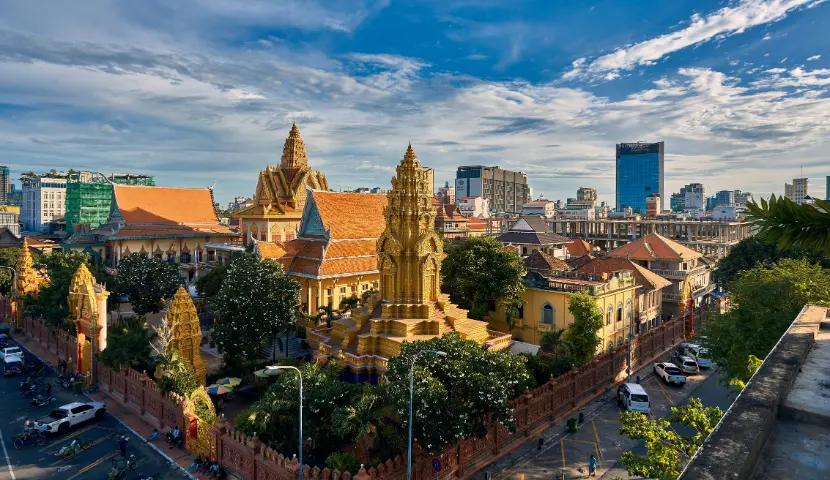
Phnom Penh is located in the south central part of Cambodia, with approximate coordinates of 11°33′ North latitude and 104°55′ East longitude. It is surrounded on all sides by Kandal Province and serves as the political, economic, and cultural center of the country. It borders Vietnam to the east.
For travelers from Vietnam, Phnom Penh is particularly accessible by road through the Moc Bai–Bavet international border crossing between Vietnam and Cambodia.
Phnom Penh is approximately:
Actual travel times and distances vary depending on the route, traffic and border conditions.
The Legend of Lady Penh
The traditional story of Phnom Penh begins in 1372 with a woman known as Lady Penh, or Daun Penh.
According to the legend, she discovered sacred statues after a tree trunk floated down the river. She then arranged for a small hill to be created and built a shrine to house the sacred images. The site became known as Wat Phnom, meaning “Hill Temple,” and the surrounding settlement eventually took the name Phnom Penh, or “Penh's Hill.”
This story is regarded as the traditional foundation legend of the city rather than a fully documented historical event.
Phnom Penh Becomes a Royal Capital
In 1434, King Ponhea Yat moved the royal capital away from Angkor and established Phnom Penh as an important new political center. The capital subsequently moved several times during the following centuries before Phnom Penh regained its importance during the French colonial period.
Phnom Penh During the French Colonial Period
In the 19th century, Phnom Penh underwent major urban development under French influence. Wide boulevards, administrative buildings, markets and European-style architecture transformed the city.
The Royal Palace complex and later landmarks such as the Central Market became important symbols of Phnom Penh's changing urban landscape.
Central Market, known locally as Phsar Thmei, was completed in 1937 and remains one of the city's best-known Art Deco landmarks.
The Khmer Rouge Era
Phnom Penh experienced one of the darkest periods in its history under the Khmer Rouge.
In April 1975, the Khmer Rouge forcibly evacuated the city's population. Phnom Penh was largely emptied of civilians and became the center of the Democratic Kampuchea regime.
Today, places such as Tuol Sleng Genocide Museum and Choeung Ek Genocidal Center preserve the memory of this period and help visitors understand Cambodia's modern history.
Phnom Penh Today
Since the late 20th century, Phnom Penh has undergone rapid reconstruction and economic development.
Modern shopping centers, hotels, restaurants and high-rise buildings now stand alongside historic temples, colonial architecture and traditional markets.
The opening of Techo International Airport in September 2025 marked another major step in the city's development and international connectivity. The airport, located in Kandal Province approximately 20 km from Phnom Penh, replaced the former Phnom Penh International Airport for commercial aviation.
Phnom Penh is famous for its mix of royal splendor and painful history. Those are the highlights you should not miss.
4.1. The Royal Palace and the Silver Pagoda: This is the symbol of Phnom Penh. Since 1866, at the heart of the city, this complex has been the residence of the King of Cambodia. You cannot enter the King's private residence, but you can visit the Silver Pagoda, or Wat Preah Keo Morakot. The floor is paved with more than 5,000 silver tiles, each weighing over 1kg. It houses the Emerald Buddha and a life sized Gold Buddha encrusted with 9,584 diamonds. In the late afternoon, when the sun hits the golden roofs, the whole complex glows.
4.2. Tuol Sleng Genocide Museum S21 and the Killing Fields of Choeung Ek: Those are the most heartbreaking but most necessary places to understand Cambodia. S21 was originally a high school that was turned into a torture prison by the Khmer Rouge. Historical sources estimate that approximately 14,000 to 17,000 people passed through the prison, where prisoners were subjected to interrogation, torture and execution. Only a small number of prisoners survived; seven known survivors are commonly documented. Only seven survived. About 15 km from the center is Choeung Ek, where over 8,900 bodies were found in mass graves. A glass memorial stupa containing more than 5,000 skulls is a haunting sight. You can take the audio guide, go slowly, and keep absolute respect.
4.3. Wat Phnom The Birthplace of the City: It is located on a 27 meter hill right in the center, Wat Phnom is one of Phnom Penh's oldest and most important landmarks. A grand staircase flanked by Naga statues leads to the top, where a stupa contains the remains of King Ponhea Yat. Locals come here in large numbers to pray for luck, love, and business. Around the hill is a small park where locals do aerobics in the morning.
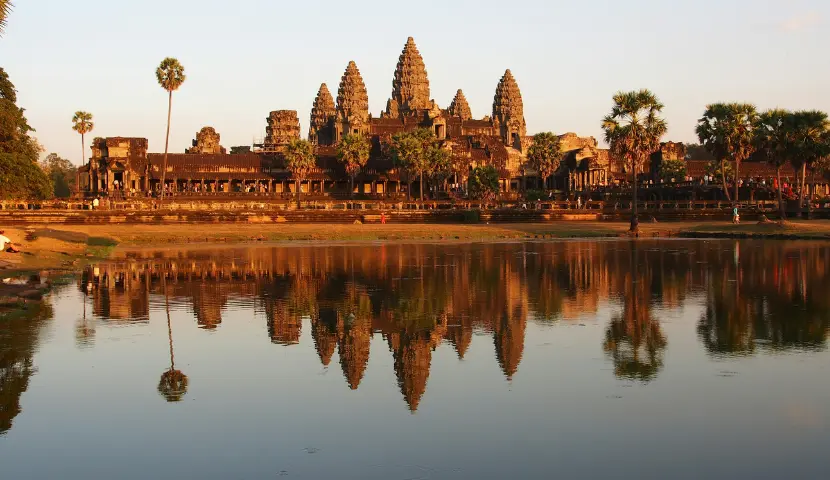
4.4. Independence Monument and the Vietnam-Cambodia Friendship Monument: The Independence Monument was built in 1958 to celebrate Cambodia's independence from France, inspired by the central tower of Angkor Wat. It is brightly illuminated and is a favorite hangout spot for locals at night. Nearby is the Friendship Monument, a site less known to tourists but deeply meaningful for Vietnamese visitors.
5.1. Sisowath Quay The Riverside: This is the best viewpoint in Phnom Penh. This 3 km promenade runs along the Mekong River, from the Royal Palace to Wat Phnom. This is the heart of the city at night. You should come at sunset for the best light, when the river turns orange, kids fly kites, locals do aerobics, and couples eat street snacks. There are dozens of rooftop bars here with views of the three rivers.
5.2. Central Market and Toul Tom Poung Russian Market: Central Market, or Phsar Thmei, which is built in 1937, is an Art Deco masterpiece with a huge yellow dome. From the air, it looks like a giant fan. Inside, it sells everything from gold and gems to electronics. The Russian Market is a maze of alleys and is a paradise for those who love vintage clothes, silk, handicrafts, and cheap souvenirs. It got its name because Russians shopped there in the 1980s.
5.3. Koh Pich Diamond Island and the Riverfront: Koh Pich is a new urban island connected to the center by a modern cable stayed bridge. The bridge is lit up like a dragon in the evening. The island has parks, a food street, and is where Phnom Penh's young people come to check in. The view back to the city skyline at night is absolutely stunning, especially with all the new high-rises.
5.4. Mekong Sunset Cruise: This is an unmissable experience, just like the Fansipan cable car. For only 10 to 15 USD, you can hop on a traditional wooden boat and drift slowly for 90 minutes on the confluence of the rivers. You will watch the sunset, see the Royal Palace and Wat Phnom from the water, and glimpse the life of floating villages along the banks. Many cruises include unlimited beer and snacks.
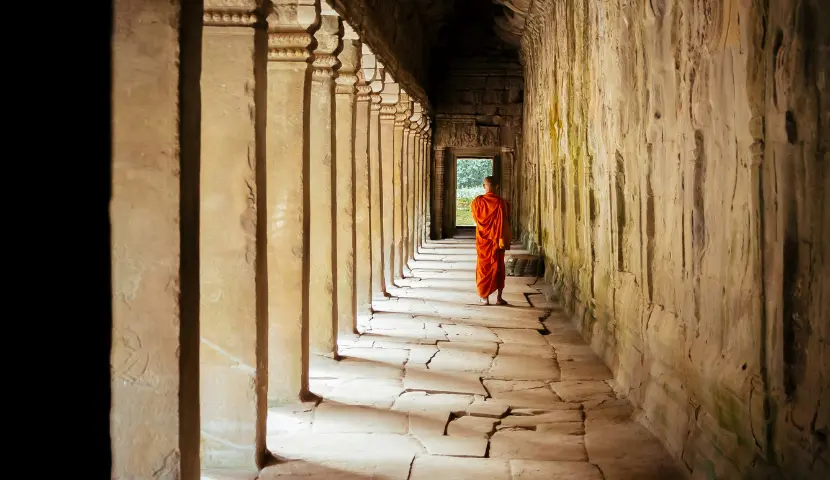
6.1. Wat Ounalom and Wat Langka: If Sapa has Hoang Lien National Park, Phnom Penh has its pagodas as spiritual lungs, then Wat Ounalom is the headquarters of Cambodian Buddhism and once housed an eyebrow hair of the Buddha. Wat Langka is quieter, a center for young monks to study and meditate. You can join a morning meditation class here for a donation. The forest of monks in saffron robes is a peaceful sight in the busy city.
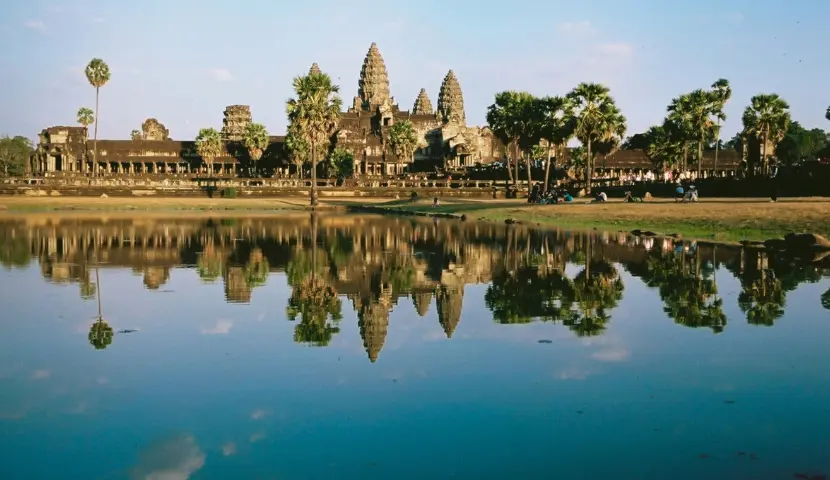
6.2. National Museum of Cambodia: It is designed by a French architect in traditional temple style, this is the best place to understand Khmer art. It houses one of the world's largest collections of Khmer art, with over 14,000 artifacts from pre Angkorian to Angkorian times. The building itself, with its red terracotta color, bronze doors, and courtyard full of ancient statues and lily ponds, is worth the visit alone. The collection of stone Buddhas and Vishnu statues is incredible.
6.3. Koh Dach Silk Island: Just 30 minutes by ferry across the Mekong from the city center, Koh Dach is another world. This island is famous for traditional silk weaving. You can rent a bicycle for 2 USD, ride around quiet village roads shaded by mango trees, visit families who weave silk by hand on wooden looms, and buy a krama checkered scarf directly from the maker. It is a perfect half day escape from the dust and noise of the city, and shows you the rural Cambodia that still exists just minutes from the capital.
Phnom Penh's cuisine is made for the hot, humid weather, sour, spicy, fragrant, and colorful.
7.1. Fish Amok: This is the soul of Khmer cuisine. Filleted snakehead fish is steamed in a banana leaf cup with coconut milk, kroeung, a fragrant Khmer curry paste made from lemongrass, galangal, and turmeric, and egg. The result is soft, creamy, and fragrant. It's the most authentic local dish and you must try it.
7.2. Bai Sach Chrouk Pork and Rice: This is probably the most popular breakfast in Phnom Penh. Thinly sliced pork marinated in coconut milk and garlic is grilled over charcoal until slightly charred, served with broken rice, pickled cucumbers, and a small bowl of chicken broth. You will see it on every street corner in the morning for less than 1.5 USD.
7.3. Lort Cha and Fried Noodles: There are so many cheap, hot meals along the riverside, like stir fried short noodles with bean sprouts, chives, beef, and a fried egg on top, drizzled with a slightly sweet brown sauce. It is smoky and satisfying, just like the grilled food in Sapa.
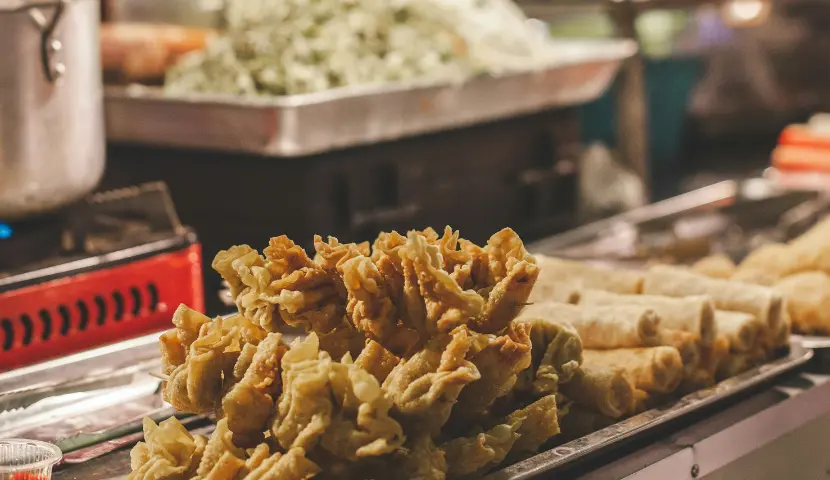
7.4. Kampot Pepper Crab: Although Kampot is 150 km away, Phnom Penh is the best place to try this iconic dish. Fresh crab is stir fried with world famous Kampot pepper, which has a unique, intense, and warm aroma. It is usually eaten with steamed rice.
7.5. Nom Banh Chok Khmer Noodles: Rice noodles served with a green fish curry made from fish, lemongrass, and turmeric, topped with fresh herbs, banana flowers, and long beans. Khmer people usually eat this for breakfast.
7.6. Fried Insects and Tropical Fruits: In November and December, you should try fried crickets, tarantulas, and grasshoppers. They are crunchy and nutty. For those who prefer something safer, you can try durian, mango, and mangosteen. You should not miss out on sugar cane juice and iced coffee to cool down in the afternoon heat. Phnom Penh food is simple but powerful with the natural sweetness of river ingredients, the heat of chili, the fragrance of lemongrass, and the comfort of a shared meal.
There are a few main groups in Phnom Penh including Khmer, Cham, Chinese, and Vietnamese. Every group keeps its own language and customs, but they share a lifestyle shaped by Buddhism and community.
The Khmer are the biggest group, famous for their gentle smiles and graceful Apsara dance. Khmer women are masters of silk weaving on Koh Dach. The Cham people, who are Muslim, are well known for their fishing villages on the river.
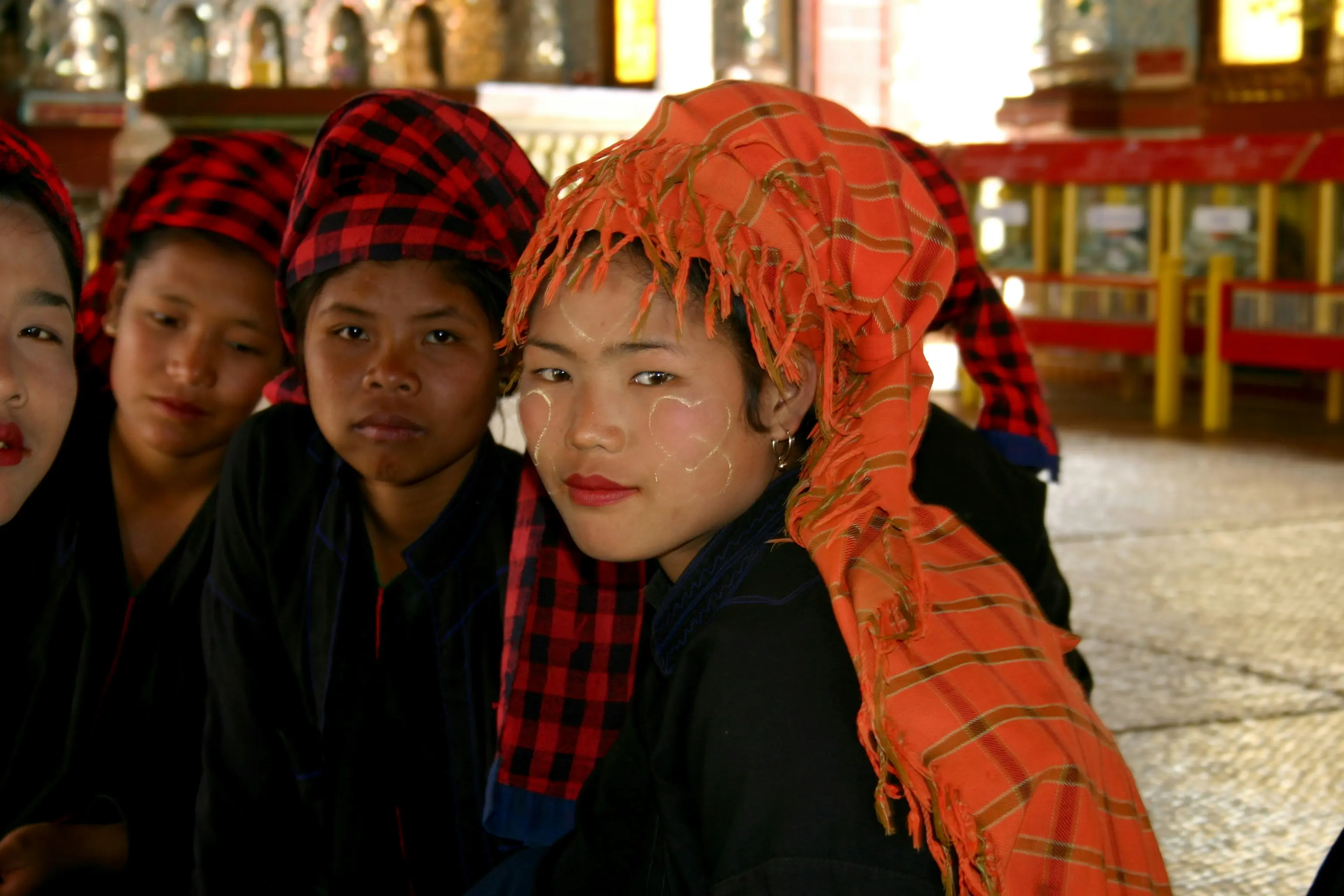
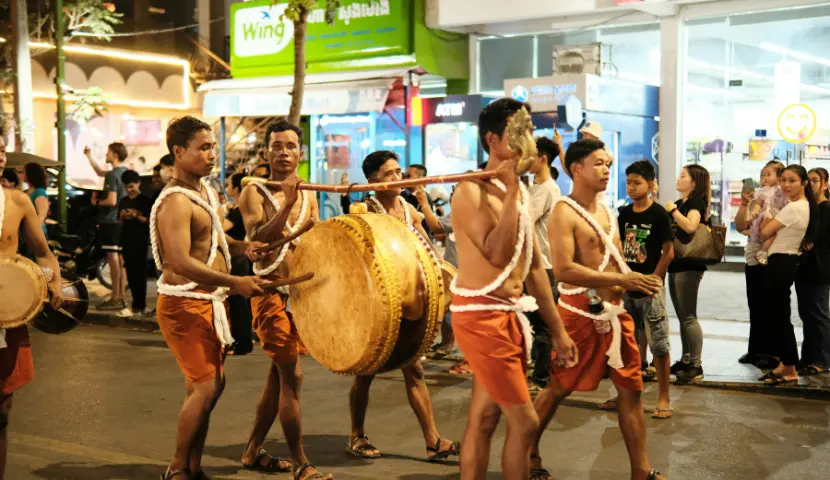
Festivals happen all year round. Bon Om Touk Water Festival in November is the biggest, held at the riverside with dragon boat races to celebrate the reversal of the Tonle Sap River. Chol Chnam Thmay in mid April is the Khmer New Year, when people splash water on each other for good luck, similar to Songkran in Thailand. Pchum Ben in September is a festival to honor ancestors.
Phnom Penh people are warm, resilient, and incredibly welcoming. Life has been hard, but hospitality runs deep. You should not be surprised if someone invites you for a chat after just a short conversation. When visiting pagodas, always dress modestly covering knees and shoulders, take off your shoes, do not point your feet at Buddha statues, and avoid touching people's heads. When you are visiting markets, a smile and a small bargain is part of the fun.
Phnom Penh is only 230 km from Ho Chi Minh City, and getting there is now much easier than ever before.
9.1. From Vietnam: By Sleeper Bus or Limousine: travel time is about 6 to 7 hours from Ho Chi Minh City. Buses leave from Pham Ngu Lao or Mien Tay Bus Station from 6 AM to midnight and cost only 250,000 to 500,000 VND per person. You will cross the Moc Bai Bavet border, where your passport will be stamped. Trustworthy companies include Giant Ibis, Khải Nam, and Virak Buntham. Limousine vans are more comfortable with 9-12 seats and hotel pick-up.
By Plane: from Hanoi, Ho Chi Minh City, and Da Nang, there are direct flights to Phnom Penh Techo International Airport with Vietnam Airlines and Cambodia Angkor Air. Flight time is only 45 minutes from Saigon and less than 2 hours from Hanoi. Tickets range from 2,000,000 VND return if you book early. From the airport, take a Grab or PassApp taxi to the center for about 10 USD.
By Private Car from Vung Tau: For travelers from Vung Tau, take a bus to Ho Chi Minh City for about 2 hours, then connect to a bus to Phnom Penh. Total travel time is about 9-10 hours. You can also arrange a private car that will handle the border crossing for you.
9.2. Getting Around Phnom Penh: The riverside and palace area is small and walkable. For villages and attractions further away, you can use ride hailing apps like Grab and PassApp, which are very cheap. A tuk tuk ride costs 1-2 USD for a short trip, remember to agree on the price before you go. Taxis are available, and most hotels can arrange private cars. For Silk Island, you can buy ferry tickets at the pier for less than 1 USD.
Phnom Penh may not have the clouds and rice terraces of Sapa, but it has the depth of history and the warmth of the river. If Sapa gives you a sea of clouds outside your window, Phnom Penh gives you a river of lights and a story of rebirth.
Related articles:
>> Cambodia Tours Price
>> Best time to travel to Cambodia