
Ciao splendida Sole !
Abbiamo visionato il sito e l abbiamo trovato fatto molto bene e interessante, riteniamo che sia di facile comprensione e con tutte le...
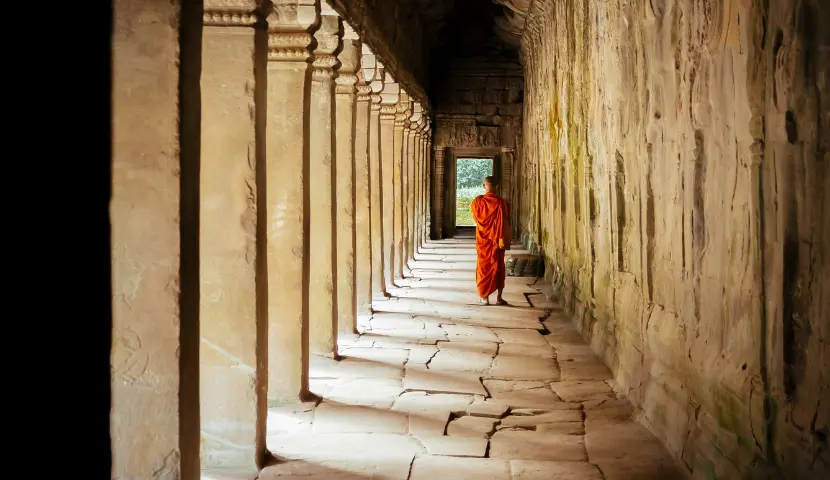
Deep in the northwest of Cambodia, where red dirt roads cut through rice paddies and palm trees line the horizon, sits Siem Reap. The name traditionally interpreted as Siam Defeated, a reminder of the ancient battles. But today the town is anything but defeated. It lies just 10 meters above sea level, about 320 km northwest of Phnom Penh and 150 km from the Thai border. Siem Reap is known as the Gateway to Angkor, where jungle temples emerge from tree roots, tuk tuks buzz through night markets, and a small river town became one of the wonders of the world.
1. General Introduction
2. Geographical Location
3. History
4. Temples & Grand Landmarks in Siem Reap
5. Water, Mountains & Scenic Spots in Siem Reap
6. Culture, Markets & Spiritual Sites in Siem Reap
7. Local Specialties
8. Culture & People
9. How to Travel to Siem Reap
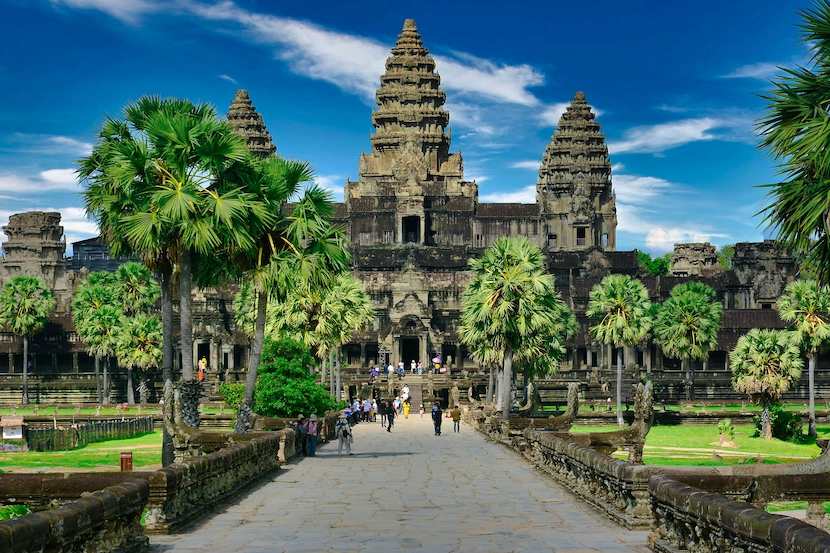
Siem Reap feels ancient, mystical, and deeply creative compared to the riverside rush of Phnom Penh or the beach vibe of Sihanoukville. You can come here to watch sunrise over Angkor Wat, ride a bicycle through jungle covered ruins, take a boat to floating villages on Tonle Sap Lake, sleep in a wooden villa surrounded by rice fields, and wake up to monks collecting alms at dawn. For Vietnamese visitors, Siem Reap is the perfect choice for a three day getaway with cheap flights and no visa hassle. For foreigners, it is the reason many come to Cambodia in the first place, and one of the easiest places in Asia to touch a lost empire.
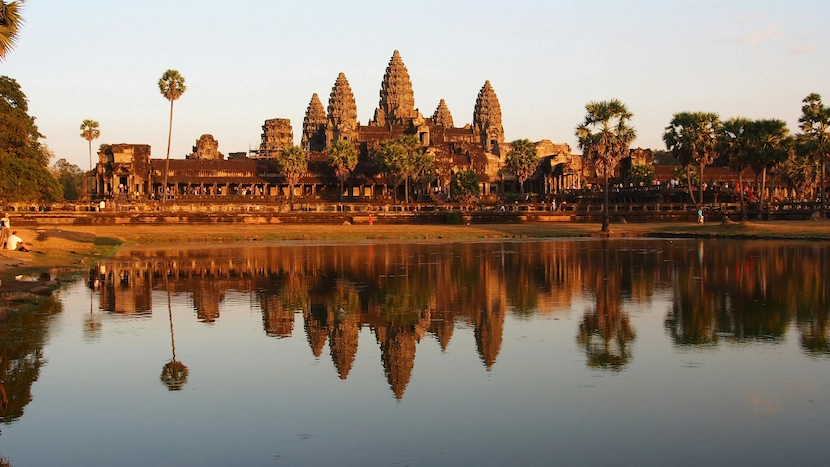
Siem Reap is located in northwestern Cambodia and is the capital of Siem Reap Province.
The town lies north of Tonle Sap Lake, the largest freshwater lake in Southeast Asia. The surrounding region consists largely of flat agricultural land, rice fields and seasonal wetlands.
The Siem Reap River flows through the town before continuing south toward the Tonle Sap system. It should not be confused with the Tonle Sap River, which connects Tonle Sap Lake with the Mekong River system.
Tonle Sap is particularly important to Cambodia because of its unique seasonal hydrology. During the rainy season, the flow of the Tonle Sap River reverses, causing the lake to expand dramatically. UNESCO describes Tonle Sap as the largest freshwater lake in Southeast Asia and notes that its surface area can expand by up to five times during the rainy season. The surrounding area forms the Tonle Sap Biosphere Reserve, designated by UNESCO in 1997.
Siem Reap is approximately:
Distances and travel times vary according to the route and transportation method.
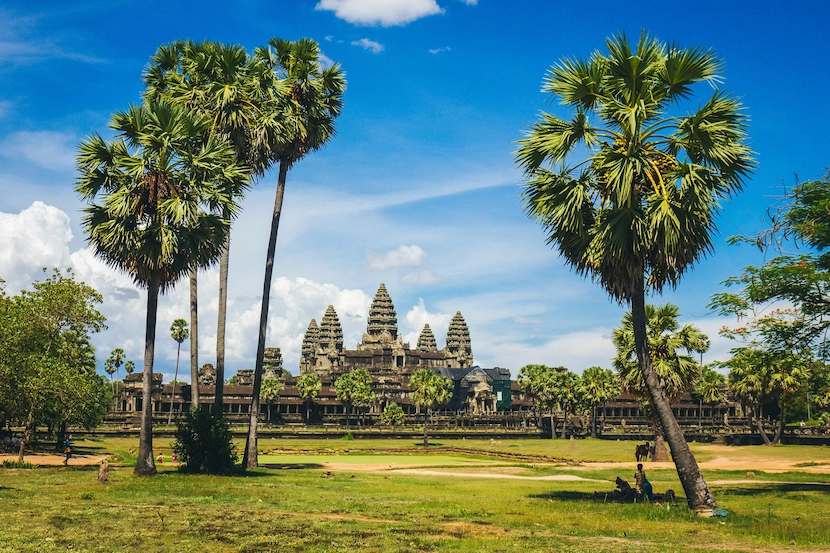
The history of Siem Reap is closely connected to the history of Angkor and the Khmer Empire.
The Rise of the Khmer Empire
In 802 AD, Jayavarman II is traditionally associated with the establishment of the Khmer Empire and the beginning of the Angkorian period.
Phnom Kulen, located approximately 48 km from Siem Reap, is traditionally regarded as an important birthplace of the Angkorian state. According to Cambodia's Ministry of Tourism, Jayavarman II proclaimed independence from Java at Phnom Kulen in 802 AD.
Over subsequent centuries, Khmer rulers developed a series of capitals and monumental temples in the Angkor region.
The Angkor Archaeological Park today covers approximately 400 square kilometres and contains temples, reservoirs, canals, roads and other archaeological remains dating from the 9th to the 15th centuries. UNESCO describes Angkor as one of the most important archaeological sites in Southeast Asia.
The Age of Angkor
The Angkorian period reached some of its greatest architectural achievements under rulers such as Suryavarman II and Jayavarman VII.
Suryavarman II commissioned Angkor Wat in the first half of the 12th century.
Jayavarman VII later developed Angkor Thom and built the Bayon, along with numerous other temples and infrastructure projects.
The Angkorian state developed an extensive hydraulic system of reservoirs, canals and other water-management structures that supported agriculture and urban life.
Rather than describing Angkor as a city that simply disappeared overnight, historians generally view its political decline and transformation as a long and complex process involving changes in political power, religion, trade, environmental conditions and regional conflicts.
Angkor and the Western World
Angkor Wat remained an important religious site after the political center of the Khmer Empire shifted away from Angkor.
European travelers and scholars later brought greater international attention to the temples, particularly during the 19th century.
French scholars and conservation organizations subsequently played an important role in archaeological research and restoration.
In 1992, Angkor was inscribed on the UNESCO World Heritage List. UNESCO describes the site as extending over approximately 400 square kilometres, with the World Heritage property covering around 40,100 hectares.
Today, Angkor remains one of Cambodia's most important cultural symbols.
Siem Reap is famous for its temples, and you could spend a week and still not see them all. These are the highlights you shouldn't miss.
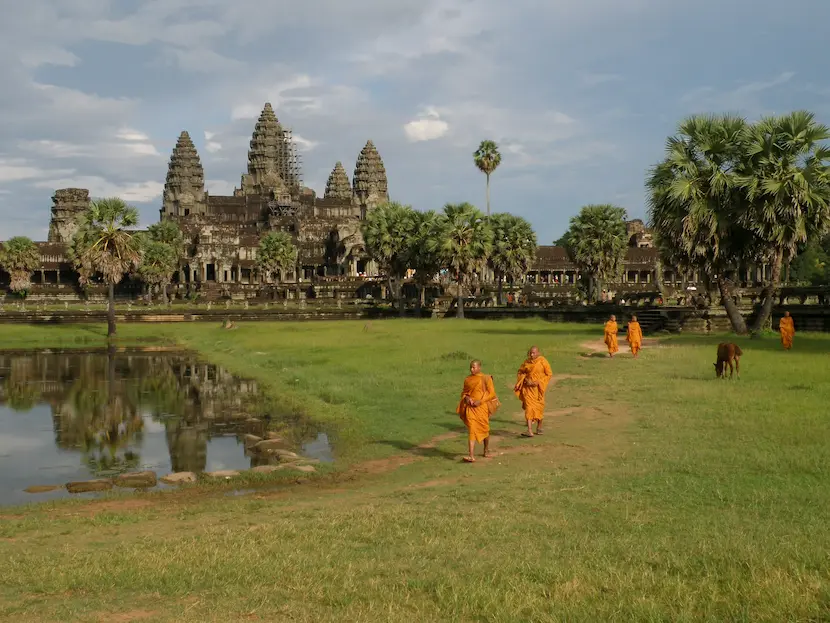
4.1. Angkor Wat - The Heart of the Universe: At 162 hectares, Angkor Wat is the largest religious monument in the world and the symbol of Cambodia, even on its flag. Even though it is built in the early 12th century by Suryavarman II, it was first a Hindu temple dedicated to Vishnu, then became Buddhist. You should come at 5:00 AM for sunrise. The silhouette of its five lotus-bud towers reflected in the lotus pond is one of the most iconic images on earth. Walk through its 800-meter-long bas-reliefs depicting the Churning of the Ocean of Milk and the Battle of Kurukshetra. Climb to the upper Bakan level for a view of the whole jungle. For the full experience, you should visit again in the late afternoon when the stone turns pink. A 3 day pass is 62 USD.
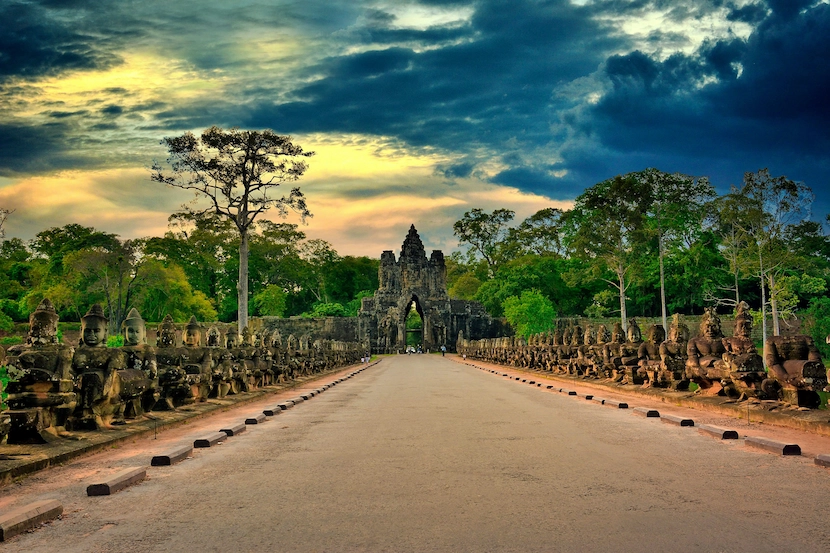
4.2. Angkor Thom and The Bayon - The City of Faces: If Angkor Wat is grand, Angkor Thom is mysterious. This was the last great capital, a walled city 3 km on each side built by Jayavarman VII. Enter through the South Gate, where a causeway of gods and demons churn a giant Naga. Inside is the Bayon, the state temple at the exact center. It has 54 towers, each with four giant, serene smiling faces of Avalokiteshvara, 216 faces in total watching you. Nearby are the Baphuon, a massive temple mountain that was painstakingly reassembled like a jigsaw puzzle, the Terrace of the Elephants where kings watched parades, and the Terrace of the Leper King with intricate carvings.
4.3. Ta Prohm - The Tomb Raider Temple: It is located just 2 km from Angkor Thom, Ta Prohm is the most atmospheric temple in Siem Reap. Unlike other temples, It has been preserved in a way that retains the landscape as it was found, roots wrapping around doorways and crushing walls. A stone path leads past moss-covered corridors. This is where Angelina Jolie filmed Tomb Raider. You can go early at 7:30 AM to have the temple almost to yourself in the soft morning light. It is a once in a lifetime experience where nature and man are locked in an embrace.
4.4. Banteay Srei - The Pink Temple: Rightly called the jewel of Khmer art, Banteay Srei is 25 km northeast of town. It is built in 967 from pink sandstone. It is small but has the most exquisite carvings in all of Angkor. The walls are covered in lace-like carvings of apsaras and stories from the Ramayana, so detailed you can see the jewelry on the dancers. The color glows at sunset. On the way, you can stop at Cambodian Landmine Museum and palm sugar villages.
5.1. Phnom Kulen Mountain and Waterfall: This is one of the most sacred mountains in Cambodia, the birthplace of the Khmer Empire. Kulen National Park is about 50 km from town. The top is a plateau at 487m with a giant reclining Buddha carved into the rock, a riverbed with 1,000 lingas carved under the water called Kbal Spean, and a two tiered waterfall 20 meters high where you can swim. Locals believe the water is holy. Come in the morning when the light shines through the jungle. The road up is steep, so you need to go before 11 AM.
5.2. Tonle Sap Lake and Floating Villages: This is Southeast Asia's largest lake and a lifeline for millions. About 12 km south of town should you take a boat to see floating villages. Chong Khneas is the closest and most touristy. Kompong Phluk and Kompong Khleang are more authentic, with stilted houses 10 meters high, a flooded forest you can canoe through in wet season with schools and markets that float. You can go in late afternoon for the best light, and in wet season from July to November when the lake is full. The sunset over the lake with fishing boats is absolutely stunning.
5.3. West Baray and Srah Srang: An ancient reservoir built by the Khmer kings, West Baray is 8 km long. It is now a giant lake where locals swim and picnic. There is a small island temple in the middle you can reach by boat. Srah Srang, the Royal Bath, is a smaller baray right in front of Banteay Kdei temple. This is a beautiful, quiet spot for sunrise if you want to avoid the crowds at Angkor Wat. The view of the water with temple ruins is very peaceful, especially in early morning mist.
5.4. Angkor Zipline and Quad Bike Trails: It is located inside the Angkor Archaeological Park. This is for those who are not scared of heights. You can zipline through the jungle canopy over ancient trees. You try a quad bike ride through rice fields and villages at sunset, or take a hot air balloon for a bird's eye view of Angkor Wat. The nearby Angkor Botanical Garden is also worth a walk.
6.1. Angkor National Museum: If you want to understand what you are seeing, you should go here first before the temples. This modern museum hosts over 1,000 artifacts, with galleries explaining the history of the Khmer Empire, religion, and the techniques of temple building. The Hall of a Thousand Buddhas is breathtaking. It gives context that makes the temples much more meaningful.
6.2. Pub Street and the Old Market - Psar Chas: This is the center of nightlife in Siem Reap. Pub Street is a 200 meter strip of bars, restaurants, and music. It is loud, neon lit, and backpacker central. It located right next to it is the Old Market, selling silk, silver, paintings, and spices. Even if you don't party, come for $0.50 draft beer and to watch the world go by. The young Khmer and tourists dance and sing every night.
6.3. Artisans Angkor and Angkor Silk Farm: This is home to incredible craftsmanship. Artisans Angkor is a social enterprise reviving ancient Khmer arts, stone carving, wood carving, lacquer, and silk weaving. You can watch artisans at work and buy high quality souvenirs where profits support young rural artists. The Angkor Silk Farm is 16 km away. It shows the whole process from mulberry to scarf. After a long day of temple climbing, this is a calm and inspiring visit.
Siem Reap food is made for the hot climate after a day of temple exploring, fresh, herbal, and full of river flavors.
7.1. Fish Amok and Khmer Curry: This is the same as in Phnom Penh, but Siem Reap does it best. Fish amok steamed in banana leaf with coconut milk and kroeung curry paste is a must. You can try it at Marum or Haven, two restaurants that train disadvantaged youth. A curry with sweet potatoes and long beans is perfect for a dusty day.
7.2. Lok Lak Stir fried Beef: This is a Cambodian classic made from stir fried beef cubes marinated in oyster sauce, served on lettuce and tomatoes with a lime-pepper dipping sauce and fried egg. It is the most popular comfort food, found at every local restaurant starting 3 to 4USD.
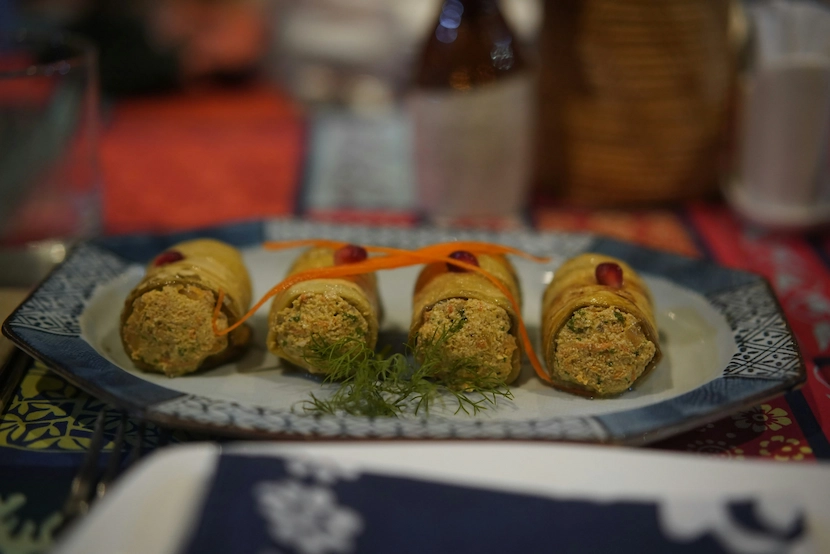
7.3. Siem Reap Night Market BBQ: there is so much cheap, hot food in the night markets like skewers of pork, grilled river fish stuffed with lemongrass, bamboo sticky rice, and prahok ktis, a dip made from fermented fish. Pub Street is starting at $1 BBQ skewers that are smoky and delicious.
7.4. Khmer BBQ and Hotpot: a unique tabletop experience where you grill meat on a dome in the middle and the fat runs down to cook soup around the edge. You can eat with lots of fresh herbs, morning glory, and rice noodles. This is perfect for groups on a cool night after the temples.
7.5. Palm Sugar and Palm Wine: the sugar palm is the symbol of Cambodia. In villages around Siem Reap, you can see people collecting palm juice to make palm sugar, a natural, caramel like sweetener, and palm wine, slightly sour and refreshing. You can try palm sugar ice cream at The Little Red Fox Espresso.
7.6. Other Must Tries: in the morning, you can try kuy teav, noodle soup with pork, and num pang, the Khmer baguette sandwich with pate. In the afternoon, you can try fried tarantulas from the Old Market if you are brave, and try palm cakes and iced coffee to cool down. Siem Reap food is simple but powerful with the freshness of lake fish, the fragrance of lemongrass and galangal, the smokiness of the grill, and the sweetness of palm sugar.
There are a few groups in Siem Reap including Khmer, Cham, Chinese, and a small Vietnamese community living on Tonle Sap. Every group has its own language. But they share the same gentle culture shaped by Buddhism and Angkor.
The Khmer are the majority, famous for their Apsara dance and hospitality. Siem Reap women are masters of silk weaving and stone carving. The Cham people live in fishing villages on the lake. The Khmer people are deeply spiritual, and 95% are Theravada Buddhists.
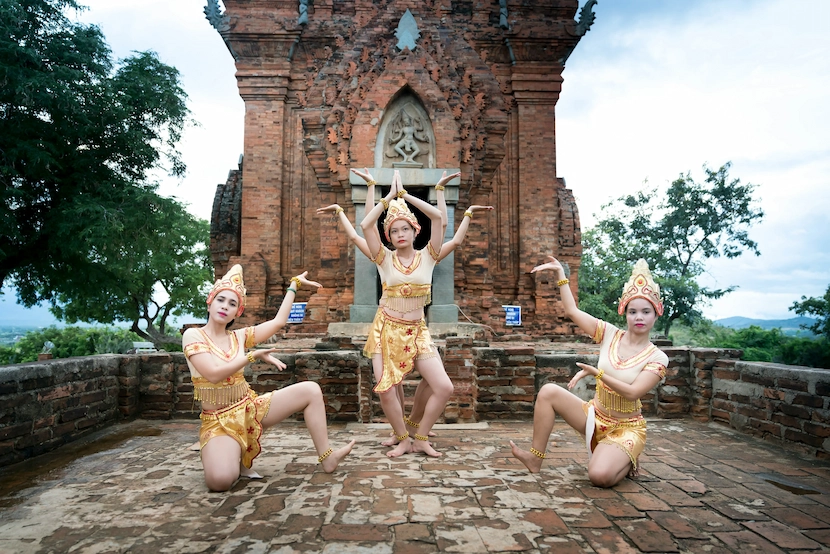
Festivals happen all year round. Pchum Ben in September is when families bring food to temples to honor ancestors. Bon Om Touk Water Festival in November sees boat races on the Siem Reap River. The Angkor Festival in December brings international dance troupes to perform in front of Angkor Wat.
The people are warm, hardworking, and incredibly welcoming despite a difficult past. Life is simple, tied to rice, fish, and tourism. You should not be surprised if a tuk tuk driver invites you for sugar cane juice after a short chat. When you are visiting temples, you should always cover knees and shoulders, take off your hat inside. You should not touch carvings, and should not climb on fragile ruins. You should always ask before taking photos of monks, and do not point your feet at Buddha, and avoid giving money to children selling bracelets at temples. However, you should buy from their parents' stall instead.
Siem Reap is 320 km from Phnom Penh and 450 km from Ho Chi Minh City, and getting there is now much easier than ever before.
9.1. From Vietnam and Phnom Penh: By Plane: this is the fastest way. From Ho Chi Minh City, there are direct flights to Siem Reap Angkor International Airport (SAI) with Vietnam Airlines and Cambodia Angkor Air, about 1 hour 15 minutes. From Hanoi, about 2 hours. From Phnom Penh, 45 minutes. The new airport is 50 km from town, a taxi is 25 to 30 USD. Tickets from Saigon range from 1,800,000 VND return if you book early. There are also flights from Bangkok and Kuala Lumpur.
By Bus: travel time is about 6 to 7 hours from Phnom Penh. Buses leave Phnom Penh from 7 AM to midnight and cost only 10 to 15 USD per person. Night buses save a night of accommodation. Trustworthy companies include Giant Ibis, Capitol Bus, and Sorya. From Ho Chi Minh City, take a bus to Phnom Penh, then connect to Siem Reap, total about 12 hours.
From Thailand: many travelers come via Bangkok to Poipet border, then 3 hours to Siem Reap. The new train from Bangkok to Poipet makes this easier, but watch out for scams at the border.
9.2. Getting Around Siem Reap: The town itself is small and walkable around Pub Street and the Old Market. For temples, rent a bicycle for 3 to 5 USD per day. The Angkor Small Circuit is 27 km and flat, perfect for cycling. For longer distances like Banteay Srei and Kulen, rent a motorbike for 8 to 12 USD per day, but you need a license. Tuk tuks are everywhere and most hotels can arrange a driver for 18 to 25 USD for a full day for the Small Circuit. For Angkor, buy your temple pass online in advance to skip the line at 5 AM. E bikes and electric carts are now available for a quieter temple experience.
If Phnom Penh gives you the present of Cambodia, Siem Reap gives you its glorious past. If Sapa gives you a sea of clouds, Siem Reap gives you a sea of temples at sunrise, where every stone tells a 1,000 year old story.
Related articles: