
Ciao splendida Sole !
Abbiamo visionato il sito e l abbiamo trovato fatto molto bene e interessante, riteniamo che sia di facile comprensione e con tutte le...
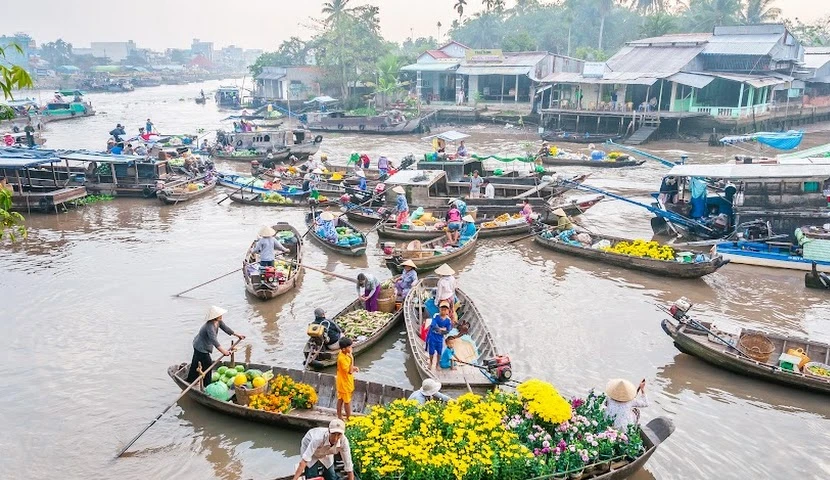
Cần Thơ is a centrally-governed city, known as “Tây Đô” - the capital of the Mekong Delta river. It doesn’t have the majestic mountains of the Northwest or a century-old ancient town like Hội An. Cần Thơ attracts tourists with the richness of the Mekong Delta: fruit-laden orchards, a maze of canals, and especially the one-of-a-kind floating market. People say, “If you’ve been to Cần Thơ but haven’t visited the floating market, you haven’t really been to the Mekong Delta river.” At 5 am, when you go to Ninh Kiều Wharf, board a motorboat to Cái Răng, eat a bowl of hủ tiếu right on the river, and listen to vendors calling “ai xôm, ai bánh tét hôn” - you’ll fall in love with the Mekong Delta instantly. Cần Thơ is simple, generous, and as sweet as a soft vocal tune.
1. History of Can Tho
2. Geographical location of Can Tho
3. Places to visit in Can Tho - River and floating market cluster
4. Places to visit in Can Tho - Orchard and eco cluster
5. Places to visit in Can Tho - Culture and spiritual cluster
6. Local specialties in Can Tho
7. Culture and people of Can Tho
8. How to travel to Can Tho
The name “Cần Thơ” has two assumptions: one from the Khmer “kìn thô” meaning striped snakehead fish, the other from “cầm thi giang” - river of poetry. This land was part of Thủy Chân Lạp. Vietnamese settlers came to reclaim land and established Trấn Giang village in the late 17th century. Mạc Thiên Tích founded Trấn Giang đạo, later renamed Trấn Giang in 1739.
The French established Cần Thơ province in 1876. Since 1875, thanks to its central geography, Cần Thơ became the Mekong Delta capital during the French period, with Ninh Kiều Wharf bustling with trade. The Saigon government established Phong Dinh province, with its capital in Cần Thơ, in 1956. Cần Thơ belonged to Hậu Giang Province after 1975. It was separated into the centrally-governed Cần Thơ City in 2004.
In the early 20th century, Cái Răng Floating Market formed when roads were undeveloped. Merchant boats gathered at the river junction to “hang what you sell.” It still keeps the tradition of operating from 4 am to 9 am and was recognized as a National Intangible Cultural Heritage in 2016.
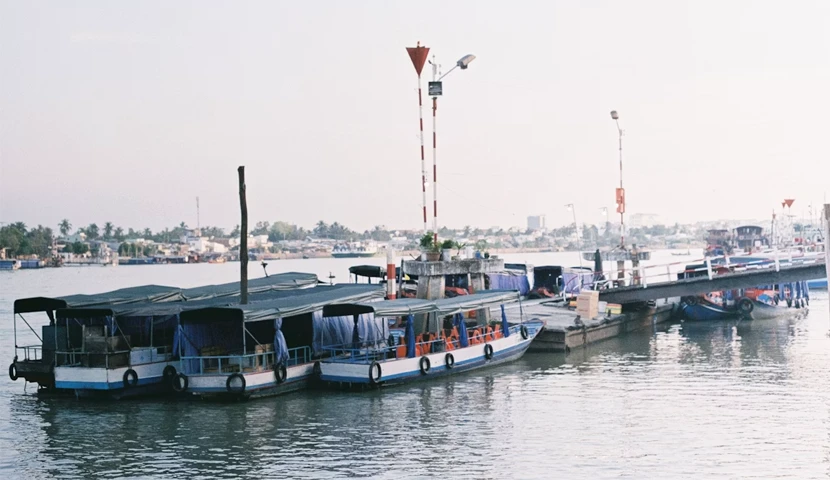
Cần Thơ is in the heart of the Mekong Delta. It is near An Giang to the north, Đồng Tháp and Vĩnh Long to the east, Hậu Giang to the south, and Kiên Giang to the west. Cần Thơ City is 169 km southwest of Ho Chi Minh City and serves as the transport hub for 13 Mekong Delta provinces. The Hậu River - a branch of the Mekong - which runs through the city, divides it into two banks: Ninh Kiều and Bình Thủy on the right bank, Cái Răng and Phong Điền on the left. The canal system is very dense: Xáng Xà No Canal, Cái Khế Creek, and Cần Thơ Creek. Thanks to alluvium from the Hậu River, Cần Thơ’s land is fertile - the country is the number one rice granary. Cần Thơ International Airport and Cần Thơ Bridge, the longest cable-stayed bridge in Southeast Asia, both make the city more easily accessible.
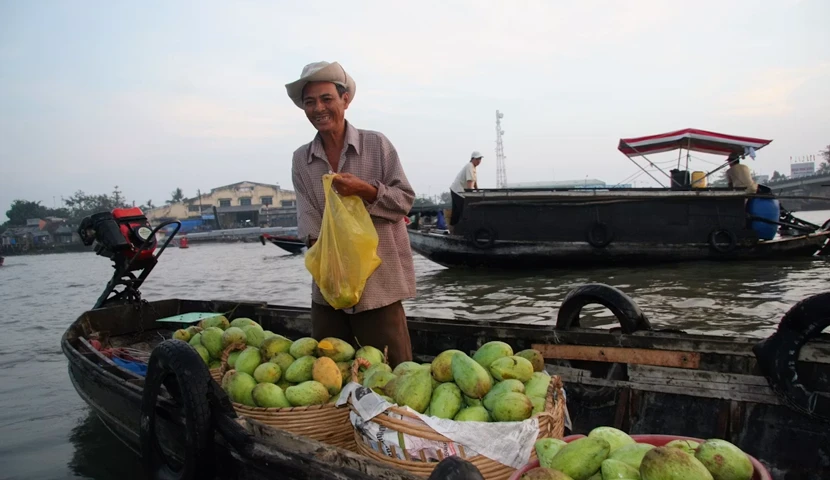
This is the essence of Cần Thơ, where life flows on the Hậu River, boats are shops, streets, and kitchens all at once. You should start at dawn to catch the floating markets at their liveliest and feel the Mekong Delta wake up with you.
Cái Răng Floating Market
It is 6km from Ninh Kiều Wharf, 30 minutes by boat. Open from 4 am to 9 am, busiest 5:30 - 7 am. Boats hang fruits, hủ tiếu, and coffee on the “bẹo” - a pole for displaying goods. A shared boat is only around 50k/person, and a private boat is 400k. Hủ tiếu is cheap 40k, coffee 15k served right on the river.
Ninh Kiều Wharf
Ninh Kieu wharf is the symbol of Cần Thơ. You can take a cruise to listen to đờn ca tài tử for 100k a ticket in the evening. Ninh Kiều Pedestrian Bridge or Love Bridge is a beautiful check-in spot for lovers.
Phong Điền Floating Market
This market keeps its old charm since it is smaller and less touristy than Cái Răng. You should wake up early for a morning trip to watch the sunrise on the river.
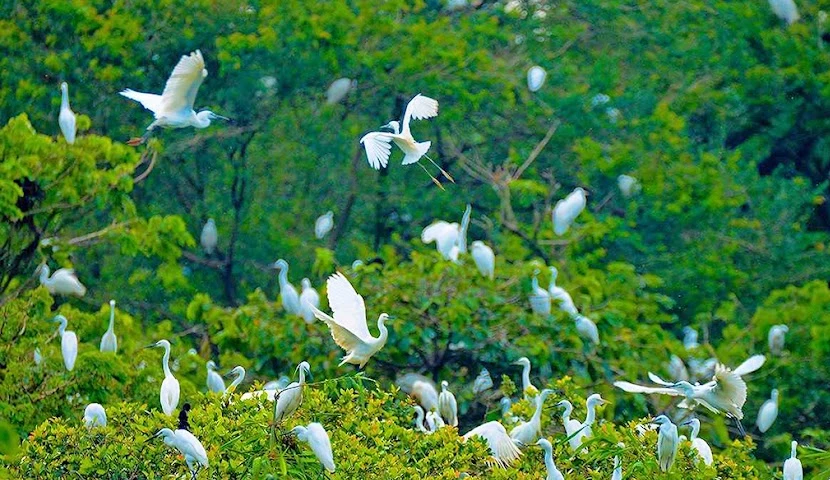
You can experience the life of a farmer in the Mekong Delta: lush fruit gardens, river islets, and hands-on activities with the residents. You can come for the fruit, stay for the fishing, cake making, and the laid-back chill of the farmerside.
Mỹ Khánh Fruit Garden, Phong Điền
Summer offers a variety of fruit, including rambutan, mangosteen, and durian. You can pay the entrance fee of 50k, pick and eat in the garden, charged by weight. You can also make bánh xèo and go ditch fishing.
Mỹ Khánh Tourist Village
The village represents Southern Vietnamese ancient houses, a zoo, pig racing, and monkey shows. For Ticket 100k, you can have a great time with your family and kids.
Cồn Sơn
A small islet in the Hậu River. Watch flying snakehead fish, make folk cakes, and visit rambutan gardens. Tour 350k/person includes ferry, guide, lunch.
Going above and beyond the rivers and orchards, Cần Thơ’s soul beats in its ancient houses, spiritual pagodas, and museums, which tell us the story of the Mekong Delta. The cluster represents the French colonial architecture of Khmer and Chinese temples, and the mix of faiths and histories that made Tây Đô.
Bình Thủy Ancient House
This is a 150-year-old house with East-West architecture, featured in the film “The Lover,” with tickets only around 25k. The orchid garden and antiques inside are definitely worth seeing.
Ong Pagoda & Munirangsy Pagoda
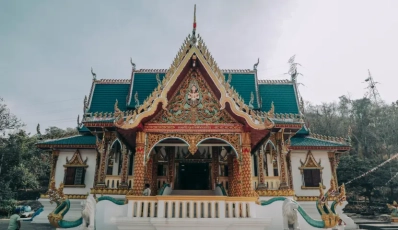
Ong Pagoda is a spiritual Chinese temple. Munirangsy Pagoda is a dazzling Khmer Theravada pagoda made of gold.
Truc Lam Phuong Nam Zen Monastery
This is the largest Zen monastery in the Mekong Delta, built in the Ly Trần dynasty architectural style. It has many peaceful spaces with large Buddha statues.
Cần Thơ Museum
Exhibits the Óc Eo culture and the Mekong Delta civilization. Learn more about the history of Southern land reclamation.
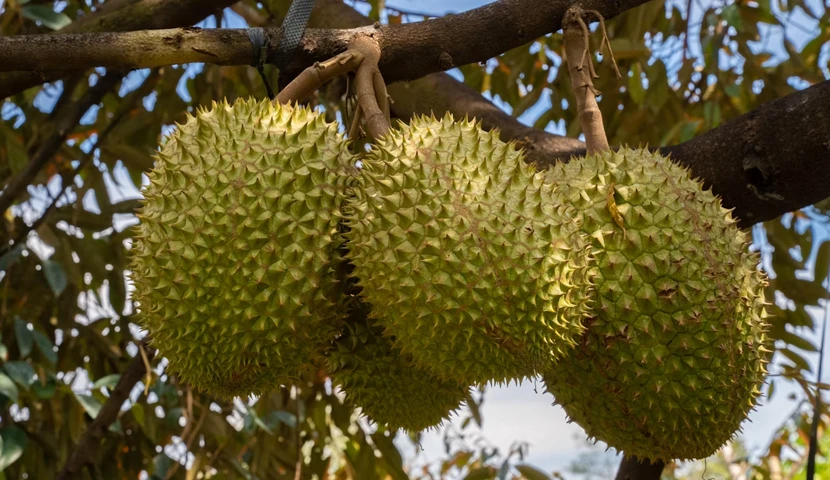
Cần Thơ cuisine captures the soul and heart of the Mekong Delta: bold, sweet, and generous, shaped by rivers, nature, and the rhythm of floating markets. Here, every dish focuses on what the water and soil give: freshwater fish, coconut milk, wild herbs, and fruit picked that morning, then turns simple ingredients into comfort food that sticks with you.
Fermented Fish Hotpot - Lẩu mắm
Lau Mam is the “soul” of the Mekong. Fermented ling fish or snakehead fish cooked with lemongrass, served with catfish, shrimp, squid, eggplant, and 20 types of greens: water lily, water spinach buds, neptunia, and sesbania flowers.
Sizzling Pancake - Bánh xèo miền Tây
Mekong bánh xèo is as big as a hat, filled with shrimp, pork, bean sprouts, and jicama. People wrapped it in forest greens and dipped it in sweet-sour fish sauce which is only around 10k a piece.
Noodle Soup - Hủ tiếu Sa Đéc
Sa Đéc and Mỹ Tho hủ tiếu are sold right on the floating market with clear broth, including minced pork, liver, and heart which are sold for 40k per bowl. Eating on a boat is indeed a unique experience.
Grilled Snakehead Fish - Cá lóc nướng trui
Natural wild-caught fish grilled in straw and wrapped in rice paper with herbs, dipped in tamarind fish sauce. They smell absolutely amazing with straw smoke.
Duck Cooked with Fermented Tofu - Vịt nấu chao Cần Thơ
Muscovy duck is A Cần Thơ specialty, rich and flavorful dishes, cooked with red fermented tofu and taro, eaten with vermicelli.
Purple Sticky Rice Cake - Bánh tét lá cẩm
Purple magenta plant sticky rice, which is chewy, fragrant, beautiful color, with fatty mung bean filling, is sold at floating markets for 15k/roll.
Salted Crab and Grilled Field Rat - Ba khía muối, chuột đồng quay lu
Rustic specialties. Clay-pot roasted field rat 120k/plate, tastes like free-range chicken. Salted ba khía crab mixed, eaten with cold rice.
Orchard Fruits - Vú sữa, Lò Rèn, Sầu riêng Ri 6
Lò Rèn star apple, durian, mangosteen, and rambutan are cheapest in the summer, from May to August. Enter the gardens and eat all you can.
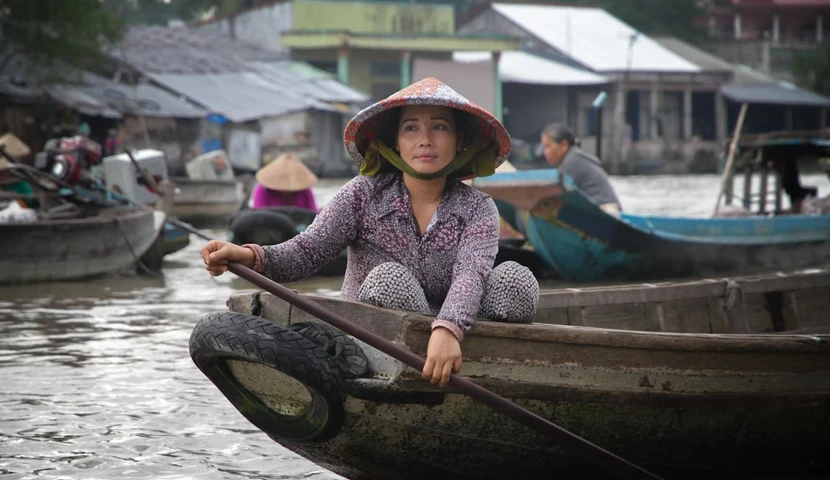
People in Cần Thơ are generous, easygoing, honest, and hospitable which are the typical Mekong Delta traits. The Mekong accent is sweet like sugarcane, with “dạ”, “nghen”, and “hôn” at the end of sentences. They don’t overprice, and when they invite you to eat, they really mean it.
River Life & Thương Hồ Culture
People built stilt houses, traveled by boat, and held markets on the river. “Bẹo” is the word used to hang goods on boats: hang pineapple to sell pineapple, hang sugarcane to sell sugarcane, hang coconut leaves if you want to sell the boat. “Thương hồ” culture means living on boats; children born on the river are fading but still exist.
Đờn Ca Tài Tử
A UNESCO heritage, people performed at night on Ninh Kiều cruises, where 6 to 8 people play and sing six verses of vọng cổ. It appears different on the water.
Festivals
The Folk Cake Festival, with hundreds of Southern cakes are celebrated every April.
People love casual drinking, singing vọng cổ, living slow, and with deep sentiment.
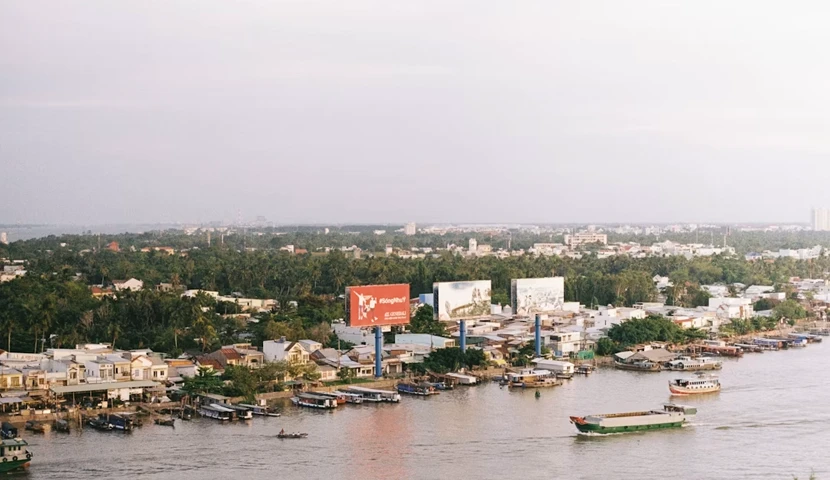
Cần Thơ is very easy to reach, only 169km from HCMC.
Buses and limousines are the most popular. Phương Trang, Vũ Linh, and Thành Bưởi buses cost around 160 to 180 Vietnam dong a ticket, for a 3.5 to 4-hour drive.
Cần Thơ Airport has flights from Hanoi for around 2 hours to Da Nang, Con Dao, and Phu Quoc.
Motorbike and Car self-drive: Via QL1A or expressway, 4 hours. The road is good and easy.
Boat: It is not very common, but you can find 2 to 3-day boat tours from HCMC to the Mekong Delta.
If you want to go to Cái Răng Floating Market, you should go to Ninh Kiều Wharf at 5 am and rent a boat. People can share a boat for 50k per person, a private boat 400 to 600k, for around 2 to 3 hours. You can go early at 5:30 am to catch the busiest time and sunrise.
Related articles:
>> All you need to know about Ho Chi Minh