
Ciao splendida Sole !
Abbiamo visionato il sito e l abbiamo trovato fatto molto bene e interessante, riteniamo che sia di facile comprensione e con tutte le...
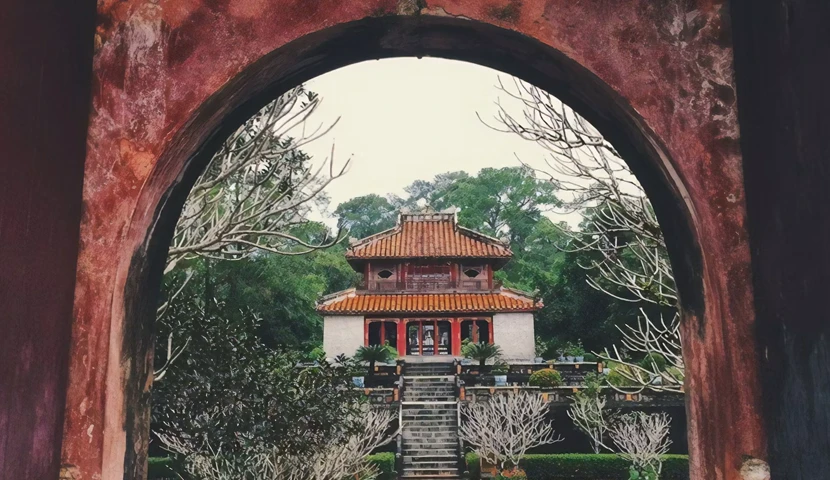
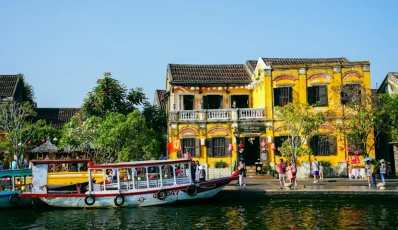
The ancient capital Hue is a poetic city that lives alongside the gentle Perfume River, " sông Hương" in the central part of Vietnam. People are describing the city with some majestic words such as nostalgic, imperial, serene, and deeply cultural.
1. Hue - the last dream for the lost royal
2. Geographical location of Hue
3. The History of Hue
4. Places to Visit in Hue - Imperial Heritage Sites
5. Places to Visit in Hue - Nature and Experiences
6. Hue cuisine
7. People and the Rhythm of Hue
8. How to get to Hue
The Nguyen Dynasty (1802-1945) used Hue as their imperial capital for 143 years in Vietnam. Hue is like the last dream for the lost royal. Hue is moving at an extremely slow pace, unlike the fast dynamic of Ho Chi Minh city, or the ancient one thousand years old Ha Noi. If people want to enjoy the peaceful atmosphere, royal fine dining, or why the Vietnamese emperor chose this place to be their capital, they come to Hue. People want to return to Hue for their quiet, defeated sadness but also the tragedy of a lost royal time.
Hue belongs to the North of Vietnam but is situated in the central part. It is near Quang Tri province to the north, Truong Son mountain head to the west, Quang Nam and Da Nang to the South, and the East Sea with a coastline stretching 120 km.
The city is divided into two parts by the river: the ancient city belongs to the north, while the modern area is located in the South. Hue is 668km away from Ha Noi, more than 1,039 km from Ho Chi Minh City, and approximately 100km from Da Nang and the Hai Van pass.
For the special geographic position, with the sea in the front and the mountain behind, Hue hosts many beautiful resorts, ranging from Thuan An Beach, Bach Ma forest, Tam Giang lagoon, rivers, and historical monuments.
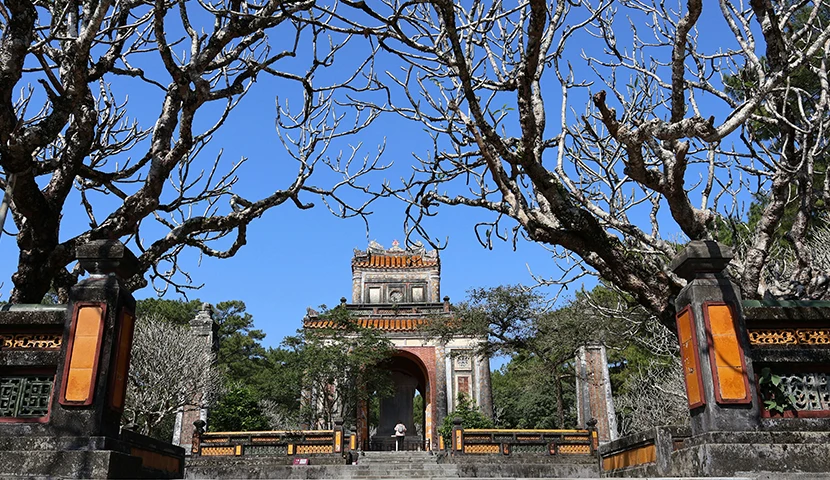
Many Nguyen emperors and Trinh lords have been closely linked to the history of Hue. In the South of VietNam, the government there was Nguyen Hoang around the late 16th century in Thuan Hoa, called “Dang Trong”. Nguyen Anh became the Emperor of Gia Long and chose Phu Xuan (Hue) as the capital of Vietnam in 1802.
Over 143 years of ruling and following feng shui principles, the Nguyen emperor has constructed many interesting buildings, including the Royal Citadel, Imperial City, and Forbidden Purple City, combining the traditional Vietnamese influences and Chinese imperial architecture.
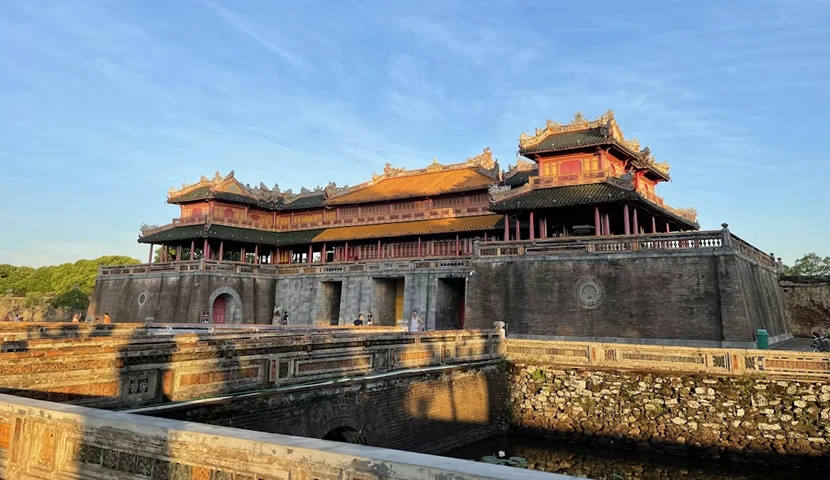
When the French attacked the capital in 1885, Hue became the center of French colonial rule in central Vietnam. Emperor Bao Dai stepped down at the Ngo Mon Gate in 1945, marking the end of Vietnam’s monarchy.
Hue's complex monument became Vietnam’s first UNESCO cultural heritage destination in 1993. Hue has much of its destruction from the Tet Offensive in 1968; however, much of its spirit remained intact.
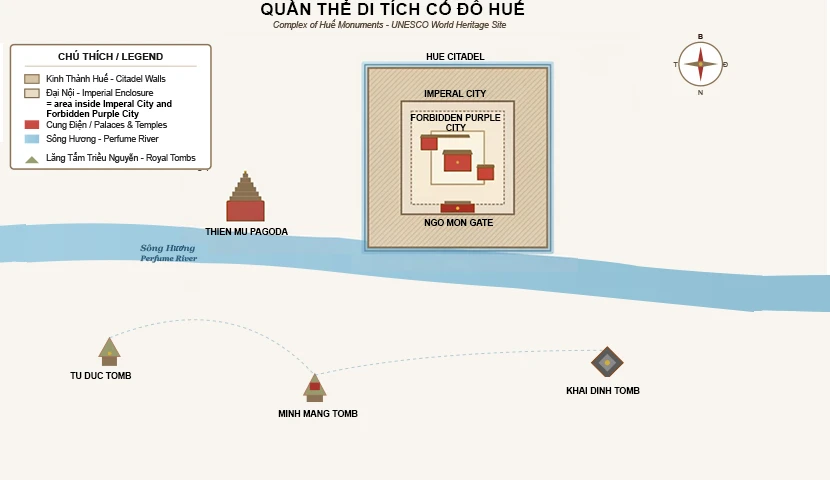
Hue is the only place in Vietnam that preserves the soul of the country's last dynasty. In 1993, UNESCO confirmed Quần thể Di tích Cố đô Huế - the Complex of Huế Monuments as a World Cultural Heritage.
In the center of the Citadel - Kinh thành Huế, a square fortress is surrounded by a sophisticated system of moats and ramparts. The place once served as a military stronghold and a residential area for mandarins and commoners. The Citadel, which was located on the North of the Perfume River, was constructed following feng shui guided “back to the mountain, face to the water,” with the Ngu Binh mountain from behind, and the front is the poetic Huong River. This layout embodies the harmonious balance between man-made structures and nature that defines Huế.
Lying at the center of the Citadel, the Imperial Citadel – Đại Nội Huế, is the exclusive area for the royal court. There are two layers inside the Imperial Citadel. The first is the Imperial City – Hoàng thành, where the imperial held court. Its most phenomenal structures include the Ngo Mon Gate - Ngọ Môn, a massive U-shaped structure with five entrances and a golden roof; the Thai Hoa Palace – Điện Thái Hòa, the coronation hall where the emperor’s throne still sits; and the Mieu Temple – Thế Miếu, the ancestral temple dedicated to 13 Nguyễn emperors. The symbolized power and permanence of the dynasty is the Mieu, which houses the Nine Dynastic Urns – Cửu Đỉnh.
The emperor and his family live inside the Forbidden Purple City Tử Cấm Thành. Dien Tho Palace – Cung Diên Thọ, the residence of the Empress Mothers, has been restored recently. The entire Imperial Citadel showcases traditional Vietnamese timber architecture combined with the symmetrical, axial layout prescribed by Confucian principles. The architecture of every gate, roof tile, and courtyard has meaning there.
Not to mention the Nguyen Emperor’s Royal Tombs, which have a very unique landscape, architecture, and philosophy of each king. Minh Mang Tomb – Lăng Minh Mạng is majestic and strictly symmetrical, built along a sacred axis to represent Confucian order. Tu Duc Tomb – Lăng Tự Đức is poetic and romantic, with lotus lakes, pavilions, and pine forests – it was designed as a place where the emperor could compose poetry and escape court life. In contrast, Khai Dinh Tomb – Lăng Khải Định stuns visitors with its bold fusion of Eastern and Western elements: concrete, stained glass, and intricate ceramic mosaics. A tomb here is not merely a tomb, but the second house to the king, where the emperor rests after life.
Thien Mu Pagoda is a 400-year-old Buddhist temple on a hill over the river. Phuoc Duyen tower has become a symbol status of Hue, portrayed in countless paintings, poems, and photographs. Other important sites include the Nam Giao Esplanade – Đàn Nam Giao, where emperors performed sacrifices to Heaven, and Ho Quyen – Hổ Quyền, a unique arena where elephants and tigers once fought.
Hue is a living museum where visitors can basically enjoy the past and the present with every brick and stool.IF you understand Hue, you understand a core part of Vietnamese culture and identity.
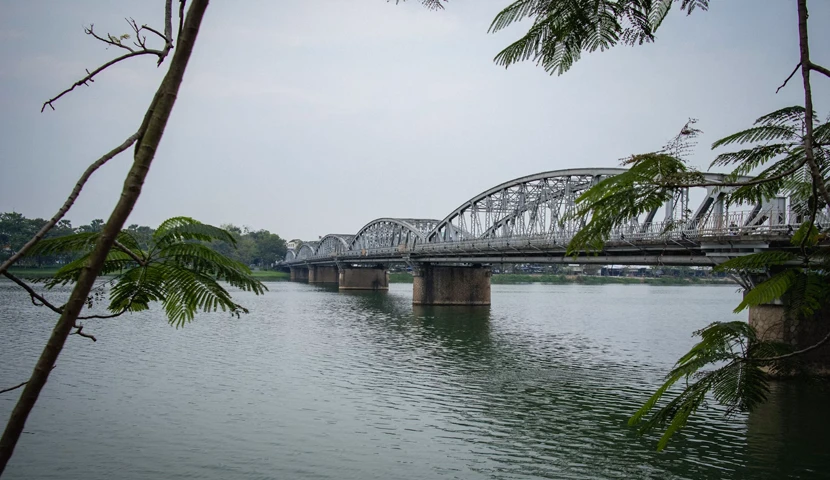
There are Perfume River - sông Hương and Trang Tien Bridge. Here, visitors can take a dragon boat cruise in the evening, enjoy Hue folk songs, and release floating lanterns.
Then there are Vong Canh Hill and Thien An Hill, which are ideal viewpoints overlooking the Perfume River and Ngu Mountain - the classic feng shui landscape of Hue.
Thuan An Beach and Tam Giang Lagoon are located around 15 km from the city center. Tam Giang’s sunsets are famous among photographers.
Bach Ma National Park is about 40 km away, with a climate similar to Da Lat. Highlights include Do Quyen Waterfall and abandoned French villas.
Bao Vinh Ancient Town and Dong Ba Market are places that are perfect for buying sesame candy (me xung), conical hats, and traditional ao dai.
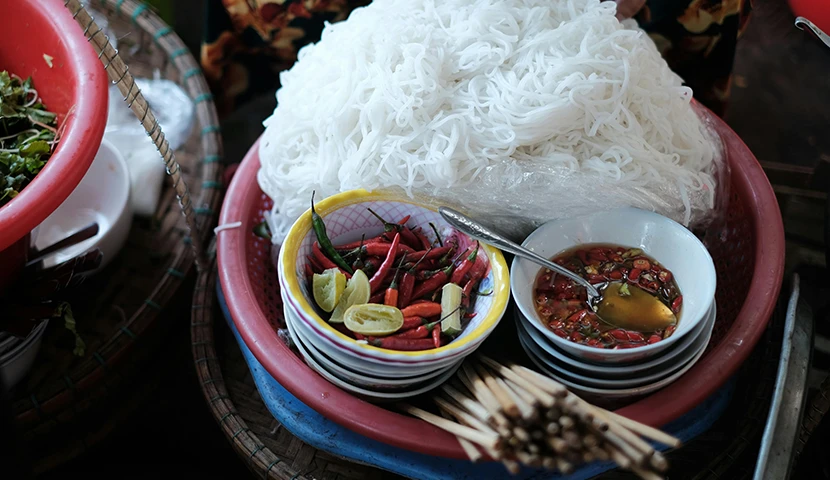
There are three main categories in Hue cuisine, including: vegetarian cuisine, royal cuisine, and folk cuisine. It consists of salty seasoning, small portions, spicy flavors, and elaborate presentation. Here are the Must-Try Dishes:
Hue Beef Noodle Soup (Bun Bo Hue) is the soul of Hue cuisine. The broth is spicy and aromatic with lemongrass and fermented shrimp paste, often served with pork knuckle and crab cakes.
Clam Rice and Clam Noodles (Com Hen, Bun Hen), originally poor people’s food but highly refined: cold rice mixed with stir-fried clams, crispy pork fat, peanuts, and shrimp paste. Extremely spicy.
Some traditional Hue cakes include
· Banh beo (steamed rice cakes)
· Banh nam (flat rice dumplings)
· Banh bot loc (transparent shrimp dumplings)
· Banh khoai (Hue crispy pancakes)
Nem Lui & Grilled Pork with Rice Paper, wrapped with herbs and dipped in rich peanut sauce.
Hue Sweet Soups (Che Hue), there are said to be 36 varieties of royal desserts, including lotus seed sweet soup and sweet soup with roasted pork wrapped in tapioca.
Vegetarian Cuisine, Hue is considered Vietnam’s vegetarian food capital, ranging from simple meals to sophisticated royal-style vegetarian dishes.
Salt Coffee (Ca Phe Muoi), modern specialty combining salty, bitter, and creamy flavors.
Food in Hue is inexpensive - 1-2 USD can buy a delicious meal. Hue residents eat slowly and delicately, reflecting the saying: “eating as if appreciating fragrance and flowers.
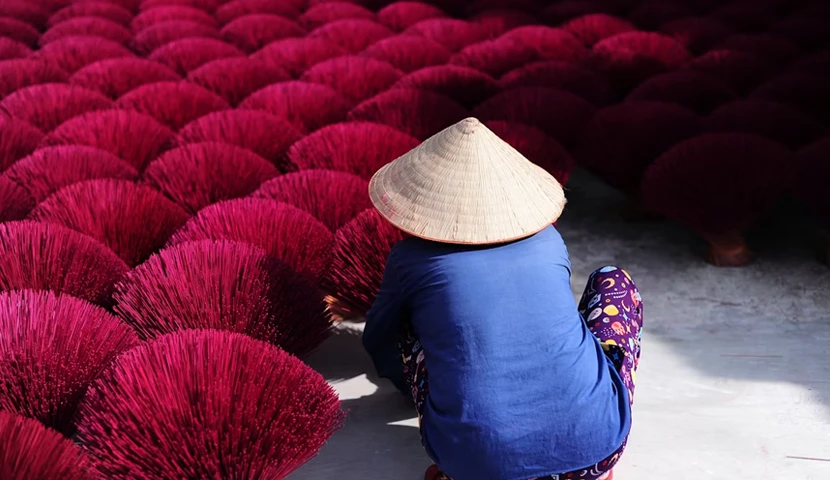
Hue people are often characterized by a gentle, sweet, reserved, and thoughtful nature. People speak with a soft tone of voice and distinctive pronunciation. Hue women are virtues with grace, modesty ad politeness. Huan are often described as masculine and romantic.
Everyday life is heavily influenced by royal culture, from cuisine to ceremonies and music, even home decoration as well. Intangible cultural heritage includes songs performed on the perfume river. Every evening, boats carry visitors while musicians perform traditional melodies such as Nam Ai and Nam Binh. Purple ao dai and non bai tho (conical hats) symbolize the image of Hue women.
Hue has two distinct seasons:
Dry season: March to August, often intensely hot.
Rainy season: September to February, with prolonged drizzle.
The poets and artists are inspired by the rainy season here. Many notable figures have been produced by prestige school such as Quoc Hoc or Dong Khanh. Trinh Cong Son, the musician, and Han Mac Tu, the poet, are the true spirits of Hue
Hue is located in the center of Vietnam, which make is more easier to travel.
By Air.
The Phu Bai International Airport is 15km from the city center. From Hanoi, it takes 1 hour 15 minutes flight to get there, and a 1-hour 30-minute flight from Ho Chi Minh City. There are many airlines to choose from, including VietNam Airlines, Vietjet Air, and Bamboo Airways. A taxi from the airport to downtown could cost between 180,000 and 250,000 VND.
By Train
Hue Railway Station is centrally located and serves as a major stop on Vietnam’s North–South railway.
Travel times:
From Hanoi: approximately 13 - 14 hours.
From Ho Chi Minh City: approximately 18 - 20 hours.
High-quality SE trains with four-berth sleeper cabins are recommended. The journey through Hai Van Pass offers spectacular coastal views.
By Bus or Car
From Da Nang to Hue takes only 2–3 hours via the Hai Van Tunnel or the Hai Van Pass. Limousine buses cost around 150,000 - 200,000 VND. Long-distance sleeper buses operate from Hanoi and Ho Chi Minh City but involve lengthy travel.
National Highway 1A and the Cam Lo La Son Expressway both pass through Hue.
Related articles:
>> Best time to visit and travel Hue