
Ciao splendida Sole !
Abbiamo visionato il sito e l abbiamo trovato fatto molto bene e interessante, riteniamo che sia di facile comprensione e con tutte le...
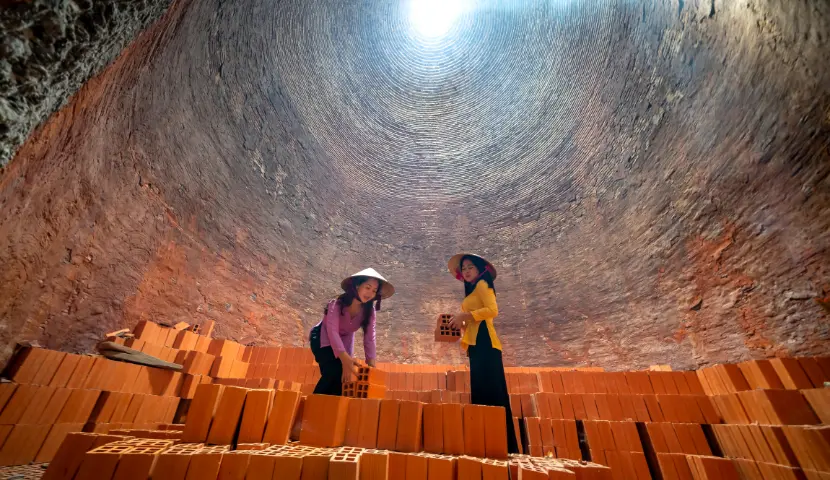
The Mekong Delta in southern Vietnam is one of Southeast Asia's most distinctive river regions, famous for floating markets, winding canals, tropical fruit orchards, rice fields and vibrant local culture. Formed by the lower reaches of the Mekong River, the region offers travelers an opportunity to experience a way of life shaped by waterways, agriculture and centuries of cultural exchange. Thanks to its warm tropical climate, the Mekong Delta can be visited throughout the year. However, each season brings different landscapes, activities, and experiences. Understanding the seasonal weather patterns will help you choose the best time to visit and make the most of your journey through this remarkable part of Vietnam
Mekong Delta Vietnam Travel Guide: Best Time to Visit & Top Destinations
1.Things to Know About the Mekong Delta
1.1 Where Is the Mekong Delta Located?
1.2 Which Provinces Are Included in the Mekong Delta?
1.3 How to Get to the Mekong Delta
2. When Is the Best Time to Visit the Mekong Delta?
2.1 Dry Season (December - April)
2.2 Rainy Season (May - November)
3. Top Destinations in the Mekong Delta
3.1 Can Tho - The Heart of the Mekong Delta
3.2 An Giang - Home of Spectacular Flood Season Landscapes
3.3 Dong Thap - The Land of Lotus Flowers
3.4 Ben Tre - The Coconut Kingdom
3.5 Tien Giang - Gateway to the Mekong Delta
3.6 Soc Trang - A Blend of Diverse Cultures
3.7 Ca Mau - Vietnam's Southernmost Frontier
4. Conclusion
1.1 Where Is the Mekong Delta Located?
The Mekong Delta, located in the southernmost part of Vietnam, is the lower reaches where the Mekong River branches off into numerous tributaries before flowing into the East Sea. This region comprises 13 provinces and cities and is surrounded by a dense network of rivers and canals, creating the distinctive riverine landscape of the Southwestern Mekong Delta. Thanks to its favorable geographical location – bordered to the north by the Southeastern Mekong Delta and Cambodia, to the east and southeast by the East Sea, and to the west by the Gulf of Thailand - along with its fertile alluvial deposits, the Mekong Delta has become Vietnam's most important agricultural region and an attractive destination with its floating markets, fruit orchards, and unique riverine culture.
The lives of the people here are closely tied to the waterways, from transportation by boat to trading activities at famous floating markets such as Cai Rang, Cai Be, and Nga Nam. This unique riverine culture has become one of the most attractive features for both domestic and international tourists.
1.2 Which Provinces Are Included in the Mekong Delta?
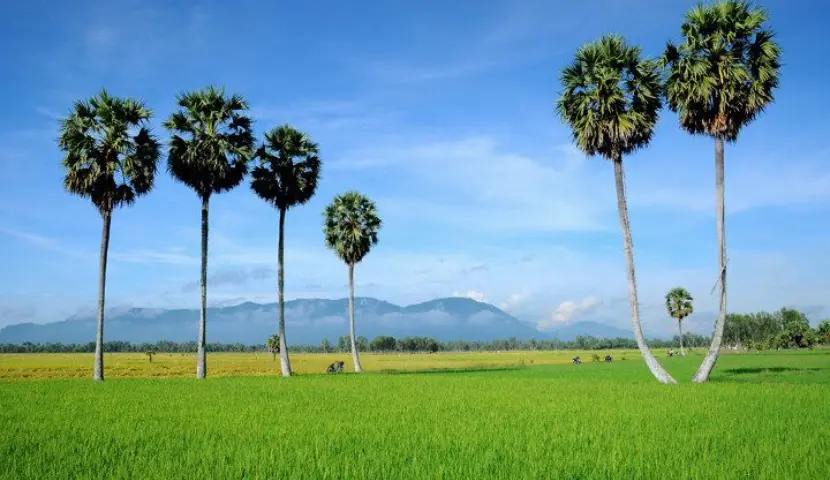
The Mekong Delta, located in the southernmost part of Vietnam, is where the Mekong River completes its journey of over 4,000 km before emptying into the East Sea. Traditionally, the Mekong Delta was described as comprising 13 provinces and one centrally governed city: Can Tho, Long An, Tien Giang, Ben Tre, Tra Vinh, Vinh Long, Dong Thap, An Giang, Kien Giang, Hau Giang, Soc Trang, Bac Lieu, and Ca Mau. Following Vietnam's 2025 administrative reorganization, these areas are now grouped into five provincial-level administrative units: Can Tho, Vinh Long, Dong Thap, An Giang, and Ca Mau. The former provincial names remain useful when discussing established destinations, tourism attractions and historical geography. Together, these provinces form a vast landscape of rivers, canals, islands, orchards, rice fields, and rural communities. Each destination has its own character, traditions, landscapes, and cultural attractions, making the Mekong Delta much more diverse than a single-day excursion might suggest.
1.3 How to Get to the Mekong Delta
The Mekong Delta is easily accessible from Ho Chi Minh City, making it one of the most convenient regions to explore in Southern Vietnam. Travelers can reach different destinations by private car, bus, or organized tour, with journey times generally ranging from around two to five hours depending on the destination. Popular gateways such as My Tho, Ben Tre, Can Tho, and Vinh Long are connected to Ho Chi Minh City by modern road networks.
For travelers, the traditional destination names remain highly relevant. My Tho, Ben Tre, Can Tho, Vinh Long, Chau Doc, Sa Dec and Ca Mau continue to be used by tourism operators, maps and travel websites even though provincial boundaries were reorganized in 2025. For longer journeys, domestic flights to Can Tho International Airport provide another convenient option, with connections from several major Vietnamese cities. Once in the Mekong Delta, boats and ferries become an essential part of the travel experience. Traveling by boat allows visitors to explore narrow canals, floating markets, riverside communities, fruit-growing areas, and landscapes that are difficult to experience from the road.
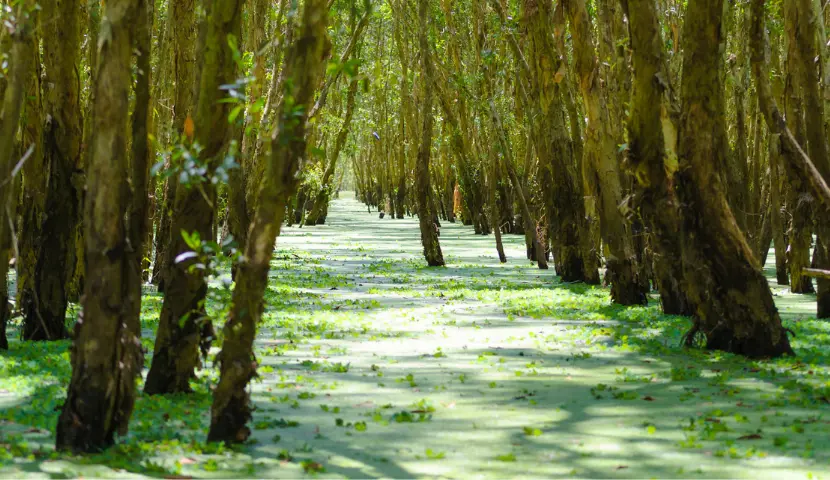
The Mekong Delta has a warm tropical climate year-round with two distinct seasons: the dry season and the rainy season. Temperatures remain warm throughout the year, generally hovering around the upper 20s to low 30s Celsius.
2.1 Dry Season (December - April)
From December to April, the Mekong Delta puts on its most peaceful and brilliant beauty of the year when it enters the dry season, with clear blue skies, mild sunshine and pleasant weather, helping visitors comfortably participate in sightseeing, entertainment, and medical tourism activities without any obstacles. Coming to the Mekong Delta at this time, visitors have the opportunity to experience the life of local people associated with the river. From bustling floating markets at dawn to long-standing traditional craft villages, all activities reflect the unique culture of the Southern region with lush orchards, peaceful islets and rustic dishes with bold Western flavors.
Not only possessing poetic natural landscapes, the Mekong Delta also impresses with its slow, friendly and hospitable pace of life. Visitors can cycle through tree-lined village streets, enjoy fresh fruit right at the garden, or relax on a boat watching the sunset fall on the river. The harmonious combination of nature, culture and people has helped the Mekong Delta provinces become an ideal destination in the first months of the year.
2.2 Rainy Season (May - November)
The rainy season brings a different character to the Mekong Delta. Tropical showers are common, particularly during the afternoon or evening, but they are often relatively short-lived. The additional rainfall replenishes the rivers and canals and transforms the countryside into an even greener and more vibrant landscape. For travelers interested in nature and authentic local life, the rainy season can be an excellent time to visit. The quieter atmosphere, lush vegetation, and abundant waterways create a distinctly different experience from the drier months.
The Flood Season, from around August to November, water levels rise significantly in parts of the upper Mekong Delta, particularly around An Giang and Dong Thap. This period is particularly interesting for nature enthusiasts. Visitors can explore flooded forests and wetlands by motorboat or traditional rowing boat, observe local birdlife, and experience ecosystems that change dramatically with the rising water levels. The flood season also brings seasonal ingredients and specialties to local cuisine, including freshwater fish, shrimp, crabs, and aquatic plants. For travelers interested in discovering the Delta beyond its most famous tourist attractions, this can be one of the most rewarding times to experience the region.
3.1 Can Tho - The Heart of the Mekong Delta
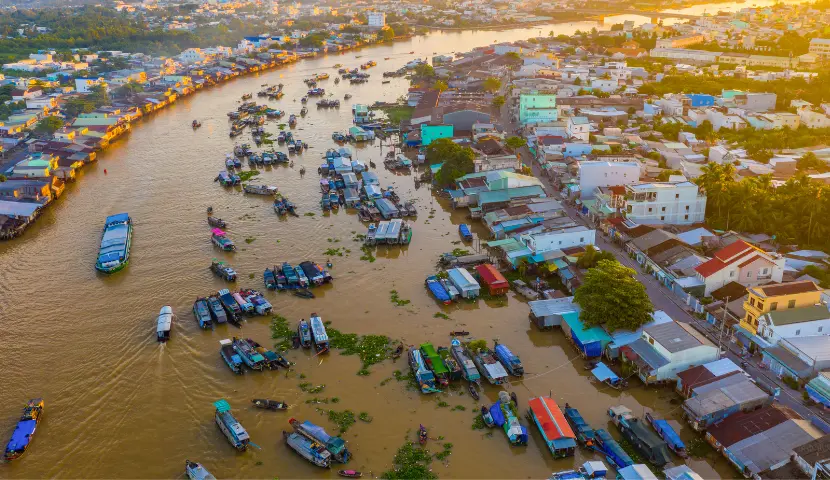
Located along the Hau River, Can Tho is the largest city in the Mekong Delta and an important economic, cultural, and tourism center of Southern Vietnam, with its extensive network of rivers and canals, Can Tho offers visitors an excellent introduction to the region's river-based culture. Its developed transportation infrastructure, international airport, accommodation options, and tourism services also make it one of the most convenient bases for exploring the Delta. The city's most famous attraction is Cai Rang Floating Market, one of Vietnam's best-known floating markets. From the early hours of the morning, boats gather along the river to sell fruit, vegetables, drinks, and other local products, offering visitors a fascinating glimpse into traditional commerce on the waterways. Beyond the floating market, Can Tho is also known for the fruit orchards of Phong Dien, Binh Thuy Ancient House, and scenic riverside areas where visitors can experience the city's relaxed atmosphere.
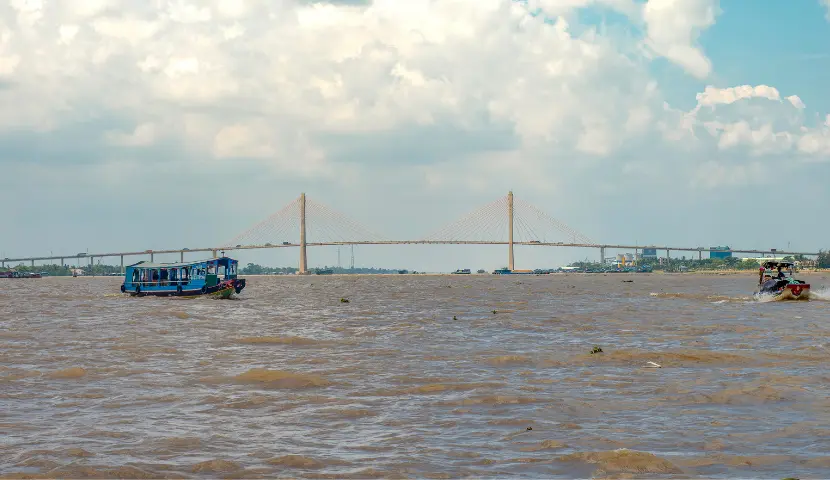
3.2 An Giang - Home of Spectacular Flood Season Landscapes
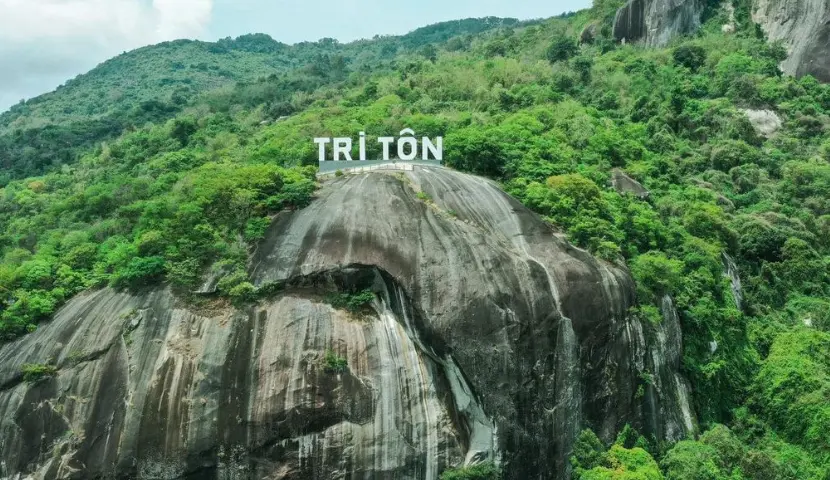
An Giang is one of the most distinctive destinations in the Mekong Delta, renowned for its rare blend of riverine and mountainous landscapes in the Western region and the diverse cultures of the Kinh, Khmer, Cham, and Chinese communities. Located in the headwaters of the Mekong River, bordering Cambodia, An Giang boasts many scenic spots and unique natural experiences that are hard to find anywhere else in the region.
The province's most famous destination is Tra Su Melaleuca Forest, a vast flooded forest with a diverse ecosystem and lush green forest paths. Visitors can take boat rides through the water hyacinth-covered areas, observing many bird species living in a peaceful natural environment, especially during the flood season when the entire area is covered in the green of nature and the number of migratory birds increases significantly. Besides its beautiful rivers and waterways, An Giang is also famous for the Thất Sơn (Seven Mountains) area, Mount Cấm, Mount Sam, and Ta Pa Lake, attracting tourists with their majestic scenery, fresh air, and long-standing spiritual values. From the summit of Mount Cấm, visitors can gaze out at the vast fields stretching to the horizon, creating a truly impressive natural landscape.
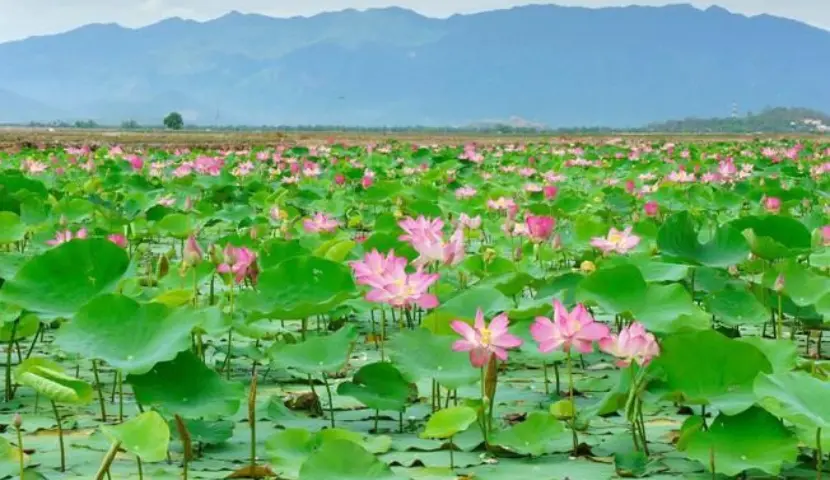
3.3 Dong Thap - The Land of Lotus Flowers
Dong Thap is one of the quintessential destinations in the Mekong Delta, famous for its vast lotus fields, diverse wetland ecosystem, and peaceful, authentic Western Vietnamese lifestyle. Located at the headwaters of the Tien River, it boasts rich natural landscapes and many unique cultural values, attracting tourists who love nature and want to learn about the agricultural life of the delta region.
When mentioning Dong Thap, one cannot overlook Tram Chim National Park, an important wetland habitat and is historically associated with the rare red-crowned crane. The species has become a major focus of conservation efforts, including recent reintroduction initiatives. One of the province's most famous symbols is the lotus fields spread across many localities, attracting tourists with the vibrant pink of the blooming lotus flowers, rustic wooden bridges, and dishes made from lotus. Visitors will also be captivated by traditional craft villages, fruit orchards, and historical sites associated with the southern region, such as Sa Dec flower village, one of Southern Vietnam's best-known flower-growing areas, where thousands of varieties of flowers and ornamental plants are cultivated throughout the year. Traditional craft villages, orchards, and historical sites further contribute to Dong Thap's cultural appeal.
3.4 Ben Tre - The Coconut Kingdom
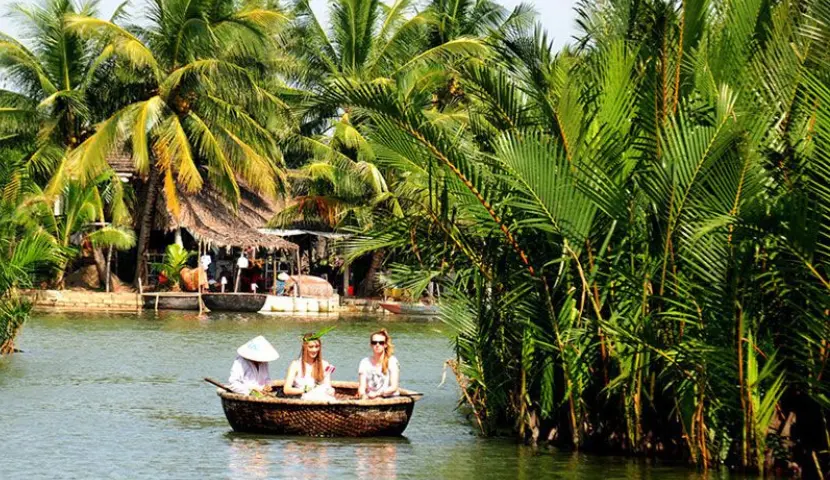
Ben Tre, now part of the reorganized Vinh Long Province, remains one of the Mekong Delta's best-known destinations, known as the "land of coconuts" thanks to its vast stretches of lush green coconut trees covering the islets and riverbanks. Like other provinces in the Mekong Delta, Ben Tre boasts a peaceful countryside landscape where the lives of the people are closely intertwined with the rivers and abundant fruit orchards. One of the most attractive activities when visiting Ben Tre is exploring the islets on the river, such as Con Phung, Con Quy, or Con Phu Da. Visitors can enjoy boat trips through small canals shaded by lush coconut trees, visit traditional craft villages producing coconut candy, rice paper, and other coconut-based handicrafts, or ride horse-drawn carriages or bicycles through quiet village roads, experiencing the slow-paced and intimate life of the local people.
3.5 Tien Giang - Gateway to the Mekong Delta
Located close to Ho Chi Minh City, historically known as Tien Giang Province, this area is now part of the reorganized Dong Thap Province, is one of the most accessible destinations in the Mekong Delta and is a popular choice for day trips. One of its best-known attractions is Thoi Son Island, located on the Tien River. Here, visitors can travel by boat through coconut-lined waterways, visit tropical fruit orchards, sample local produce, and experience traditional forms of rural life. Other popular activities include riding traditional sampan boats, listening to Southern Vietnamese folk music, and visiting local honey-producing facilities. Beyond its natural attractions, Tien Giang also has a rich cultural and historical heritage, with traditional temples, craft villages, and historical sites reflecting the development of Southern Vietnam.
3.6 Soc Trang - A Blend of Diverse Cultures
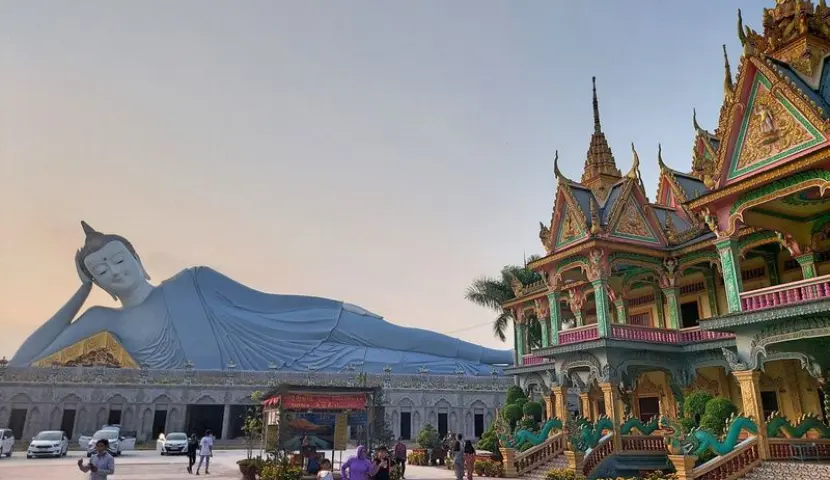
Soc Trang is a province famous for the cultural blend of three ethnic communities: Kinh, Khmer, and Hoa. Thanks to this cultural diversity, Soc Trang boasts many unique architectural works, distinctive traditional festivals, and a rich culinary tradition. The former Soc Trang Province is now part of the reorganized Can Tho City, but Soc Trang remains an important cultural destination known for its Khmer Buddhist heritage. Bat Pagoda, surrounded by mature trees inhabited by thousands of bats, is one of the most recognizable landmarks. Chen Kieu Pagoda and Clay Pagoda are also notable for their distinctive architecture and cultural significance. Beyond its temples, Soc Trang offers peaceful rural landscapes, rice fields, orchards, and coastal communities where fishing and aquaculture play an important role in the local economy. For travelers interested in the cultural diversity of Southern Vietnam, Soc Trang offers a fascinating perspective on the different communities that have shaped the Mekong Delta
3.7 Ca Mau - Vietnam's Southernmost Frontier
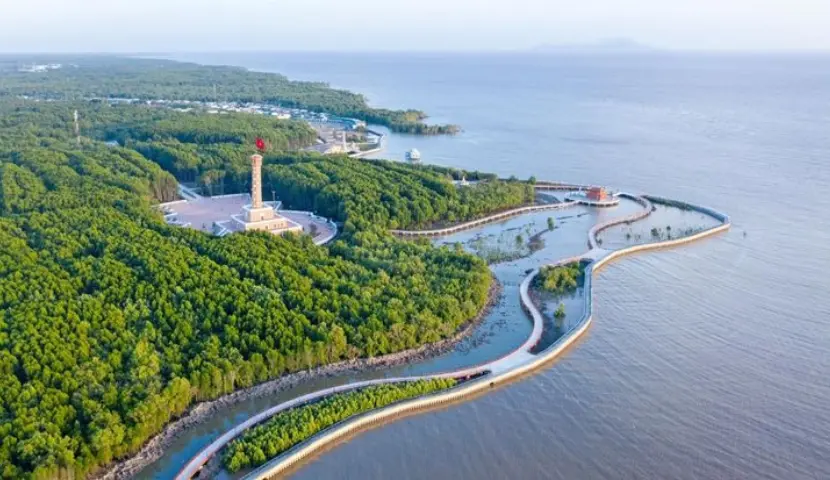
Ca Mau is the southernmost province of Vietnam, known for its vast mangrove forests, diverse coastal ecosystem, and the sacred southernmost point of the country. Surrounded by both the East Sea and the Gulf of Thailand, Ca Mau boasts a unique natural landscape unlike many other regions. It's an ideal destination for nature lovers who want to explore pristine areas and learn about life connected to the sea and mangrove forests. The province's most famous attraction is Ca Mau Cape, where visitors can reach the national coordinate marker and the iconic ship's bow pointing towards the sea. Here, visitors also have the opportunity to admire the expansive coastal alluvial plains constantly being built up by sediment. Ca Mau is also famous for Ca Mau Cape National Park and U Minh Ha National Park, two important nature reserves with rich ecosystems featuring melaleuca forests, mangrove forests, and other wetlands that are home to many rare species of birds, wild animals, and aquatic life.
The Mekong Delta is much more than a collection of floating markets and boat trips. It is a living cultural landscape where rivers, agriculture, food, traditions, and communities have been interconnected for generations. From the bustling waterways of Can Tho and the coconut groves of Ben Tre to the wetlands of Dong Thap, the cultural diversity of Soc Trang, the landscapes of An Giang, and the remote southern frontier of Ca Mau, each destination offers a different perspective on life in Southern Vietnam. The region can be visited throughout the year, with each season offering its own advantages. The dry season is generally ideal for comfortable sightseeing and outdoor activities, while the rainy and flood seasons reveal a greener, more dynamic side of the Delta. Whatever time of year you choose to visit, the Mekong Delta offers travelers an opportunity to slow down, explore beyond the major cities, and experience one of Vietnam's most distinctive cultural and natural regions.